
- Locations
- Interviews
- Luxury Home
- Luxury Lifestyle
- Luxury Travel
- Luxury News
- Events
- More
- Magazine

Luxury is no longer defined by status, exclusivity, or expensive perks. Modern life has trained people to value constant availability, meticulously curated schedules, and optimization in almost every moment. Work messages ping at all hours, calendars overflow, and even leisure is measured against productivity benchmarks or social media impressions. In this context, solo travelers are quietly redefining what it means to experience luxury. Privacy, space, and the ability to dictate your own pace have become some of the most coveted elements of a high-end travel experience.
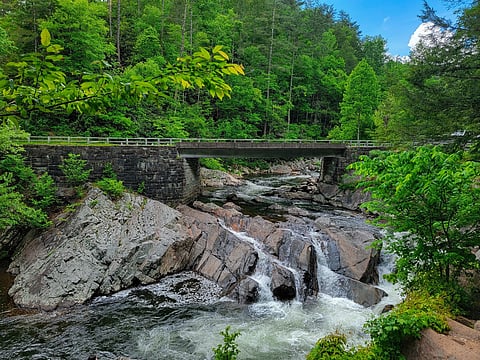
Gatlinburg and the surrounding Smokies illustrate this perfectly. A solo traveler can wake up without an alarm, stroll along quiet streets, take a detour through an unexpected park, and return to a balcony overlooking the mountains to watch fog drift across the peaks. There is no group consensus, no guided tour schedule, and no external expectation dictating the flow of the day.
For solo travelers, accommodations are no longer just a place to sleep but the canvas for freedom. A private space allows complete control over daily routines, creating a sense of sanctuary in the midst of travel. There is no waiting for check-in lines, no shared bathrooms, no group dynamics to navigate. The room itself becomes a luxury because it allows the traveler to set boundaries, move at will, and dictate how they experience each day.
Many travelers are turning to condos in downtown Gatlinburg TN because they offer both privacy and a strategic location. Through Vacation Rentals in Gatlinburg, solo visitors can step outside into the heart of town, explore on a whim, and retreat to their personal space whenever they want. This level of autonomy transforms even simple acts, such as having coffee on the balcony, reading by a window, or cooking a meal, into moments that feel indulgent.
Luxury is increasingly defined by the ability to dictate the flow of your own time. Many modern travelers spend the year responding to alerts, filling calendars, and optimizing every hour. Solo travel allows a rare pause. A day can be structured around curiosity rather than obligation. The morning might start with a slow coffee, followed by a walk to see the sunrise behind the mountains. The afternoon may dissolve into a quiet bookstore browse, unplanned photography, or a lunch found by chance at a local café.
The appeal is subtle but profound: no metrics, no checklists, no sense of performance. The value comes from being present, from having the freedom to let the environment guide decisions, and from escaping the constant pressure to “make the day count” in ways dictated by outside expectations.
Traditional luxury often relies on exclusivity: private tours, reserved seating, curated itineraries. Solo travelers increasingly reject this model. The ultimate indulgence is freedom itself, the ability to leave when you want, to explore in any direction, and to abandon plans mid-course without consequence.
Experiences are no longer measured by prestige. A spontaneous detour to a small gallery or an unplanned stop at a quiet trailhead often provides far more satisfaction than any structured VIP offering. Modern luxury for solo travelers is about autonomy rather than recognition. The value lies in being in charge of one’s own journey, rather than following a path designed for status or social validation.
Flexibility has become a rare and highly sought-after luxury. Technology enables instant decision-making: a weather change can reroute a hike, a spontaneous recommendation can lead to a hidden café, or a simple whim can shift the day entirely. Solo travelers embrace this freedom because it allows them to respond to their mood, environment, or curiosity without compromise.
This flexibility encourages deeper engagement with the surroundings. Instead of moving mechanically from point A to point B, travelers can pause, linger, or explore completely unplanned spaces. Luxury emerges not from what is scheduled, but from the permission to let the day evolve naturally.
For a long time, travel marketing treated being alone as something that needed fixing. Group excursions, social mixers, and organized activities were often positioned as solutions. A growing number of solo travelers see things differently. Solitude isn't a gap in the experience but the experience itself. The opportunity to spend time without competing opinions, constant conversation, or social obligations has become one of the most desirable parts of traveling alone.
This appeal makes sense in the context of modern life. Most people move through environments filled with noise, notifications, and expectations. Even moments of downtime are often interrupted by screens demanding attention. Solitude offers something increasingly rare: uninterrupted mental space. Sitting quietly with a mountain view, walking through town without headphones, or spending an evening reading without feeling the need to be productive can feel surprisingly luxurious because those opportunities are becoming harder to find at home.
One reason solo travel feels so refreshing is that it removes an enormous amount of invisible responsibility. There are no group schedules to coordinate, no debates about dinner plans, and no compromises about how the day should be spent. Every decision belongs to one person, which often makes the entire experience feel lighter.
Modern life is filled with commitments competing for attention. Work obligations, social expectations, family responsibilities, and digital distractions can make free time feel surprisingly structured. Travel becomes luxurious when it removes some of those layers. Choosing where to go, what to do, or whether to do anything at all creates a sense of freedom that many travelers find far more valuable than traditional luxury perks.
There was a time when many travelers relied heavily on guidebooks, packaged tours, and carefully planned itineraries. Today's solo travelers often prefer a different approach. They use destinations as starting points rather than scripts. The trip develops through curiosity, observation, and personal interests instead of a predetermined sequence of activities.
This approach creates a stronger sense of ownership over the experience. The traveler isn't simply following recommendations. They're building a version of the destination that feels uniquely theirs. A favorite coffee shop, an overlooked walking path, or a scenic bench discovered by accident can become defining parts of the journey. Self-directed travel turns exploration into something more personal, which is one reason it continues to resonate with independent travelers.
Privacy, flexibility, and personal choice are replacing many of the traditional markers that once defined high-end travel. A private condo, an unscheduled afternoon, a spontaneous detour, or a few uninterrupted hours can feel far more valuable than exclusive amenities or carefully curated itineraries.
Inspired by what you read?
Get more stories like this—plus exclusive guides and resident recommendations—delivered to your inbox. Subscribe to our exclusive newsletter
The products and experiences featured on RESIDENT™ are independently selected by our editorial team. We may receive compensation from retailers and partners when readers engage with or make purchases through certain links.