
- Locations
- Interviews
- Luxury Home
- Luxury Lifestyle
- Luxury Travel
- Luxury News
- Events
- More
- Magazine

2026 was a significantly difficult year for cryptocurrency investors and traders, mostly because of all the geopolitical and economical turmoil. Hence, many have gotten discouraged from pushing their limits and discovering new market assets. On the other hand, the number of digital assets has grown since 2022, so we can say that more people want to learn how to buy Bitcoin, the leading digital asset on the market, and start a stable portfolio that can withstand volatility.
Still, creating a portfolio and working on it is different from preparing it for the uncertainty of the economy. Oil prices are booming, inflation is reaching new levels in some parts of the world, triggering the butterfly effect in the economy and making it more difficult to allocate funds to an investment portfolio. So, here are the ways to strengthen it for the future.
Although Bitcoin is considered an all-time save haven in the cryptocurrency world, its productivity can experience shifts due to geopolitical issues. The most recent one concerning rising oil prices also made the cost of Bitcoin production and mining more expensive and also triggered moments of short-term volatility. Such moments are testing the cryptocurrency’s resilience to overcome any economic challenge, even if there’s no direct link between the two casualties.
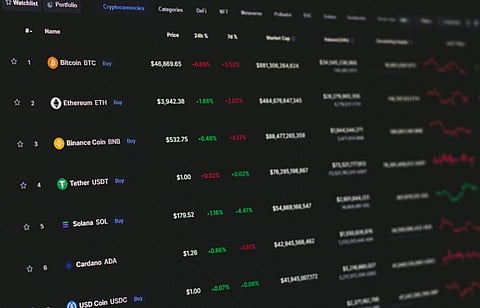
That’s why your portfolio should include digital assets from various industries. If you want to protect your investments against volatility and optimize your returns, you need to remember stablecoins, such as the USD Coin, which is considered a low-risk asset. Medium-risk cryptocurrencies include altcoins, such as any other coin that is not Bitcoin, which are part of emerging projects, so they’re most of the time bringing new money inflows to the market.
You can introduce high-risk cryptocurrencies to your portfolio, insofar as it allows you. Generally speaking, if we’re talking about a portfolio that’s primarily made of stocks, bonds and other instruments, your crypto investments should be around 1% up to 5% if your risk levels are stable, and you can double it up to 10% as an aggressive investor.
So, you can get an idea of how much you should invest solely in high-risk cryptocurrencies, known as meme coins, NFTs, and utility tokens that lack usage in the way Bitcoin or Ethereum do. These investments are successful in bringing profits only when their prices spike due to support from online communities or influencers.
Luckily for investors and traders, cryptocurrencies are part of an ever-growing industry of decentralization and paving the way towards Web3. So, besides using these coins as investments, look for industries within the decentralized ecosystem that have huge potential to bridge the future world. DeFi (decentralized finance) is one of the most promising domains that’s set to change the traditional finance industry, so early investments in DeFi instruments might be a good idea.
Investing in blockchains, like Ethereum and Solana, is a good idea, as they are two of the leading ledgers that contribute to making applications and smart contracts available. You may also look into blockchain games, like Axie Infinity, and AI-based tokens that further extend the AI investments.
Between investments in Bitcoin and popular blockchains, market trends are changing and turning different kinds of technologies and commodities into tradeable instruments through the power of tokenization. This is how you can trade land on the blockchain, and, most recently, oil commodities to sustain your portfolio from rising oil prices.
However, when it comes to these trends, they rarely last for too long, and their value is best when you take advantage of them on the spot, when they’re still at their peak. This was the case of artificial intelligence assets on the blockchain, and in the real world, where following the craze of investments, things settled down.
Ideally, you’re building your safe portfolio; you can invest in riskier assets from time to time only if you’re sure your losses are minimized. This happened, for example, with meme coins for a while, when they entered the stage of social media popularity and experienced price surges in a matter of hours.
The last secret to portfolio diversification is to rebalance its assets every now and then and reevaluate its efficiency. This is more suitable for long-term investments, which, even if they don’t yield that much profit when compared to trading, are much safer and more stable. But when you’ve invested in an asset for years, and its value is slowly decreasing, it may be time to choose another more lucrative asset.
It’s best not to stray away from the main purpose of portfolio diversification, which is to spread exposure to risks and reduce the impact of a market collapse on your portfolio, so you can comfortably readjust the strategy. As long as you don’t concentrate the portfolio’s outcome in only one asset, whether it’s Bitcoin or Ethereum, you can rest assured that losses are not significant.
While diversification is approachable and easy to understand, the risk of over-diversification is real and can make it even more difficult to keep track of your portfolio instruments. This applies especially if you have more assets in the same sector, so for example if you invest only in stablecoins.
But the most dangerous move you can make is to diversify your portfolio according to someone else’s risk profile if you’re doing copy trading. No matter your level as an investor, whether as a beginner or intermediate, your risk level and management requirements will differ at all times, so matching this small yet important detail to the asset classes you choose is more important than you’d think.
Portfolio diversification in 2026 and beyond is getting more complicated. Markets are moving faster and in different directions due to geopolitics and changing economies, and you must be as fast to gauge these movements and make adjustments on the go. This means allocating assets over different sectors but avoiding over-diversification, as well as introducing high-risk assets when the portfolio allows it.
Inspired by what you read?
Get more stories like this—plus exclusive guides and resident recommendations—delivered to your inbox. Subscribe to our exclusive newsletter
The products and experiences featured on RESIDENT™ are independently selected by our editorial team. We may receive compensation from retailers and partners when readers engage with or make purchases through certain links.