
- Locations
- Interviews
- Luxury Home
- Luxury Lifestyle
- Luxury Travel
- Luxury News
- Events
- More
- Magazine

Transporting products across long distances presents big shipping challenges for modern businesses. Every package goes through extreme physical stress as sorting centres process millions of boxes daily. Items shift violently inside dark truck trailers while travelling over bumpy and uneven highways.
Without proper protection, fragile merchandise easily breaks before reaching the final buyer. These broken packages force distributors to issue expensive refunds and handle angry customer complaints. In this blog, you will learn how warehouse consumables protect your goods in modern shipping.
Constructing a strong shipping carton begins with sourcing components from a trusted packaging supply store. Cheap cardboard boxes collapse when heavier crates get stacked on top inside delivery trucks. Acquiring industrial-grade cartons establishes a rigid outer layer that resists immense crushing forces.
In addition, a carton might look perfect outside while the internal contents are completely crushed. Eliminating space inside the box is necessary for comprehensive fragile cargo protection. Numerous reliable warehouse teams use dense filler materials to hold objects entirely still within the shipping box.
Shipping networks expose vulnerable freight to wild temperature swings and sudden heavy rainstorms. Leaving standard cardboard on a damp loading dock weakens its structural strength very rapidly. Take note that moisture enters unsealed seams, transforming rigid boxes into soggy and totally useless paper.
Industrial distribution hubs utilise specialised barriers to block aggressive weather conditions. Moisture-resistant plastic liners form an invisible waterproof shield around sensitive corporate inventory. This way, it prevents water damage from ruining expensive electronics or spoiling dry organic goods.
Choosing the best transit armour requires understanding the unique weaknesses of your products. Distinct shapes and weights demand highly cushioned strategies to survive the long journey. So using the exact same wrapping technique for everything leads to massive unnecessary material waste. Also, equipping your packing stations with diverse options empowers staff to pack intelligently and safely:
Air-filled cushions: Trapped plastic bubbles provide lightweight and bouncy insulation against sudden drop impacts
Reinforced tapes: Strong polymer adhesives lock carton flaps tightly to resist high bursting pressure effectively
Rigid edge guards: Hardened cardboard angles reinforce structural corners against heavy side collisions
Thick paper rolls: Crumpled dense paper tightly fills awkward empty spaces inside irregular outbound shipping boxes
Stacking loose boxes onto wooden pallets speeds up the loading process for heavy commercial vehicles. However, an improperly secured pallet acts like a dangerous and shifting tower of loose blocks. A sudden forklift stop will send unsecured merchandise crashing onto the hard concrete floor. Keep in mind that preventing load shifts requires binding the entire structure into a single solid movable unit.
Applying heavy-duty wrapping materials stops the tall box from bending under extreme transit pressure:
Elastic stretch films: Plastic wraps squeeze stacked tiers tightly inward to create absolute structural strength
Strong plastic straps: High-tensile bands bolt heavy industrial components directly to the wooden base securely
Textured friction mats: Rough separator sheets prevent smooth cartons from sliding horizontally during sharp highway turns
Heavy top covers: Plastic caps defend the top layer from dusty warehouse ceilings and sudden rain
Having a messy packing station creates massive delays during peak holiday shipping seasons. Searching for the correct size of bubble wrap wastes precious working minutes every single hour. This means that arranging supplies properly allows staff to process outgoing orders with lightning speed.
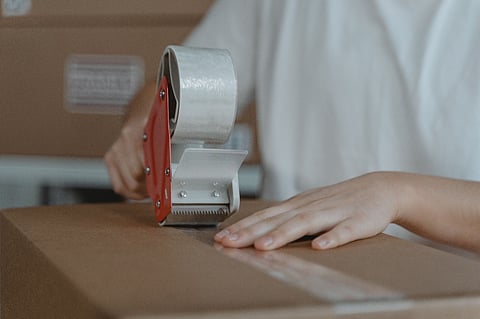
Additionally, overhead dispensers keep giant rolls of wrap accessible without cluttering valuable table space. Custom-built workstations put heavy-duty tape guns directly within an immediate arm's reach. With this deliberate physical organisation, it reduces worker fatigue and increases daily output.
Protecting valuable cargo directly influences annual profit margins and positive corporate reputation. Utilising flimsy shipping materials guarantees high damage rates and permanently lost future revenue. Premium packing resources defend inventory against the harshest global transit environments. Ensure to invest in commercial-grade protective materials to eliminate transit breakage from the ledger.
Inspired by what you read?
Get more stories like this—plus exclusive guides and resident recommendations—delivered to your inbox. Subscribe to our exclusive newsletter
The products and experiences featured on RESIDENT™ are independently selected by our editorial team. We may receive compensation from retailers and partners when readers engage with or make purchases through certain links.