
- Locations
- Interviews
- Luxury Home
- Luxury Lifestyle
- Luxury Travel
- Luxury News
- Events
- More
- Magazine

Disclosure: After this article was written, Community Digital Technologies engaged the author for contract work. RESIDENT received no compensation for this article.
At a Glance
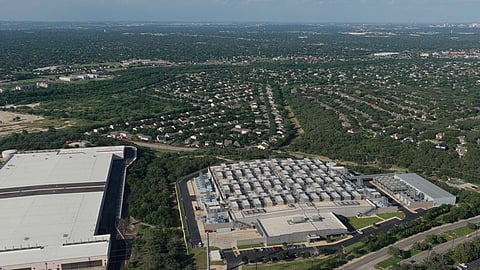
A proposed data center can bring hundreds of millions of dollars in investment to a community and still leave the people living closest to it wondering what they will receive. The developer may promise tax revenue, construction jobs or improvements to public facilities. Residents see a different ledger: potential noise, heavier demand on the electric grid, industrial buildings near homes and uncertainty about property values. For entrepreneur Janine Yorio, that mismatch is a business problem waiting for a new kind of deal.
Yorio, founder and CEO of Community Digital Technologies, wants residents to negotiate for direct economic benefits when data centers move into their neighborhoods. Her company's proposed arrangements could include utility bill credits, recurring payments or opportunities for shared ownership. The approach challenges a familiar development practice in which local governments negotiate community benefits on behalf of a municipality, leaving individual households with little direct say in the financial terms.
The pressure on developers is measurable. An October 2026 analysis by Heatmap Pro estimated that at least $260 billion in proposed data center investment had been canceled amid local opposition during 2026. The analysis also identified roughly $1 trillion in proposed investment encountering meaningful resistance. Those estimates reflect the researcher's project tracking and should not be read as proof that opposition was the sole cause of every cancellation. They do suggest that developers cannot treat neighborhood objections as an afterthought.
Electricity demand helps explain the tension. The International Energy Agency's Energy and AI research estimates that data centers consumed about 415 terawatt-hours worldwide in 2024 and projects approximately 945 terawatt-hours by 2030. Lawrence Berkeley National Laboratory estimates that U.S. data centers accounted for about 4.7% of national electricity use in 2024 and could reach 9.5% to 15.3% by 2030. Those are projections, not guaranteed outcomes, but they put the scale of proposed development into perspective.
Yorio knows the economics of large projects. Her biography credits her with more than 25 years across real estate investment, private equity and technology, including oversight of more than $2 billion in complex real estate transactions. She previously headed acquisitions at The Standard Hotels and co-founded Compound, a property investment technology business acquired by Republic in 2020.
Her premise is straightforward: people who bear the local consequences of AI infrastructure should have a chance to participate in its financial upside. Speaking with the author, Yorio put the distinction plainly: “People have figured out that tax revenue is not the same as money in their pocket.” A county can collect substantial revenue from a data center, but that does not necessarily compensate a homeowner living beside its cooling equipment or new transmission infrastructure.
Community Digital Technologies is trying to make those residents identifiable as a negotiating group. According to its company backgrounder, a household signs up at no charge and verifies its identity and address. Eligible residents receive a Community Credential, and the platform groups households according to proximity to a data center. The company then seeks benefits from developers or other industry participants and would administer them if the parties reach an agreement. Membership does not depend on whether a resident supports or opposes construction.
The company reports more than 11,500 people signed up and 240 neighborhoods active on its platform. Those are company-reported participation figures, not evidence that households have already received payments. The backgrounder explicitly says benefits are not guaranteed. That distinction is central to evaluating the venture: it has described a mechanism for organizing and negotiating, but the economic results will depend on actual agreements and their terms.
People have figured out that tax revenue is not the same as money in their pocket.
Janine Yorio, Founder and CEO, Community Digital Technologies
Yorio argues that conventional community benefits agreements can miss the households most directly affected. She points to Loudoun County, Virginia, where data center taxes support public finances, as an example of substantial municipal benefits that are different from direct payments to neighboring families. The two forms of benefit need not compete. A city could still negotiate infrastructure improvements while nearby households separately seek compensation for localized impacts.
There are complications. Developers would need a defensible way to determine which households qualify, how proximity affects payments and whether benefits continue if a property changes hands. Ownership interests introduce securities, valuation and liquidity questions. Residents might also disagree about whether any payment can justify a proposed site. A financial offer cannot replace environmental review, land-use controls or grid planning, and no developer should assume that compensation purchases consent.
Community Digital Technologies says it takes no position on whether a particular project should be built. That decision remains with residents and the established public process. Yorio's wager is that the debate can become more productive when communities have a credible way to negotiate economic terms alongside their environmental and planning concerns.
For developers confronting expensive delays, that possibility deserves attention. For homeowners, the test is simpler: whether an agreement delivers real, enforceable value to the people living with the project.
Entrepreneur Leadership Network member Merilee Kern, MBA, is a highly regarded brand strategist and analyst who reports on cultural shifts, trends, and notable industry leaders across both B2C and B2B sectors. Her work covers a broad range of categories, including field experts, thought leaders, brands, products, services, destinations, and events. As Founder, Executive Editor, and Producer of The Luxe List International News Syndicate, Merilee is a respected marketplace voice whose work reaches millions worldwide through broadcast TV (including her own shows and numerous others on which she appears) as well as a variety of print and online publications. Connect with her at www.TheLuxeList.com / Instagram www.Instagram.com/MerileeKern / Twitter www.Twitter.com/MerileeKern / Facebook www.Facebook.com/MerileeKernOfficial / LinkedIN www.LinkedIn.com/in/MerileeKern.
Some or all of the accommodations(s), experience(s), item(s) and/or service(s) detailed above may have been provided or arranged at no cost to accommodate if this is review editorial, but all opinions expressed are entirely those of Merilee Kern and have not been influenced in any way.
Inspired by what you read?
Get more stories like this—plus exclusive guides and resident recommendations—delivered to your inbox. Subscribe to our exclusive newsletter
The products and experiences featured on RESIDENT™ are independently selected by our editorial team. We may receive compensation from retailers and partners when readers engage with or make purchases through certain links.