
- Locations
- Interviews
- Luxury Home
- Luxury Lifestyle
- Luxury Travel
- Luxury News
- Events
- More
- Magazine

If 2025 signaled the end of blank-slate minimalism, then 2026 marks the moment luxury interiors step confidently into a new era. After years of pared-back spaces defined by restraint, the pendulum is swinging toward homes that feel expressive, tactile, and intimately connected to the people who live in them. Across designer forecasts, industry reports, and the broader design conversation, the same message appears again and again, luxury is becoming more personal, more sensory, and more rooted in comfort.
This shift isn’t a rejection of minimalism nor an embrace of maximalism for its own sake. Instead, it’s an evolution toward spaces with depth and character, where materials are chosen not just for appearance but for longevity, atmosphere, and emotion. The most influential trends for 2026 share a common thread, they prioritize how a home feels, not just how it photographs.
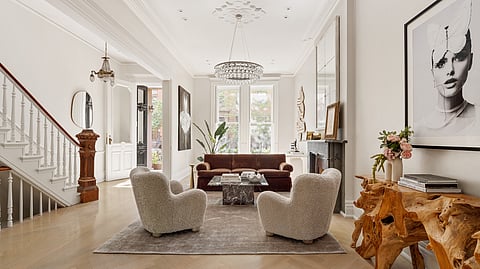
Minimalism is still very much alive, but it looks different in 2026. Stark edges and clinical spaces are giving way to a softer approach that keeps the clarity of minimalism while allowing room for warmth and personality. Designers are leaning into creamy, comforting neutrals rather than crisp whites, and natural light is often softened through linen. Furniture takes on sculptural, organic silhouettes rather than rigid geometric lines.
Consider incorporating a sculptural ceramic vase or a boucle accent chair to introduce softness without disrupting the room’s clarity.
The result is a version of minimalism that feels soft rather than rigid. Homes are styled to look collected, not installed, with meaningful pieces layered seamlessly into otherwise streamlined rooms. A vintage chair next to a modern sofa, handmade ceramics displayed for their texture, or a bookshelf that feels used rather than staged, these quiet gestures create a sense of intimacy that defines the new luxury aesthetic. What emerges is a balance of serenity and soul, a direction almost every major design forecast points toward.
One of the clearest shifts for 2026 is the return of color, but in a way that feels grounded rather than ostentatious. Designers and trend reports consistently highlight blue as the defining hue of the year, though not the breezy coastal blues that once dominated. Instead, the palette leans toward nuanced blue-greens like Patina Blue and softened mineral tones that feel aged, atmospheric, and timeless. These shades bring unexpected depth to entryways, powder rooms, and cabinetry while remaining sophisticated enough for larger living spaces.
Alongside these rich blues, neutrals are evolving as well. The cool gray-beige tones that once dominated luxury interiors have warmed into creamy off-whites, clay tones, putty shades, and soft browns. These hues wrap a room in a cocoon-like atmosphere that pairs effortlessly with natural stone, warm wood, and metallic details. In 2026, color is less about making a bold statement and more about cultivating an environment that feels calm and layered. Saturation appears in thoughtful places, a lacquered bar cabinet, a velvet bench, or a patterned floor tile that reads almost like art.
Across nearly every facet of design, texture has become essential. Luxury in 2026 is deeply tactile, driven by materials that invite touch and create a sense of comfort and authenticity. Designers are embracing washed and rumpled linens, matte stone with subtle veining, handcrafted tiles with organic variation, plaster walls that diffuse light, and rich fabrics like boucle, mohair, wool, and heavy knits.
Layering in stonewashed linen bedding or a chunky knit throw instantly adds the kind of tactile richness that defines 2026 interiors.
This shift toward tactile richness transforms the overall feeling of a space. Instead of rooms that appear polished but untouchable, 2026 favors interiors that feel relaxed and effortless, but also elevated. Bedrooms and living spaces benefit most noticeably from this approach, but the movement is also reshaping kitchens and baths.
Where glossy finishes once dominated, they’re now being replaced with warm woods, stone with character, and surfaces that age gracefully rather than resist wear. Designers often describe this as comfort expressed through materiality, and it’s one of the strongest currents defining the year ahead.
Even as minimalism softens, there’s a notable revival of influences drawn from historical design eras, particularly styles known for romance, ornament, and sculptural detail. Art Deco elements are resurfacing in subtle but impactful ways, from rounded forms and metal inlays to rich jewel tones and geometric motifs. Arches, scalloped edges, fluted millwork, and patterned stone floors are also becoming common expressions of craftsmanship.
The intent isn’t to recreate a period interior. Instead, designers are borrowing selectively, layering Deco-inspired lighting with Scandinavian cabinetry, or pairing a curved doorway with contemporary furniture. These blends create interiors with narrative, spaces that feel storied and more personal than purely utilitarian design allows. It’s an evolution that reflects a larger desire to bring heritage and craft into modern luxury homes.
As always, the kitchen remains the emotional center of the home, but its aesthetic is changing in meaningful ways. Warm tones dominate, with cabinetry often finished in cashmere, clay, taupe, or mushroom hues. For those willing to embrace color, deeper shades, particularly greens, blues, and muted oxblood, are becoming signature choices. The overall palette feels calm but expressive, a step away from the stark white kitchens of years past.
Hardware becomes minimal or seamlessly integrated, allowing the cabinetry’s forms to take priority. Stone surfaces introduce soft veining and sculptural movement without overwhelming the room, and kitchen hood designs become focal points in plaster or brushed metal.
Even small details like a marble serving board or a beautifully designed wood and ceramic serving tray can reinforce the sense of quiet luxury within the space.
Another defining shift is the growing popularity of secondary prep kitchens or sculleries, a feature increasingly sought after by homeowners who entertain. These secondary spaces keep the main kitchen pristine, allowing it to function as both a showpiece and a gathering place. Collectively, these changes reflect a broader trend toward kitchens that feel lived-in and comfortable.
Wellness continues to reshape the home, and nowhere is that more apparent than in the bathroom. What used to be a functional space is now becoming a sanctuary for restoration. Steam and rain showers, deep soaking tubs, and warm, matte metals are becoming standard features in high-end primary suites. Designers are leaning into soft stone, natural textures, and lighting that encourages calm and stillness.
A teak shower stool or plush, hotel-quality towels can transform a daily routine into something far more restorative.
For many homeowners, the bathroom is expanding into an entire wellness suite, sometimes complete with saunas, cold plunge areas, aromatherapy, and chromatherapy features. These spaces prioritize sensory balance, offering a retreat from digital noise and daily demands. They represent one of the clearest examples of how luxury is shifting away from display and toward wellbeing.
As lifestyles continue to evolve, architecture is evolving with them. Flexibility is a major consideration in 2026, with homeowners seeking spaces that can adapt to work, entertaining, and family needs over time. Rooms increasingly serve more than one purpose a home office that transforms into a guest room, a library that doubles as a workspace, or a dining room designed for both hosting and quiet daily use.
Thoughtful additions like a sculptural desk lamp or woven storage baskets help these spaces transition effortlessly between work and leisure.
Open-concept layouts are being reconsidered in favor of zones that create flow while preserving function. Mudrooms, entries, and utility spaces are receiving more design attention, often becoming some of the most thoughtful areas in a home.
Outdoor rooms styled with the same care as indoor living spaces continue to rise in popularity, reflecting the desire for environments that feel intentional and immersive. Underpinning all of these shifts is a renewed appreciation for craftsmanship and a sense of place. Homeowners want spaces rooted in local architecture and built with materials that age beautifully.
In luxury homes, technology is becoming more discreet. Rather than gadgets meant to be noticed, the most desirable features are those that blend seamlessly into the architecture. Lighting systems are increasingly designed to follow natural circadian rhythms, shifting in tone throughout the day. A Frame-style television or rotating galleries allow homeowners to display evolving collections without adding clutter. Hidden speakers, integrated panels, and smart appliances concealed within cabinetry maintain the integrity of the design.
Even indoor gardening is receiving a technological upgrade, with AI-assisted systems that support culinary herbs or ornamental greenery year-round. The overarching theme is a home that responds subtly and intuitively, rather than one that announces its innovations.
Finally, sustainability has moved from wish list to expectation. For luxury buyers, the focus has shifted firmly toward materials and craftsmanship that endure. Natural woods, eco-friendly textiles, long-lasting stone, and well-made furniture are no longer niche preferences but essential components of a refined home.
Investing in solid wood furniture or organic textiles ensures the space not only looks beautiful but ages gracefully over time.
This emphasis on sustainability aligns seamlessly with the broader return to warmth, character, and personal expression, a home meant to last is a home worth investing in thoughtfully.
The most defining shift in 2026 isn’t a single color, material, or style, it’s a mindset. The future of luxury design is personal, grounded, and emotionally intelligent. Homes are becoming places that support wellbeing, spark creativity, and offer a sense of calm that extends far beyond aesthetics.
A beautiful stone slab chosen for its veining, a handcrafted tile picked up on a trip abroad, a blue that feels like aged copper, a living room layered with textures that invite you to sit and stay a while, these are the new markers of luxurious living. The most desirable homes in 2026 aren’t perfect. They’re expressive, tactile, intimate, and deeply connected to the people who inhabit them.
Inspired by what you read?
Get more stories like this—plus exclusive guides and resident recommendations—delivered to your inbox. Subscribe to our exclusive newsletter
The products and experiences featured on RESIDENT™ are independently selected by our editorial team. We may receive compensation from retailers and partners when readers engage with or make purchases through certain links.