
- Locations
- Interviews
- Luxury Home
- Luxury Lifestyle
- Luxury Travel
- Luxury News
- Events
- More
- Magazine
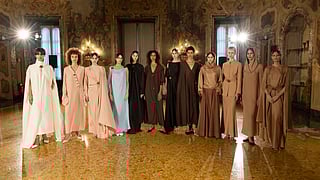

Milan Fashion Week 2025 revealed a Spring/Summer 2026 season shaped by intention. Designers leaned into emotion, memory, and material intelligence, allowing fashion to unfold at a measured pace. Across the runways, collections spoke through craftsmanship, symbolism, and thoughtful construction, pointing toward a future where luxury is felt as much as it is seen.
Narrative dressing emerged as one of the clearest throughlines of the season. Garments arrived with context, emotion, and a sense of authorship, inviting the wearer into a broader story.
Pierre-Louis Mascia’s Les Enfants du Paradis transformed the language of theater and cinema into fabric-driven storytelling. His extensive use of silk, developed through 18 original prints, created garments that carried visual memory and movement. Wide skirts with ruffles, pajama-style shirts, and flowing dresses reinforced the idea of clothing as lived experience, where print and texture communicate as clearly as silhouette.
At Blumarine, David Koma explored narrative through symbolism. Butterflies, dragonflies, and spiderweb motifs recurred throughout the collection, appearing in embroidery, appliqués, and jewelry. These elements built a visual vocabulary rooted in transformation and romantic tension, shaping a season where storytelling becomes integral to design identity.
Spring/Summer 2026 redefines tailoring through ease, motion, and adaptability. Structure remains present, yet it arrives with flexibility and lightness.
Mascia’s pairing of silk with light jersey allowed garments to move naturally, offering elegance that feels instinctive rather than imposed. Ultra-light bombers, trenches, and trompe-l’œil denim introduced practicality while preserving fluidity, creating silhouettes that adapt easily to modern lifestyles.
Philipp Plein echoed this shift through relaxed tailoring for both men and women. Lightweight suits, softly structured sets, and refined denim carried a sense of polish suited for summer settings, moving seamlessly from daytime social moments into evening environments.
Sport references appeared across Milan as a cultural signal tied to leisure, elegance, and social ritual.
Philipp Plein’s Tennis Society positioned tennis as an aspirational framework. Pastel tones, muted denim, ribboned heels, and tailored silhouettes reflected the sport’s association with refinement and tradition. Accessories such as sneakers, platforms, and structured handbags extended this language into a full lifestyle wardrobe, designed for summer destinations and polished gatherings.
Anteprima approached sport through form and texture. Polo shirts, bermudas, and mesh knits referenced utility, yet their execution felt architectural and reflective. The result was a quiet reinterpretation of athletic influence, rooted in design precision rather than performance cues.
Material intelligence and construction emerged as key markers of luxury for Spring/Summer 2026. Designers placed renewed emphasis on how garments are made and why those choices matter.
Francesca Liberatore’s Alètheia revisited heritage bedding fabrics, transforming them into structured jackets, overcoats, and modular garments. Raw-edge jerseys, cotton voiles, and jacquards contributed to a tactile experience that highlighted durability, memory, and care in construction. Her interchangeable garment elements introduced functionality as a form of creative expression.
Anteprima reinforced this focus through recycled and regenerated materials, zero-waste techniques, and sculptural knitwear. Metallic yarns, translucent voiles, and biodegradable fabrics translated sustainability into visual language, positioning responsible design as an integral part of contemporary luxury.
Cross-cultural dialogue shaped some of the season’s most resonant moments, with Milan serving as a meeting point for global perspectives.
Afraa Al-Noaimi’s Desert Rose capsule bridged Qatari heritage with Italian craftsmanship through fabric selection and silhouette. Chiffon, silk cady, muslin, and stretch hemp formed billowing capes, structured tunics, and flowing dresses, while accessories such as crystal-embellished gloves and Carrara marble details added layers of cultural symbolism. The palette, drawn from desert landscapes, reinforced a grounded sense of place and identity.
This emphasis on cultural authorship signaled a broader shift for Spring/Summer 2026, where global narratives enrich luxury fashion through authenticity and collaboration.
Spring/Summer 2026, as seen in Milan, reflects a recalibration of luxury fashion. Designers prioritized storytelling, refined construction, and cultural depth, allowing collections to unfold with clarity and purpose. The season values garments that resonate beyond the runway, offering substance through craft, emotion, and intention.
Milan’s message was measured yet confident. Fashion does not need to rush to be relevant. When design is grounded in meaning, it holds its place naturally.
Inspired by what you read?
Get more stories like this—plus exclusive guides and resident recommendations—delivered to your inbox. Subscribe to our exclusive newsletter
The products and experiences featured on RESIDENT™ are independently selected by our editorial team. We may receive compensation from retailers and partners when readers engage with or make purchases through certain links.