
- Locations
- Interviews
- Luxury Home
- Luxury Lifestyle
- Luxury Travel
- Luxury News
- Events
- More
- Magazine

A good faith exam for clinics is an important part of evaluating whether an aesthetic treatment is appropriate for an individual patient. Rather than treating a cosmetic consultation as simply a conversation about appearance, a proper medical evaluation considers the patient's health history, current medications, treatment goals, potential contraindications, and overall suitability for the proposed procedure.
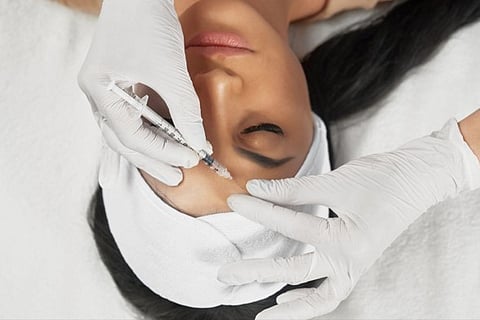
This matters because aesthetic treatments can involve prescription medications, injectable products, medical devices, and procedures that carry real risks. The U.S. Food and Drug Administration (FDA), for example, describes dermal filler injections as medical procedures and notes that serious complications, although uncommon, can include tissue death, vision abnormalities, stroke, and other injuries.
As aesthetic medicine continues to grow, responsible care begins before the injection, device treatment, or other procedure takes place. A structured evaluation allows qualified healthcare professionals to make decisions based on the patient's individual circumstances rather than cosmetic goals alone.
A Good Faith Exam, often abbreviated as GFE, is generally a medical evaluation performed by an appropriately qualified healthcare professional to determine whether a proposed treatment is medically appropriate for a patient.
The exact requirements and terminology can differ depending on the state, the provider's license, the treatment being offered, and the clinical setting. Clinics should therefore avoid assuming that one GFE process automatically satisfies requirements everywhere in the country.
A thorough evaluation may include:
Reviewing the patient's relevant medical history
Discussing current medications and supplements
Identifying allergies and previous reactions
Reviewing relevant health conditions
Assessing the patient's treatment goals
Screening for potential contraindications
Determining whether the proposed treatment is appropriate
Discussing potential benefits, risks, and alternatives
Identifying circumstances that may require additional evaluation
Documenting the clinical assessment and treatment decision
For example, a patient requesting a dermal filler treatment may focus primarily on improving facial volume. A responsible clinical evaluation should look beyond that goal and consider factors such as allergies, active skin inflammation, bleeding risks, previous filler complications, and other relevant health information.
The FDA specifically advises healthcare providers to consider patient conditions and risks before administering dermal fillers. Certain conditions, including active inflammation or infection, bleeding disorders, and some serious allergies, may affect whether treatment is appropriate.
In aesthetics, a GFE provides a clinical foundation for deciding whether a patient is an appropriate candidate for a proposed cosmetic medical treatment.
This distinction is important. A patient may want a particular procedure, but wanting a treatment does not automatically mean the treatment is medically appropriate. The role of the qualified clinician is to evaluate the patient and use professional judgment to determine whether proceeding makes sense.
Aesthetic medicine includes a wide range of treatments, making structured patient evaluation an important part of responsible care. Clinics need processes that help providers consistently evaluate the individual receiving treatment rather than focusing only on the requested procedure. A thorough assessment can support informed decision-making, appropriate treatment planning, and patient safety.
A questionnaire can collect useful information, but responsible evaluation should not necessarily stop when a patient checks a few boxes.
A clinician may need to clarify answers, ask follow-up questions, review medications, or determine whether a patient's medical history creates a concern for the proposed treatment. The purpose is to identify information that could affect clinical decision-making.
For example, a patient seeking an injectable treatment may report a history of significant allergic reactions. That information could warrant further discussion before treatment proceeds. Similarly, an active skin infection or inflammation near an intended treatment area may be a reason to postpone certain procedures.
The FDA recommends delaying dermal filler injections when relevant skin inflammation or infection is present and advises providers to understand both the product and the patient's individual risk factors.
A GFE should also give the patient an opportunity to explain what they hope to accomplish.
This conversation can help the provider determine whether the requested procedure is appropriate and whether the patient's expectations are realistic. In some cases, the most responsible decision may be to modify the treatment plan, recommend another option, postpone treatment, or decline to proceed.
That is an important part of patient-centered aesthetic medicine. Responsible care is not simply about finding a procedure that matches a patient's request. It is about determining whether the proposed treatment makes clinical sense for that particular person.
There is no single nationwide answer to whether an RN can perform a Good Faith Exam.
Whether an RN can independently perform a medical evaluation for aesthetic treatment depends on the applicable state law, the nurse's scope of practice, the clinical setting, the treatment involved, and the level of physician or other authorized practitioner oversight required in that jurisdiction.
Clinics should therefore avoid using a generic nationwide policy for this question. A process that may be permitted in one state may not be permitted in another.
This is particularly important for practices operating across multiple states or using good faith exam telemedicine models. Before implementing a GFE workflow, a clinic should verify the requirements applicable to its location and the credentials and scope of the healthcare professional conducting the evaluation.
Telehealth can make clinical consultations more accessible, but it does not automatically remove state-specific requirements. Clinics using telemedicine should consider issues such as provider licensure, patient location, prescribing rules, documentation, technology, privacy, and applicable standards of care.
For this reason, good faith exam nationwide should be approached as a framework that requires state-by-state verification rather than a single uniform legal standard.
A telehealth good faith exam may be useful in settings where a qualified healthcare professional can appropriately evaluate a patient remotely.
Depending on the treatment and applicable rules, a telemedicine assessment may involve reviewing medical history, discussing medications and allergies, evaluating treatment goals, identifying potential contraindications, and determining whether an in-person assessment is necessary.
However, not every aesthetic treatment can be appropriately evaluated through a remote encounter. Some procedures may require physical examination, visualization, palpation, or other information that cannot be adequately obtained through a video consultation.
A responsible telemedicine workflow should therefore include a process for identifying when an in-person assessment is necessary.
The goal is not to make every consultation virtual. The goal is to use telehealth when it supports appropriate clinical evaluation without compromising the quality of the assessment.
A Good Faith Exam is more useful when the clinical reasoning behind the treatment decision is documented.
Appropriate documentation can help establish what information was reviewed, what concerns were considered, what treatment was discussed, and why the provider determined that the proposed treatment was or was not appropriate.
Depending on the practice and applicable requirements, documentation may include:
Patient history and relevant health information
Medication and allergy review
Treatment goals and concerns
Relevant examination findings
Contraindication screening
Clinical assessment
Treatment recommendations
Risks, benefits, and alternatives discussed
Patient questions and responses
Informed consent
Follow-up recommendations
Good documentation does not replace sound clinical judgment. Instead, it creates a clear record of the evaluation and decision-making process.
Clinics developing or reviewing their GFE procedures should consider how the exam and documentation process fits into the practice’s broader clinical workflow. A consistent approach can help support organized patient care, clearer communication, and appropriate treatment decisions.
A responsible GFE process should be viewed as part of a larger patient-care system rather than an isolated form or administrative step.
Key considerations include:
Individual assessment: Every patient should be evaluated according to their own health history and circumstances.
Clinical judgment: A patient's request for a procedure does not automatically establish medical appropriateness.
Risk awareness: Providers should identify relevant contraindications and potential complications before treatment.
Documentation: Clinical decisions should be documented appropriately.
Medical oversight: Clinics should establish roles and responsibilities that comply with applicable laws and professional standards.
Patient communication: Patients should understand the proposed treatment, expected benefits, risks, alternatives, and relevant limitations.
Ongoing review: A GFE should not be treated as a permanent approval for every future treatment.
Clinics reviewing their current approach can begin with a few practical steps:
Identify applicable requirements. Review the laws and professional rules governing the clinic, providers, telemedicine, and specific aesthetic treatments.
Standardize the intake process. Collect relevant medical history, medications, allergies, previous procedures, and treatment goals.
Build clinical screening into the workflow. Make sure potentially important findings are reviewed by the appropriate qualified professional.
Document clinical reasoning. Record the assessment and the basis for the treatment decision.
Establish escalation procedures. Create a clear process for situations requiring additional evaluation, specialist input, or an in-person examination.
Review telehealth limitations. Determine which consultations can reasonably be conducted remotely and when an in-person evaluation is needed.
Keep the process current. Laws, professional guidance, products, and clinical practices can change over time.
A Good Faith Exam is an important part of responsible aesthetic care, but it is not a guarantee that complications will never occur.
Even when a patient is appropriately evaluated, medical procedures can involve risks. A GFE also cannot replace appropriate injector training, product knowledge, emergency preparedness, informed consent, infection-control practices, appropriate follow-up, or compliance with applicable laws.
For example, the FDA notes that dermal fillers can cause common effects such as swelling and bruising while rare complications can include vascular injury, vision abnormalities, stroke, and tissue necrosis.
The broader lesson is that patient evaluation is one component of a larger clinical safety system.
A Good Faith Exam places the patient's individual circumstances at the center of aesthetic decision-making. It allows qualified healthcare professionals to review relevant health information, identify potential concerns, discuss treatment options, and determine whether proceeding is appropriate.
For clinics, the value of a well-designed GFE process extends beyond documentation. It can help create a more consistent approach to patient assessment, support communication between patients and providers, and reinforce the principle that aesthetic treatments are medical decisions when they involve medical procedures or prescription products.
Ultimately, responsible aesthetic care is not defined simply by whether a patient receives the treatment they requested. It begins with a more important question: Is this treatment appropriate for this patient, at this time, based on the information available?
Inspired by what you read?
Get more stories like this—plus exclusive guides and resident recommendations—delivered to your inbox. Subscribe to our exclusive newsletter
The products and experiences featured on RESIDENT™ are independently selected by our editorial team. We may receive compensation from retailers and partners when readers engage with or make purchases through certain links.