
- Locations
- Interviews
- Luxury Home
- Luxury Lifestyle
- Luxury Travel
- Luxury News
- Events
- More
- Magazine

Between morning school drop-offs, late-afternoon soccer practices, and takeout eaten straight from the carton on busy weeknights, modern family life rarely slows down. Yet even in the middle of that rush, the world inside a typical household can feel remarkably connected. Cousins live an ocean away, neighbors trade recipes from different corners of the globe, and grandparents appear on a tablet screen over Sunday morning coffee.
For many parents, helping children engage with that wider world starts with language—not as another box to check on a school application, but as a living part of home life.
Often, the most meaningful moments have nothing to do with test scores. A seven-year-old greeting her grandfather in his native language during a video call, or asking a family friend about the name of a traditional dish, can make the value of learning another language suddenly feel very real. Language turns distant places into personal connections.
For years, conversations around raising bilingual children have included promises of improved concentration, stronger memory, and exceptional cognitive abilities. When researchers examined the evidence more closely, however, the picture became far more nuanced.
A 2020 systematic review and meta-analysis published in Psychological Bulletin examined research on bilingualism and executive functioning in children. The findings offered little evidence of a broad cognitive advantage across abilities such as working memory and attention, although some differences appeared in task-switching performance. The researchers also identified publication bias that may have inflated some reported benefits.
For parents, that finding can be liberating. Taking the pressure off unrealistic brain-training promises allows families to focus on what learning another language can genuinely offer: human connection.
A child who feels comfortable communicating in two languages has another way to listen, ask questions, and understand different perspectives. Whether chatting with a new classmate, participating in family traditions, or visiting relatives abroad, those additional communication skills can open doors that academic scores alone cannot measure.
Memorizing isolated words is one thing; understanding the stories and humor behind another language is something else entirely. Through language, children encounter familiar greetings, childhood jokes, and everyday expressions that carry warmth across generations.
Asking a grandparent about their first day of school—or discovering the story behind a family recipe—can create connections that go beyond simply translating words.
Mandarin Chinese is one example of how language can connect children to both family heritage and wider communities. Spoken across mainland China, Singapore, and Taiwan, as well as in Chinese-speaking communities throughout the United States and elsewhere, Mandarin provides opportunities to explore different traditions and contemporary cultures.
At home, that connection rarely begins with grammar rules. It might happen while folding dumplings before Lunar New Year, sharing mooncakes during the Mid-Autumn Festival, or retelling a favorite folktale at bedtime.
When a child recognizes the Mandarin words for flour, ginger, or the full moon while taking part in a family activity, vocabulary becomes more than something memorized from flashcards. It becomes part of a shared experience.
For some families, this means preserving a heritage language. For others, it means introducing children to unfamiliar traditions and perspectives. Either way, the value lies in making language meaningful beyond the classroom.
Even in supportive households, parents may notice a familiar hurdle: many young learners understand far more than they feel comfortable saying aloud.
A child might follow a Mandarin picture book or animated story, yet hesitate when someone asks a simple question at dinner.
Understanding a language and expressing ideas aloud require different skills. Speaking involves retrieving vocabulary, organizing thoughts, and responding in real time. In a tonal language like Mandarin, children may also feel self-conscious about pronunciation because changes in tone can affect a word's meaning.
Regular, low-pressure conversation can help children become more comfortable with these challenges.
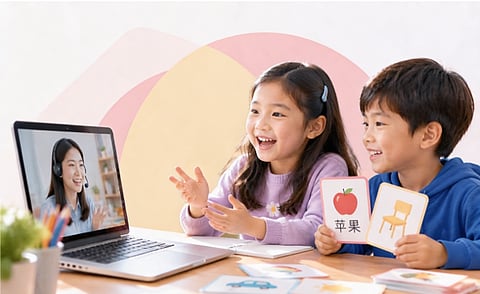
When families want consistent speaking opportunities beyond what they can provide at home, live sessions built around guided storytelling, role-play, and real-time encouragement can help a child learn to speak Chinese in a setting that feels like a conversation rather than an exam.
A patient instructor can model pronunciation, respond to a child's ideas, and encourage another attempt without making every mistake feel like a failure.
With regular practice, children may begin showing progress in small but meaningful ways:
Tuning into sounds: A child might notice that mā means "mother" while mǎ means "horse." Discovering how tones change meaning can become a playful opportunity to listen and experiment with pronunciation.
Building everyday phrases: Familiar words gradually become short requests, greetings, and questions, from asking for an apple to wishing a grandparent goodnight.
Sharing small stories: With gentle prompting, a child may begin describing a playground game, a birthday party, or a favorite bedtime book, even if the story contains plenty of enthusiastic "and then" moments.
Voicing real opinions: As confidence develops, children may become more willing to explain why they prefer one game over another or share what they enjoyed about a family outing.
These are examples rather than fixed developmental stages. Every child's progress depends on factors such as previous exposure, opportunities to practice, and individual learning needs.
The important change is not simply knowing more words. It is becoming more comfortable using those words to communicate something personal.
Building speaking habits does not necessarily require carving out another hour in an already packed schedule. Some of the most sustainable opportunities arise during activities families already enjoy.
Walking home from school, parents might invite children to share a few sentences about the best part of their afternoon. While preparing dinner, they can name ingredients, describe flavors, or discuss the story behind a family recipe.
On a rainy Saturday, the living room can become a neighborhood café. A child plays the waiter, taking orders and answering questions, while a parent becomes the hungry customer. Switching roles encourages children to use familiar expressions in different ways.
Songs, picture books, and shared storytelling offer additional opportunities to hear natural language patterns. Looking through old family photographs can also prompt children to ask questions about people, places, and memories.
The key is keeping expectations realistic.
A beginner might contribute a single word or short phrase, while a more experienced learner may be ready to tell a complete story. Children also need room to experiment without feeling that every conversation is being assessed.
When mistakes happen, parents can let children finish their thoughts before gently modeling a more natural expression. Encouraging communication first helps preserve the enjoyment of the exchange.
Ten minutes over breakfast, a song in the car, or a brief bedtime conversation may seem small. Together, these moments can help make another language feel like a familiar part of everyday life rather than an additional homework assignment.
Every family's starting point looks different. Some households have fluent speakers around the dinner table, while others are learning alongside their children. What works well for one child may not suit another.
The most useful support depends on a child's existing skills, interests, and confidence.
When comparing language-learning programs, parents can start with a few practical questions. Does the child have opportunities to speak independently rather than simply repeat after a recording? Does the teacher respond to the child's ideas and provide constructive pronunciation feedback? Are activities adapted to the learner's age and language ability?
A complete beginner may benefit from structured instruction in sounds, vocabulary, and basic sentence patterns. A child who already understands Mandarin but rarely speaks it may need more opportunities for guided conversation rather than additional vocabulary drills.
Interactive lessons can help children connect what they know with what they want to say. Storytelling, role-play, and discussions about familiar experiences make room for individual responses instead of relying entirely on memorized answers.
Parents should also look beyond the number of completed lessons when evaluating progress. A child who begins asking spontaneous questions, offering longer answers, or speaking more willingly with relatives may be developing valuable communication skills even when improvement is difficult to capture in a test score.
Structured instruction and family interaction do not need to compete. Ideally, they reinforce each other, with lessons providing guidance and everyday experiences giving children reasons to use what they learn.
Raising globally minded children does not require constant international travel or an elaborate educational plan. Sometimes, it begins with a conversation at home.
A child who can greet a grandparent, understand a family tradition, or share a story in another language gains an additional way to participate in the lives of people who matter to them.
Bilingualism does not automatically make children smarter or more culturally aware. But when language learning grows through genuine relationships, curiosity, and meaningful interaction, it can help them become more comfortable communicating across differences.
For families, that may be the most lasting reward: not simply raising children who know another language, but helping them find more ways to connect with the world around them.
Inspired by what you read?
Get more stories like this—plus exclusive guides and resident recommendations—delivered to your inbox. Subscribe to our exclusive newsletter
The products and experiences featured on RESIDENT™ are independently selected by our editorial team. We may receive compensation from retailers and partners when readers engage with or make purchases through certain links.