
- Locations
- Interviews
- Luxury Home
- Luxury Lifestyle
- Luxury Travel
- Luxury News
- Events
- More
- Magazine

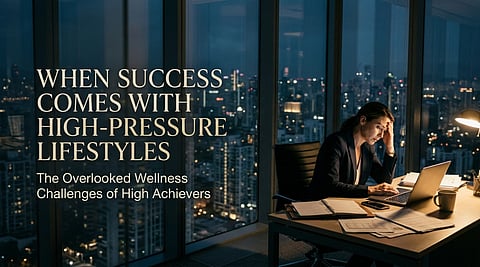
Success can often mask some very unhealthy habits. Ask yourself: when was the last time you had an evening off without checking your emails, thinking about tomorrow's deadlines, or feeling that you should be doing something more productive?
For many high achievers, switching off is often harder than getting things done. And that can have consequences that go well beyond occasional tiredness.
A 2026 study published in BJPsych Open found that 30.8% of full-time workers met the criteria for higher-risk alcohol use, yet fewer than one in ten identified themselves as heavy drinkers. Work-related stress was one of the contributing factors, of course.
It’s incredibly easy for an unhealthy coping mechanism to slip into an otherwise successful professional routine. A drink after work or at a business dinner might seem like an ordinary part of the routine, but what happens when alcohol becomes your most reliable way to manage pressure or stress? And what about the other costs of a lifestyle that leaves little time for sleep, exercise, or genuine recovery?
High achievement usually comes with a schedule that leaves very little room for genuine downtime. You might finish a demanding workday only to attend a networking dinner, catch a late flight, respond to messages from another time zone, or prepare for an early meeting the following morning.
The problem is that your body doesn't differentiate between a demanding work deadline and an obligation you voluntarily add to your calendar. Both require energy, and neither gives you much opportunity to recover.
Over time, chronic stress can contribute to exhaustion, irritability, difficulty concentrating, and poor sleep. The World Health Organization describes burnout in terms of energy depletion, increased mental distance from work, and reduced professional effectiveness. So, no, it's not simply feeling tired after a busy week.
There's also a less obvious but potentially harmful consequence: you may become so accustomed to operating under pressure that you stop recognizing how much it's affecting you. A good first step is to protect at least two evenings a week from work-related commitments, even if that means declining invitations that might otherwise seem professionally valuable.
For some high achievers, alcohol gradually, almost insidiously, becomes part of the professional routine. A glass or two of wine after a difficult day, drinks with clients, or cocktails during frequent business trips can all seem innocent in isolation.
The problem arises when drinking becomes your primary way to manage uncomfortable emotions. Instead of addressing work-related anxiety or finding time to decompress, you start relying on alcohol to switch off.
A few practical changes can help you recognize what's happening:
Track the reason: Note whether you drink because you enjoy a particular occasion, feel socially obligated, or need relief from stress.
Create an alternative after-work ritual: A gym session, a walk, a proper meal, or 20 minutes without screens can help you separate work from personal time.
Set expectations before business events: Decide whether you'll drink beforehand rather than making that decision after several rounds of client conversations.
Of course, these adjustments aren't a substitute for professional help if drinking has become difficult to control. However, they can help reveal whether alcohol has taken on a role in your routine that you never consciously intended.
One reason alcohol-related problems can remain hidden among successful professionals is that outward performance doesn't always reflect what's happening privately. You may continue to meet targets, manage employees, and maintain relationships while drinking more frequently than you intended.
Pay attention if you regularly promise yourself you'll cut back but struggle to follow through, need increasingly large amounts to achieve the same effect, or feel anxious in situations where alcohol isn't available. Drinking despite its negative effects on your sleep, mood, health, or relationships is another reason to seek an assessment. These are recognized warning signs of alcohol use disorder, not personal failures or evidence of weak character.
If changing your drinking habits feels harder than expected, professional support is worth considering. Private alcohol treatments now include online, physician-led care that can fit around demanding schedules. For example, Choose Your Horizon offers physician assessments, medication when clinically appropriate, coaching, and ongoing progress monitoring.
Treatment plans can also accommodate different goals, whether you want to reduce your drinking or stop altogether. The appropriate option depends on your health, drinking history, and a clinician's assessment.
Importantly, if you drink heavily or regularly, don't abruptly stop without medical advice. Alcohol withdrawal can be dangerous and sometimes requires supervised medical care.
You don't need to abandon an ambitious career or turn down every invitation to improve your well-being. Not at all. What you do need is a more realistic approach to managing your energy.
Start with your calendar. Schedule exercise, regular meals, adequate sleep, and time away from work with the same consideration you'd give an important business meeting. That's a great start, and it covers the most essential aspects of well-being.
It's also worth scheduling routine health checkups rather than waiting for something to interfere with your performance. Alcohol consumption, blood pressure, sleep quality, and stress levels deserve attention even when you feel perfectly capable of handling your responsibilities.
Ultimately, professional success should give you more freedom to enjoy your life, not leave you too exhausted to do so. Don't treat taking your health seriously as a distraction from your ambitions because it's not; in reality, it's what allows you to sustain them.
Inspired by what you read?
Get more stories like this—plus exclusive guides and resident recommendations—delivered to your inbox. Subscribe to our exclusive newsletter
The products and experiences featured on RESIDENT™ are independently selected by our editorial team. We may receive compensation from retailers and partners when readers engage with or make purchases through certain links.