
- Locations
- Interviews
- Luxury Home
- Luxury Lifestyle
- Luxury Travel
- Luxury News
- Events
- More
- Magazine

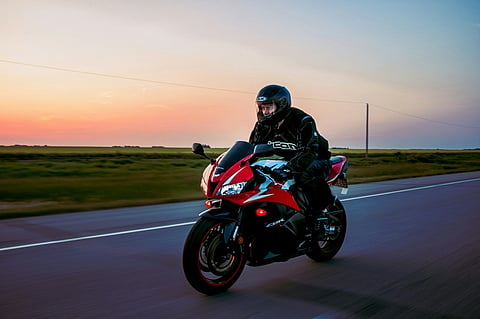
Few rides in the Southeast reward a motorcyclist the way the foothills of the Blue Ridge do. Sweeping curves, long views across the Piedmont and cool mountain air make a late-autumn day on two wheels hard to turn down. The same terrain that makes the ride memorable also produces tight corners, loose gravel, damp leaves and sudden changes in elevation. A little preparation before the trip, plus a clear picture of how insurance works afterward, separates a good story from a long recovery.
Shaded corners and north-facing slopes hold frost and moisture long after open pavement has dried.
South Carolina requires helmets and eye protection only for riders under 21, though riders of any age may choose to wear them.
State minimum liability limits of $25,000 per person and $50,000 per accident are low next to the cost of a serious motorcycle injury.
Injured riders generally have three years to file a claim, and a rider found more than 50 percent at fault is barred from recovery.
Riders weighing what a claim involves after a crash can find a reference page by Elliott Frazier Injury Law, LLC that covers motorcycle accident cases in the Greenville area. That kind of background reading is simpler before a trip rather than after one. The ride itself begins with the road, and the foothills give riders plenty to study.
The Cherokee Foothills Scenic Highway, which follows SC 11 across the northern edge of the Upstate, mixes long open sweepers with short blind crests and farm-road intersections. Traffic is a blend of locals heading to work, delivery trucks and weekend sightseers who slow without warning to look at an orchard or a view. Motorcyclists tend to be most exposed at those intersections, where a driver pulling out of a side road scans for cars and misses a single headlight.
Granted, a rider cannot control what other drivers notice, but position, speed and spacing are all in the rider's hands. Staying out of the blind spots of vehicles ahead, covering the brake when approaching a driveway and leaving more following distance than a car would need all reduce exposure. Experienced touring riders also treat every parked truck at a roadside stand as a possible pull-out waiting to happen.
he Blue Ridge Parkway, which many Upstate riders reach in a couple of hours, carries an established speed limit of 45 miles per hour in most places, according to the National Park Service. Speed alone is rarely the problem on that road. The trouble tends to come from curves that tighten with little warning, deer at dusk and gravel washed onto the pavement after a rainstorm.
Look closer and the hazards of cold-weather riding stand apart from the summer ones. Shaded switchbacks hold frost long after the sun reaches the open stretches, wet leaves collect in the apex of a turn, and sections of mountain roads may close when ice sets in. Tires also lose temperature with the air, so grip during the first few miles is lower than most riders expect.
Gear matters here as well. South Carolina requires a helmet only for riders under 21, along with eye protection, but the law sets a floor rather than a recommendation. Many seasoned riders wear a full-face helmet, an armored jacket, gloves and boots regardless of age, partly because foothills crashes so often injure the head, the hands and the legs.
Fuel, food and daylight deserve planning as well. Short December days mean that a ride which starts at noon may finish after dark, when deer move and reflective surfaces ice over, and cell service in the hollows between ridges is spotty. Riders who share a route and an expected return time with someone at home give emergency responders a place to start looking if something goes wrong.
Group touring adds its own complications. A staggered formation works on open road, while in tight curves each rider needs a single lane position and room to adjust. Riders who drop out of the group to pull over do better at a marked pullout than on a blind shoulder where the next bike has no time to react.
The first minutes after a collision decide how much of the story can be reconstructed later. Calling 911, even when injuries seem minor, creates a record and brings medical help. Adrenaline hides pain, and a rider who feels fine at the roadside may be diagnosed with a fractured wrist or a concussion the next morning.
Photographs help more than most people expect. The position of the bike, skid marks, the road surface, the other vehicle and any debris tell a story that fades within hours. Names and phone numbers of witnesses matter too, particularly on rural stretches where nobody else is around for miles.
Riders comparing options for legal help in the region often search for greenville south carolina personal injury attorney to see how local practices describe injury claims in the Upstate. Whoever a rider eventually speaks with, the advice about the insurance adjuster is consistent: give the facts, avoid guessing about speed or fault, and decline to give a recorded statement until the injuries are understood. Gathering that information while the details are still fresh also makes later conversations with doctors and insurers much easier.
Insurance is the part of the trip most riders think about least. South Carolina requires vehicle owners to carry liability coverage of $25,000 per person for bodily injury, $50,000 per accident and $25,000 for property damage, along with uninsured motorist coverage at matching limits, according to the state Department of Insurance. Those numbers exist to protect other people on the road, and they run out quickly after a serious motorcycle injury, where surgery, rehabilitation and lost income add up fast.
Underinsured motorist coverage works differently. Insurers must offer it, but the owner is not required to buy it, so a rider who declines may face a gap when the at-fault driver carries only the minimum. Reading the declarations page before a long weekend, and asking an agent what the policy includes for medical payments and uninsured protection, takes ten minutes and can matter for years.
Fault is the other piece. South Carolina follows a modified comparative negligence rule, which means a rider who is more than 50 percent at fault cannot recover, while a rider with a smaller share has damages reduced by that share. Insurers know this, and they frequently argue that a motorcyclist was speeding or riding too close, even when a driver turned across the rider's path. Day to day, much of a claim comes down to that dispute over percentages.
Time limits also apply. Personal injury claims in South Carolina generally must be filed within three years, and a wrongful death action has to be brought by the executor or administrator of the estate. Evidence such as traffic camera footage and phone records is often gone well before that deadline arrives.
No. State law requires a helmet and eye protection only for riders under 21, although many insurers and doctors still point to helmets as the single most effective protection against head injury. Riders who skip a helmet should also expect insurers to raise the issue if a head injury is part of a claim.
Personal injury claims in South Carolina are generally subject to a three-year limit, though exceptions exist and some claims against government entities follow different rules. A rider who is unsure which limit applies should confirm the date of the crash and the type of defendant before assuming any deadline. Asking sooner rather than later removes most of the guesswork.
Yes, as long as the rider is not more than 50 percent responsible. The recovery is reduced by the rider's percentage of fault. A rider who is 30 percent responsible, for example, would see the award cut by 30 percent.
A good ride in the foothills usually comes down to ordinary habits repeated mile after mile: reading the road, dressing for the fall, and knowing what the policy in the glove box actually says. The scenery will still be there next weekend, and so will the road, which is a good reason to arrive back home in one piece. Riders who treat the ride as one trip among many tend to make calmer choices.
Inspired by what you read?
Get more stories like this—plus exclusive guides and resident recommendations—delivered to your inbox. Subscribe to our exclusive newsletter
The products and experiences featured on RESIDENT™ are independently selected by our editorial team. We may receive compensation from retailers and partners when readers engage with or make purchases through certain links.