
- Locations
- Interviews
- Luxury Home
- Luxury Lifestyle
- Luxury Travel
- Luxury News
- Events
- More
- Magazine

Say you've finally found the lot. Maybe it's a tired 1950s ranch a few blocks from the water, or a gap between two bungalows where a house used to stand, and you're already standing on the sidewalk arguing with yourself about paint colors for a porch that doesn't exist yet. Then the practical question sneaks up on you: who do you trust to build the thing?
Pinellas County makes that harder than it sounds. Nearly every neighborhood is built out, the flood maps matter, and the weather has opinions. Pull up a chair.
Say a couple, Mike and Jen, has the lot and a napkin sketch with a coffee ring on it. What they need is a guide from napkin to house keys: somebody to shape the plans, pull permits, run the construction and then stick around when the warranty questions come. Some builders do all of it themselves. Others hand pieces to outside firms, which isn't automatically bad, but Mike and Jen should know which kind they're hiring, because it decides who picks up when the garage door acts up in month three.
People swap these terms all the time. A general contractor builds from a finished set of plans, and plenty of them are terrific at it. A custom home builder usually takes on more, including the design stage that comes before anybody pours a slab.
If you already have an architect and drawings in hand, a general contractor can be a fine fit. If all you've got is a lot and a long wish list, a builder with design in-house spares you a ridiculous amount of juggling. Be honest about which one you are.
Skip the brochure and ask real questions. Who's my one point of contact once construction starts? Is it one team for design, permitting and building, or are pieces farmed out? Can I walk a finished home in a neighborhood like mine? How often will you update me? What happens if something needs attention after move-in? Watch how easily the answers come, because hesitation tells you plenty.
And check the license before you sign. Florida has a license search portal for contractors, and you'll be done in about two minutes.
St. Petersburg is a waterfront city, and the city doesn't pretend otherwise. Its flooding page describes a stormwater floodplain, meaning areas with a 1% or greater chance of flooding in any given year from heavy rain, and a lot of those areas sit outside the FEMA floodplains altogether. A lot can carry real risk even when the federal map looks calm. Funny how that works.
So a good builder brings up your exact address early. FEMA's flood insurance program also describes an elevation certificate, which shows how high a building sits compared with expected floodwaters, and that can matter in a high-risk zone. Ask whether your builder handles these documents every week, and who arranges the survey if you need one. Then ask how the current Florida Building Code applies to your lot, and expect a real explanation rather than a shrug.
The details shift, but the stretches stay the same. First, planning: a meeting, a look at your lot, a talk about budget and timeline. Then the plans get drawn, reviewed and reworked until you're happy, pricing is finalized, a contract is signed and permitting begins. After that comes the fun bit, selections, where you pick finishes, followed by construction itself, a walkthrough and the warranty period.
Timelines depend on plan complexity, permitting and site conditions, so side-eye anybody who promises a date before seeing your lot. Mike and Jen would rather hear a plain "we'll set the schedule when you sign, and you'll get updates until the final walkthrough." That's the better sign.
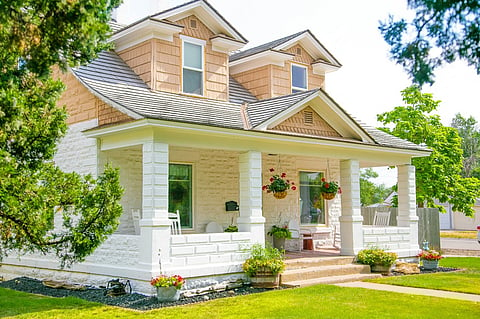
Local knowledge counts for a lot here. St. Pete's older streets have their own personality, Craftsman porches, low bungalow rooflines, and a new house looks best when it respects the block around it. Most people in this city would rather see a new home blend in than shout.
Want to see what that looks like? A St. Petersburg builder with in-house design is a decent place to start. Canopy Builders says on its site that it has built more than 300 homes in the city, with design, permitting, construction and warranty all handled by its own team. Browse the finished homes, read what past clients wrote, and ask yourself whether the style matches the house in your head.
So Mike and Jen book two meetings, minimum. They walk a finished home. They show up with the lot address, a rough budget and an honest timeline, and they notice which builder asks questions and which one just pitches. When the right team makes the whole thing feel manageable, that porch gets a lot closer to real.
Inspired by what you read?
Get more stories like this—plus exclusive guides and resident recommendations—delivered to your inbox. Subscribe to our exclusive newsletter
The products and experiences featured on RESIDENT™ are independently selected by our editorial team. We may receive compensation from retailers and partners when readers engage with or make purchases through certain links.