
- Locations
- Interviews
- Luxury Home
- Luxury Lifestyle
- Luxury Travel
- Luxury News
- Events
- More
- Magazine

In today’s global world, many parents hope their children will grow up informed and tolerant of cultures worldwide. Learning about countries, languages, and customs can foster curiosity and open-mindedness, and it can better equip children to interact with people from different backgrounds.
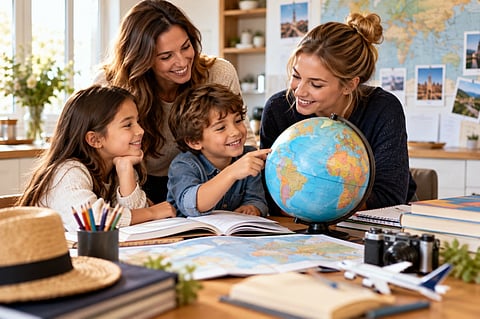
Internationalizing children's perspective doesn't necessarily mean going abroad, sending them to international schools, or paying for costly programs and courses. Children can learn so much about cultural differences from the people they meet and the things they do at home.
There are many ways to explore the wider world from the comfort of your own home. You can cook meals from around the world, learn a few words in a language to communicate with native speakers, learn about cultural events in countries across the globe, and even make friends with children from different backgrounds. Children see cultural diversity as normal when parents naturally incorporate these experiences into family life.
Young children learn about the world around them in concrete terms. Their experiences and perceptions of different cultures, languages, and ways of life form their basic understanding of what is normal and different.
Children can easily ask questions about things they have not seen before and form opinions as they grow up in a household with various cultures around them.
A parent's approach matters in how children see different cultures. They need to remember that every family has its own way of doing things, including traditions and values. This doesn't have to be different from how the parent normally interacts with children and explains cultural differences.
It does not have to be complicated. Talking about how children in other countries celebrate birthdays, what they eat for breakfast, and how they spend their weekends can be informative and help children understand the world better.
Introducing other cultures to children is easier than you think. Reading books and watching documentaries about cultures around the world is a great place to start. But nothing compares to meeting someone from another culture face to face.
Some families introduce these experiences through international cultural exchange programs. For example, organizations such as Culture Care connect American families with au pairs from different countries, creating opportunities for children to learn about other cultures through everyday interactions.
The international au pair shares recipes from their homeland and everyday expressions with the host family's children. He/she explains how certain holidays are celebrated in his/her country of origin and how other traditions are observed. The children can then incorporate these activities into their daily routine of fun learning.
Additionally, children can gain a lot by simply hearing a song in a foreign language while getting ready for school or by listening to stories about childhood in other parts of the world over dinner. They will soon realize that just as cultures have different customs, they also share similar interests and experiences.
Children can learn a language without realizing it; they need exposure to an unfamiliar language, words, and expressions in everyday situations.
Parents can teach children simple phrases, like greetings, or help them count in other languages. Songs and children’s books can also help spark interest in other languages. Even hanging up posters with simple words in different languages can spark interest.
It’s fine to know just a few words in another language. Kids are naturally curious about other languages and can quickly start asking more questions.
By not putting excessive pressure on your child to become fluent, they'll enjoy understanding different languages. They will be encouraged to keep learning more about the cultures of different countries as they grow up.
One of the easiest ways to learn about cultures from your own home is by exploring the food they make. These meals and their recipes often include foods and preparation methods your child may have never seen before.
By preparing and eating meals from that country, a family can learn a lot about a country and its culture, including why certain foods are prepared for special occasions and for daily meals.
There are many other ways to explore cultures beyond food. Many families read stories, listen to music, and learn how people around the world celebrate different holidays and events.
Children can choose which aspects of a culture they want to learn about. Children can ask and answer questions about cultures that their family is studying. This makes a big part of the learning process fun.
Your community also offers many international experiences you can share with your child. These can include museum exhibitions, cultural festivals, community events, and even international markets where you can buy and taste foods from around the world.
Museums, cultural events, festivals, community celebrations, and international food markets are just a few ways children can experience different cultures.
By encouraging friendships between children of different backgrounds and learning about your own culture, your children will better understand the cultures around them.
Children also learn that cultural diversity isn't limited to faraway countries; many other cultures exist in their local community, too.
You don't need a plan to raise globally minded children. All you need is to give them opportunities to develop their natural curiosity, talk with them about places and cultures, and build good relationships with people from around the world.
Children also learn from how their parents react to unfamiliar traditions and cultures. Children notice and want to replicate real interest and openness to perspectives different from their own.
Whether through friendships with children from other countries, conversations and interest in a foreign language, or cultural activities, children learn through their experiences with other people.
It’s about the people and experiences children have in life from different countries, not how many countries they visit.
Inspired by what you read?
Get more stories like this—plus exclusive guides and resident recommendations—delivered to your inbox. Subscribe to our exclusive newsletter
The products and experiences featured on RESIDENT™ are independently selected by our editorial team. We may receive compensation from retailers and partners when readers engage with or make purchases through certain links.