
- Locations
- Interviews
- Luxury Home
- Luxury Lifestyle
- Luxury Travel
- Luxury News
- Events
- More
- Magazine

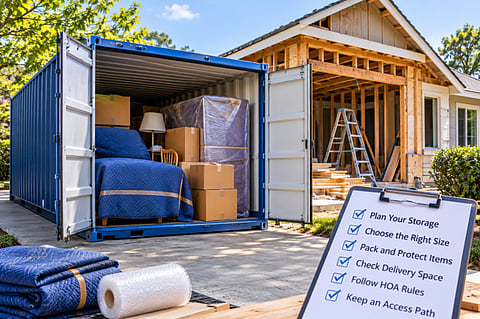
Renovation work rarely stays in one room. Dust drifts through doorways, tools take over hallways, and furniture gets moved again and again. A lockable container on the driveway protects belongings and keeps them within reach.
Plan before demolition. Size, access, packing, ventilation, and loading order matter.
Furniture left indoors faces dust, paint, falling materials, and impact. Covers protect surfaces but do not give workers room to carry lumber or equipment. Small valuables are also harder to control when several trades enter the property.
A monthly storage container rental provides lockable space without trips to a distant facility and can be extended if the project runs long. Midstate Containers offers 10-, 20-, and 40-foot rentals in California, subject to inventory. Listed units include double cargo doors and a lock box.
Both options can keep belongings away from construction, but they change the homeowner’s routine in different ways.
On-site storage helps when schedules change or another room must be cleared. Off-site storage may be better when delivery is unsafe, local rules prohibit the unit, or the driveway must stay open.
Room count is only a starting point. Furniture volume, appliances, boxes, and aisle space matter more. Measure bulky pieces and decide what will remain indoors.
This guide is not a loading guarantee. Furniture shape and access space reduce capacity. If the inventory falls between sizes, an item list and photos can support a better recommendation.
Delivery normally uses a gooseneck tilt-bed truck. The company states that 10- and 20-foot units need about 80 feet of straight clearance; a 40-foot unit needs about 120 feet. Overhead clearance can reach 16 feet while tilted.
A large unit may hold everything but still be impossible to unload on a short driveway.
Clean and dry every item. Damp cushions or a refrigerator closed after defrosting introduce moisture. Remove food, liquids, flammables, and prohibited goods.
Use materials that protect without trapping unnecessary moisture:
moving blankets for wood furniture and finished surfaces;
breathable furniture covers for upholstered pieces;
sturdy boxes of consistent sizes for stable stacking;
mattress bags and corner protectors for vulnerable edges;
pallets or suitable supports to keep items off the floor when appropriate.
Stretch wrap can hold drawers and pads in place, but sealing damp furniture traps moisture. Consider the climate and storage period.
A wall-to-wall load wastes time when a needed box is at the far end. Keep an aisle if anything may be retrieved during renovation.
Load the unit in this order:
Place heavy, durable items near the front wall and distribute weight across the floor.
Stand suitable furniture securely and protect contact points from rubbing.
Put dense boxes low and lighter boxes above them without overloading stacks.
Keep frequently needed belongings close to the doors or beside a clear aisle.
Photograph the finished layout and note where labeled boxes are stored.
Do not lean unstable stacks against the doors. Leave room to operate the locking gear safely.
A weather-resistant container keeps out external conditions, but contents can release moisture. Air furniture, avoid loading in rain, use suitable moisture absorbers, and check a long-term load periodically.
Artwork, electronics, instruments, photographs, and documents may need climate control. A dry container cannot provide controlled temperature and humidity.
Placement must be flat, firm, and clear of branches, lines, overhangs, and vehicles. It must also preserve drainage and emergency access.
Before booking delivery, complete this renovation storage check:
ask the city or county whether a temporary-use permit is required;
review HOA rules and obtain written approval when applicable;
measure the driveway, turns, gates, and overhead clearance;
confirm that the surface can support the truck and loaded container;
choose the door direction and exact placement point;
reserve space for contractors, waste bins, and material deliveries.
Rules vary by address. Resolve them before dispatch to prevent failed delivery or removal.
Midstate Containers offers flexible terms across California. Confirm inventory, monthly price, delivery, and pickup for the ZIP code.
For a quote, describe the timeline, size, driveway surface, access limits, and placement. Send photos of narrow routes or overhead obstacles. Good site and packing plans turn the unit into a practical part of the remodel.