
- Locations
- Interviews
- Luxury Home
- Luxury Lifestyle
- Luxury Travel
- Luxury News
- Events
- More
- Magazine

When discussing luxurious houses, many people first think about outstanding architecture and amazing finishing. However, luxurious houses today have little to do with outstanding exterior appearance. Their owners want them to be comfortable, provide a constant temperature and clean air and, finally, not need constant intervention. Thus, this article will consider the aspects of luxurious house construction and design. In particular, its focus will be placed on indoor air quality, energy efficiency of climate control and other technologies.
Most sophisticated homes are the ones that perform rather than those that have impressive architectural style or luxurious decorations. They maintain stable temperature and air quality and do not require too much effort to operate because there were specific design decisions made in advance. Thus, this section of the paper will describe what design decisions help create a comfortable home in terms of energy efficiency and maintenance costs.
Both passive and active solutions are important to ensure comfort in a luxurious home. In the process of creating such a house, it is necessary to pay attention to insulation, glass, building orientation and other factors. Moreover, it is vital to choose the correct ventilation systems to provide clean air. Passive measures may be complemented by installing energy-efficient heat pumps or other heating systems to minimise expenses. In general, all of them should be combined in order to provide a comfortable microclimate for the owner of a luxurious home.
It is known that good indoor air quality influences human health, concentration and ability to sleep. Poor ventilation leads to accumulation of pollutants that affect the health of people and decrease air quality over time. This topic was examined by the US Environmental Protection Agency (EPA). According to it, dust mites, mould and other factors are recognised as causes of asthma. Moreover, pollutants that affect people's health are identified to include radon, tobacco smoke and volatile compounds.
These and other factors are considered to be potential health threats. They accumulate in the room and cause certain symptoms, and this phenomenon has been researched extensively and thoroughly. Thus, air quality has a great impact on a person's wellbeing. For this reason, a luxurious house should have a good ventilation design, proper filters, humidifiers/dehumidifiers and low-VOC paints and finishes. All these features have to be considered during the planning and designing of such a house.
Over the last few decades, air conditioning and heating technology have advanced significantly. Today, homeowners can choose from highly efficient residential heat pumps & air conditioners designed to maintain comfortable indoor temperatures in modern homes. Unlike traditional heating systems that generate heat directly, heat pumps transfer thermal energy from one place to another. In winter, they extract heat from outdoor air and move it indoors, while in summer, they remove heat from inside the home and release it outdoors.
According to the U.S. Department of Energy, properly installed air-source heat pumps can deliver up to two to four times more heat energy than the electrical energy they consume. Their efficiency depends on factors such as climate conditions, system type, insulation, and installation quality. Because heat pumps transfer heat instead of creating it through combustion or electric resistance, they can help reduce energy consumption while improving indoor comfort. Modern climate control options range from window air conditioners and ductless mini-split systems to fully ducted central heating and cooling systems.
Material selection is an integral part of luxurious home design. However, in most cases, the owners think only about the aesthetics of materials rather than their functionality. Nevertheless, there are some materials that are better to avoid in luxurious homes due to toxic components. Such materials are likely to emit VOCs and increase air pollution. Thus, luxury homes should be made of premium materials, including responsibly sourced wood, natural stones and non-toxic finishes and paints.
Of course, luxury homes are characterised by unique interior design and unusual materials. Thus, luxury designers should be careful while selecting materials to create an amazing interior and make sure that the chosen material will serve long-term and provide a healthy microclimate inside the room. This way, the choice of materials will contribute to the creation of a comfortable home. Moreover, nowadays, there are many materials that satisfy both aesthetic and functional criteria without compromising one.
In addition to materials, luxurious homes usually have advanced climate control systems, automated shades, ventilation and energy monitoring. This means that all of these systems function independently of each other and respond to the current situation to minimise power consumption and provide a comfortable microclimate. In this way, smart systems contribute to better energy efficiency and a better microclimate in a luxurious home.
There is enough research on zoned climate control systems. As a result, it becomes clear that zoned systems may decrease expenses by providing conditioned air only where and when it is needed. At the same time, such savings depend on climate, house size and layout and the way they interact with the chosen system. Thus, zoning allows minimising expenses and increasing comfort for inhabitants.
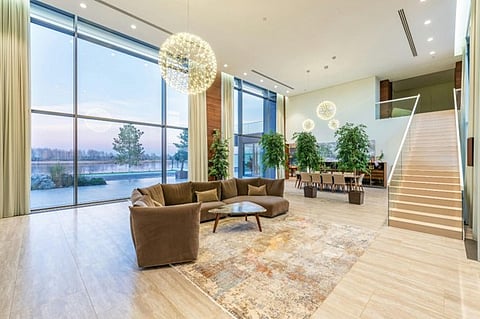
One of the most interesting trends in contemporary luxurious housing is the biophilic approach to design. 'Biophilia' means the inclusion of living plants, natural materials, exposure to natural light and access to the outside world into a luxurious home. Numerous research studies have proved that this strategy has positive effects on human wellbeing. Firstly, natural lighting positively impacts people's circadian rhythms and, consequently, promotes restful sleep and good mood.
Secondly, the presence of natural elements helps people relax and reduces anxiety and other symptoms of stress. Green roofs and vertical gardens, natural stone elements, wooden finishing and others have a positive effect on the health of residents. At the same time, they allow for creating an interesting interior design and decorating walls with plants. Thus, this solution can be used in contemporary luxurious housing.
The standards of luxury housing have changed in the last decades. Although the size and finishes are still important, comfort is the major indicator that makes a home luxurious. Today we are talking about clean air, stable temperature and healthy materials. Thus, designers have to consider all aspects while developing a project and making decisions during its implementation.
Inspired by what you read?
Get more stories like this—plus exclusive guides and resident recommendations—delivered to your inbox. Subscribe to our exclusive newsletter
The products and experiences featured on RESIDENT™ are independently selected by our editorial team. We may receive compensation from retailers and partners when readers engage with or make purchases through certain links.