
- Locations
- Interviews
- Luxury Home
- Luxury Lifestyle
- Luxury Travel
- Luxury News
- Events
- More
- Magazine

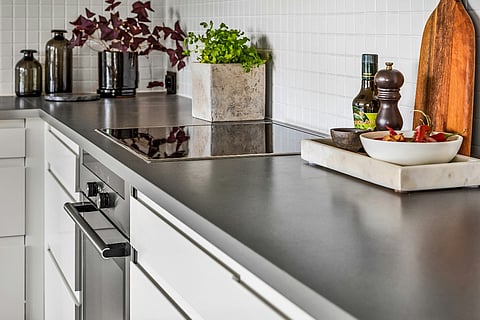
Countertop edge profiles are the shaped finishes applied to the edges of stone countertops. They define how the edge looks and feels, from simple straight lines to soft rounded or highly decorative curves. The edge profile affects safety, durability, cleaning, and the overall design style of your kitchen.
Choosing the right edge is just as important as selecting the stone itself, especially for materials like granite countertops where fabrication quality directly impacts both appearance and performance.
Countertop edge profiles are the finished shapes applied to the outer edges of materials like granite, quartz, and marble. Fabricators cut and polish these edges into specific styles using specialized machinery.
Common edge profiles include:
Straight or eased edge
Bullnose (fully rounded)
Half-bullnose
Beveled edge
Ogee edge (decorative S-curve)
Waterfall or laminated edge
Each profile changes how the edge interacts with light, how safe it feels to touch, and how easy it is to maintain over time.
Edge profiles influence both function and aesthetics. A kitchen countertop is not just a work surface—it is also a visual focal point.
Here is why edge selection matters:
Design consistency: A modern kitchen usually pairs better with clean edges like eased or beveled styles
Safety: Rounded edges reduce sharp corners, which is useful in homes with children
Durability: Some edges are more resistant to chipping, especially in dense stones like granite
Visual impact: Decorative edges like ogee create a premium, traditional look
In many kitchen remodels, homeowners focus on stone color first, but professionals know the edge profile can completely change the final result.
For example, high-quality fabrication and installation of granite countertops plays a key role in achieving clean edge detailing that enhances both durability and design precision.
Different edge styles suit different design goals.
Hard stones like granite allow precise shaping without losing strength, making them ideal for multiple edge styles.
Choosing the right edge depends on style, safety, and maintenance.
Modern kitchens work well with eased or beveled edges. Traditional spaces suit ogee or bullnose profiles. Luxury kitchens often use mitered edges for a bold appearance.
Rounded edges are better for homes with children because they reduce injury risk.
Simple edges are easier to clean. Complex profiles may require more detailed wiping.
Granite and quartz support a wide variety of edge profiles due to their strength and density.
Edge profiles influence long-term performance.
Sharp edges (eased, beveled): More likely to chip under impact
Rounded edges (bullnose): Better resistance to wear and impact
Decorative edges (ogee): Require more detailed cleaning
According to the Natural Stone Institute, proper fabrication and finishing improve stone durability and reduce structural weakness at edges.
Pricing depends on complexity.
Eased edge: Usually standard
Beveled or bullnose: Slight additional cost
Ogee edge: Premium pricing due to craftsmanship
Mitered edge: Highest cost due to fabrication complexity
Stone type also affects cost because granite requires more cutting and polishing time.
Many homeowners make avoidable mistakes:
Choosing style over function
Ignoring cleaning difficulty
Not matching edge with cabinet design
Overusing decorative edges in small kitchens
Forgetting safety needs
A balanced design always performs better long term.
Edge profiles affect how light reflects and how finished the kitchen appears.
Soft edges create a smooth and continuous look
Sharp edges emphasize structure
Decorative edges add luxury detail
Even with the same stone, edge choice can completely change the kitchen’s visual style.
Modern renovation decisions are also influenced by deeper financial strategies used in real estate investment. For example, tax planning approaches such as a cost segregation study explained show how property improvements and asset components can be analyzed to improve cash flow and long-term return on investment.
These broader financial considerations highlight how even design details—like countertop edges—can indirectly contribute to perceived home value and long-term resale appeal. Kitchen upgrades remain one of the most consistently cited improvements that influence buyer decisions and return on investment.
Countertop edge profiles play an important role in kitchen design, affecting style, safety, and durability. The right choice ensures your countertop fits your space both visually and functionally.
When combined with quality materials like granite countertops, proper edge fabrication helps create a long-lasting and well-finished kitchen surface.
Inspired by what you read?
Get more stories like this—plus exclusive guides and resident recommendations—delivered to your inbox. Subscribe to our exclusive newsletter
The products and experiences featured on RESIDENT™ are independently selected by our editorial team. We may receive compensation from retailers and partners when readers engage with or make purchases through certain links.