
- Locations
- Interviews
- Luxury Home
- Luxury Lifestyle
- Luxury Travel
- Luxury News
- Events
- More
- Magazine

Every heating company in the Ottawa Valley has the same February story. A homeowner calls before sunrise, furnace stone dead, house dropping fast. The repair itself is usually minor. What stings is that a fall tune-up would have flagged the problem months earlier for a fraction of what the 6 a.m. rescue costs. That gap, cheap prevention against pricey panic, is the whole case for seasonal HVAC maintenance. Spend a little on two visits a year, and you sidestep the ugly surprises. Here are ten spots where the trade quietly pays for itself.
Start with cleaning vents and registers that lower your bill. A furnace choked with dust or an AC coil caked in pollen has to run longer and draw more power to reach the number you set on the wall. Leave it be, and a system sheds roughly 5% of its efficiency a year, while dirty air filters and coils can push consumption up 15% on their own. Clean it, calibrate it, and most of that comes back. Add a programmable thermostat with an overnight setback and Natural Resources Canada pegs the extra savings near 10% on heating and cooling. These figures are stacked across a year of Ontario hydro and gas.
HVAC systems usually quit during the July heat or the January deep freeze. A spring or fall visit gets out ahead of that. Replace a $50 capacitor caught showing early wear, and you never meet the $1,500 compressor failure it was about to cause. Set a $200 fall inspection beside a $3,500 furnace replacement forced by a cracked heat exchanger nobody thought to check. Same underlying fault, wildly different receipt, and the only variable is when you caught it. Our professionals have spent years AC repair booked on your own calendar always beats a call at two in the morning.
Furnace and AC usually give you a lifespan of 15 to 20 years. Run into the ground, they can tap out closer to ten. The reason is mechanical, nothing mysterious. Clean parts moving inside their designed range put less load on the motor and compressor, so wear creeps in slowly instead of arriving all at once. One fall furnace tune-up can buy back five to ten years of service life. Professionals at RB Heating Climatecare recommend tune-up for cooling systems twice a year. Two identical homes on the same street can sit a full decade apart on replacement due to cleaned HVAC components.
Homeowners ask this every spring, and maths settles it fast. A year of preventive HVAC maintenance generally costs $150 to $300. What it hands back, through lighter bills, cheaper fixes, and equipment that lasts, tends to land somewhere between $400 and $1,500. Your system wears down on a schedule whether the budget approves or not, and servicing is the one lever that slows the clock.
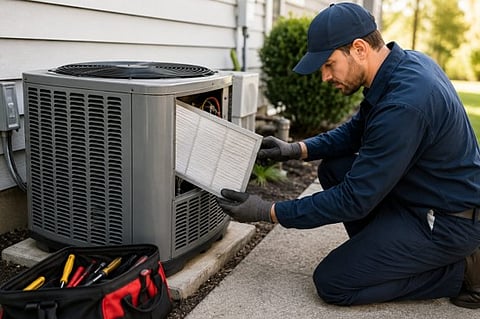
Scheduling seasonal HVAC maintenance twice a year fits most homes. Get the air conditioner looked at in spring before the first hot stretch, and the furnace in fall before you start leaning on it nightly. Running a heat pump that pulls double duty across both seasons? Book both visits without fail, since that unit barely gets a moment off.
A real HVAC maintenance checklist runs well past swapping a filter. A proper seasonal visit puts hands and eyes on the coils, the condensate drain, the thermostat calibration, the wiring, and the refrigerant charge. Every item earns its place. Refrigerant sitting 10% off the correct charge can cost you 20% in efficiency. A drain line packed with algae can send water across a finished basement floor overnight while you sleep. Ask for a written note of what got inspected and what turned up, then file it somewhere you'll find it. And stay skeptical of anyone wrapping a "full tune-up" in twenty minutes, because that isn't enough time to check any of it honestly.
Ensure HVAC professionals do these maintenance tips to make ten minutes of their visit worth it:
Eyeball the filter monthly and replace it once it greys over. Pets or allergies in the house push that to more often.
Give the outdoor unit two feet of breathing room. Cut back the shrubs, rake out the grass clippings.
Come spring, shut the power off and hose down the outdoor coil. That single chore claws back 10 to 15% of lost cooling.
Patch obvious duct leaks with foil tape or mastic. Cloth duct tape peels inside a year, so leave it in the drawer.
Nudge the thermostat back any time the house sits empty, or everyone's asleep.
Small habits on their own, but together they hold your HVAC energy efficiency steady right through the season.
Most brands want documented annual service to keep the manufacturer warranty in force. Let the visits lapse, and when a heat exchanger or compressor lets go, the maker can wave the claim off and leave you covering a part that was supposed to be on them. So hang onto every service receipt. A tune-up isn't only about how smoothly the system runs this week; it's the paper trail standing between you and a four-figure repair the warranty was written to absorb.
Everything your household breathes indoors passes through that system first. Once the filter clogs and the coils gum up, all of it gets shoved back into the rooms: pollen, pet dander, the fine grey dust that settles on every surface. Fresh filters and clean coils mean sharper indoor air quality, which hits differently when someone under your roof fights asthma or hay fever. Comfort climbs too. A tuned system holds an even temperature from the front room to the back bedroom, so nobody's pulling on a sweater in one room while another one bakes. Serviced right, it also wrings humidity out of the air the way it should, keeping that clammy August heaviness, along with the mould and dust mites that thrive in it, out of the house.
Replacing a furnace and AC together climbs well into five figures once the install is counted. Neglect is the quickest route to that bill. Starve a system of upkeep, and it gives out years ahead of schedule, almost always mid-season, with no window left to gather quotes or weigh your choices. Stay on top of the seasonal care and your current gear stays healthy long enough that you replace it on your own timeline, calmly, rather than during a crisis. When that day does come, check the current rebates before you buy. Ontario programs and Enbridge Gas incentives can pull a solid amount off a high-efficiency upgrade.
There's a safety layer sitting under all the dollar talk. Part of any fall furnace check is a close look at the heat exchanger, where a hairline crack can seep carbon monoxide into your living space long before the detector on the wall ever sounds. The inspection exists for precisely that reason. A maintenance plan folds both seasonal visits into one flat yearly figure, which takes the guesswork out of budgeting and means you're not scrambling for an available technician on a long weekend when the furnace decides that's the moment to fold.
Nobody frames the receipt from a furnace tune-up. Seasonal HVAC maintenance is an easy thing to shelve for another month, and most people do exactly that until something breaks. Even so, the ledger tilts hard one way: steadier bills, fewer sunrise disasters, more years out of the equipment, a warranty that actually holds, and cleaner air to breathe, all against the price of two appointments. Your system is going to age either way. You can pay a little along the road or a lot at the worst possible moment. If you're around the Ottawa Valley and can't recall your last tune-up, get in touch and lock one in before the next season puts you to the test.
Inspired by what you read?
Get more stories like this—plus exclusive guides and resident recommendations—delivered to your inbox. Subscribe to our exclusive newsletter
The products and experiences featured on RESIDENT™ are independently selected by our editorial team. We may receive compensation from retailers and partners when readers engage with or make purchases through certain links.