
- Locations
- Interviews
- Luxury Home
- Luxury Lifestyle
- Luxury Travel
- Luxury News
- Events
- More
- Magazine

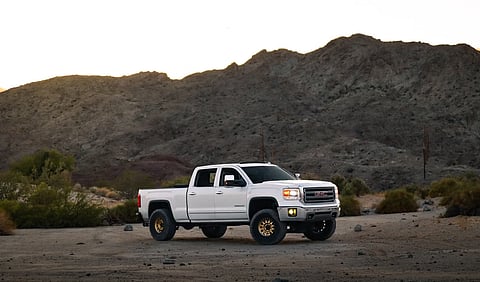
There is a particular kind of vehicle that never makes the glossy spread but is present in nearly every luxury story worth telling: the tow rig. Behind the vintage Ferrari arriving at a concours, the polo string moving between estates, the fully outfitted horse trailer bound for a private equestrian club, or the toy hauler delivering a collector's latest acquisition to a coastal garage, there is almost always a heavy-duty diesel truck doing the unglamorous work of getting something priceless from one place to another without incident.
For a certain class of owner, the truck itself has quietly become part of the collection — not for its badge, but for its capability. And capability, it turns out, is where factory engineering starts to show its limits.
A common assumption among first-time collectors is that a higher trim level solves every mechanical concern. It doesn't. Factory diesel trucks — even fully loaded Platinum, Denali, or Limited trims — are built around emissions hardware designed for ordinary commuting, not for towing a six-figure trailer across mountain terrain in August heat.
Under sustained heavy load, EGR coolers run hotter, DPF regeneration cycles fire more frequently, and the truck's real-world towing performance starts to drift from the number on the window sticker. It is one of the quieter frustrations in the world of serious collecting: the asset gets all the attention, while the vehicle transporting it is left fighting its own factory emissions system on every haul.
This is the gap that diesel specialists like SuncentAuto have built their business around. Rather than generic aftermarket parts, their catalog is engineered specifically for the Powerstroke, Cummins, and Duramax platforms that make up the majority of serious tow vehicles on American roads today.
For owners looking to address heat buildup and airflow restriction under sustained towing loads, a dpf delete kit is typically where the conversation starts — engineered for closed-course and off-road use, replacing the restrictive factory particulate filter with a straight-flow stainless design built to handle prolonged high-load operation. For owners approaching a build more comprehensively, a def delete kit bundle addresses the DPF, EGR, and related emissions hardware together, which tends to be the more efficient path for anyone planning a single, complete build rather than piecing components together over time.
It's worth being direct here: modifying or removing emissions-control equipment on a vehicle intended for public roads carries real regulatory consequences in the United States, and any build should be planned with that firmly in mind. The owners who approach this thoughtfully tend to dedicate a specific vehicle to transport and event duty, and take the time to review current federal and state guidance before altering an emissions-controlled truck — a distinction that matters as much for peace of mind as for compliance.
Speaking with people who move valuable vehicles, vessels, and livestock for a living, three priorities come up consistently:
Sustained cooling under load — a truck sitting in summer heat after a long tow needs to shed heat efficiently, not fight a clogged system.
Predictable power on grades — mountain routes with a loaded trailer are where marginal setups reveal themselves.
Season-long reliability — a truck that fails mid-transport risks far more than the cost of the repair itself.
SuncentAuto's kits are built for exactly this category of owner — not a weekend show truck, but a working vehicle expected to perform identically whether it's July in the desert or a January morning with black ice on a mountain pass. Owners currently planning a build can review the brand's current deals and coupon codes before ordering, as pricing on kit bundles shifts periodically.
None of this replaces disciplined maintenance. Regular fluid analysis, cooling system inspection, and a properly load-rated hitch and brake setup remain the foundation of any serious transport vehicle, regardless of what's been done under the hood. It is worth remembering, too, that the towing side of the equation — hitch rating, brake compliance, load distribution — deserves the same scrutiny as anything mechanical, since a build that solves one problem shouldn't quietly create another.
There is also a quieter form of value at stake. Word travels quickly among people who move serious assets for a living, and a truck known for reliably making every transport — through heat, through mountain grades, without drama — becomes a trusted part of the operation in a way that's difficult to put a price on. A collector who has once dealt with a truck stalling mid-regeneration cycle on a mountain grade, trailer in tow, rarely wants to repeat the experience — and that memory tends to shape every equipment decision that follows.
This is also why the most experienced owners treat the tow vehicle as a long-term investment rather than a one-time purchase. A build done properly, with attention to both compliance and mechanical reliability, tends to last for years of consistent service rather than needing to be revisited after every difficult haul.
For owners whose collections depend on flawless transport, the truck is rarely the subject of the story. But increasingly, it is the reason the story gets told at all.
Inspired by what you read?
Get more stories like this—plus exclusive guides and resident recommendations—delivered to your inbox. Subscribe to our exclusive newsletter
The products and experiences featured on RESIDENT™ are independently selected by our editorial team. We may receive compensation from retailers and partners when readers engage with or make purchases through certain links.