
- Locations
- Interviews
- Luxury Home
- Luxury Lifestyle
- Luxury Travel
- Luxury News
- Events
- More
- Magazine

Miami’s strongest luxury hotels are spread across South Beach, Mid-Beach, Surfside, Bal Harbour, Sunny Isles, Coconut Grove, and Key Biscayne, and each area creates a very different kind of stay.
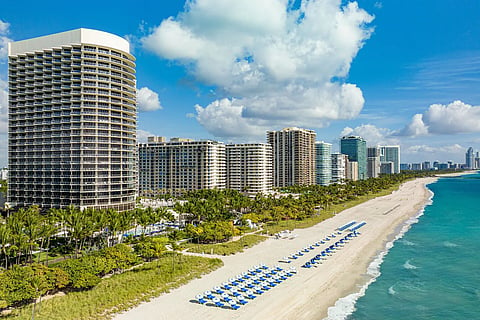
The 2026 hotel scene includes long-established standouts like Four Seasons Hotel at The Surf Club, Faena, The Setai, Acqualina, and The St. Regis Bal Harbour, along with the newly reopened Delano Miami Beach.
South Beach and Mid-Beach are best for travelers who want restaurants, nightlife, and easy access to the city, while Surfside, Bal Harbour, Sunny Isles, and Key Biscayne offer more privacy and a stronger resort feel.
This list is built around traveler fit, from art and dining at Faena to quiet luxury at The Surf Club, family-friendly resort time at Acqualina, and a more neighborhood-driven stay at Mayfair House in Coconut Grove.
Miami Beach stretches for roughly nine miles along a barrier island between Biscayne Bay and the Atlantic, but the experience changes quickly as you move north from South Beach toward Mid-Beach, Surfside, and Bal Harbour. South Beach is the part most people picture first, with Ocean Drive, the Art Deco Historic District, Lincoln Road, and a dense mix of restaurants, nightlife, galleries, and hotels packed into a relatively walkable stretch. It is also where several of the city’s most recognizable luxury properties sit, including The Setai, W South Beach, 1 Hotel South Beach, and the newly reopened Delano.
Farther north, Mid-Beach feels less compressed and more resort-driven. Collins Avenue remains the main hotel corridor, but the properties become larger and the pace noticeably quieter, with Faena Hotel Miami Beach and The Miami Beach EDITION anchoring two very different versions of modern Miami luxury. Continue north and the atmosphere shifts again. Surfside and Bal Harbour are more residential and discreet, with quieter beaches, luxury shopping, and hotels like Four Seasons Hotel at The Surf Club and The St. Regis Bal Harbour Resort that are designed as destinations in their own right. Acqualina, farther north in Sunny Isles Beach, takes that resort model even further.
What follows are ten of the best luxury hotels in Miami for 2026, from landmark South Beach properties and design-driven Mid-Beach resorts to the quieter oceanfront hotels of Surfside, Bal Harbour, and Sunny Isles Beach, each offering a very different way to experience the city.
Four Seasons Hotel at The Surf Club feels very different from most Miami Beach hotels. The original Surf Club opened in 1930 and became known for its private-club atmosphere and famous guests, and that history still gives the property a sense of place without making it feel stuck in the past. Today, the hotel pairs that legacy with a quiet oceanfront setting in Surfside, spacious rooms and suites, private cabanas, pools, and a strong emphasis on privacy and service.
I like it because it offers a calmer version of Miami. You are still close to everything, but the hotel feels removed from the energy of South Beach, with the beach, spa, Lido Restaurant, and The Champagne Bar all making it easy to spend an entire day on property. It is especially well suited to travelers who want understated luxury, excellent service, and a hotel that feels discreet.
Faena Hotel Miami Beach is for travelers who want the hotel to feel like part of the destination, not just somewhere to sleep. Set along an eight-block stretch of oceanfront in Mid-Beach, the property combines bold design with a serious focus on food, art, entertainment, and wellness. Los Fuegos by Francis Mallmann, Pao by Paul Qui, Faena Theater, nightly live music, and Tierra Santa Healing House all give the hotel a sense of energy that is hard to replicate elsewhere in Miami Beach.
There is always something happening at Faena. You can spend the morning at the beach or pool, book a treatment or yoga session, have dinner on property, and end the night with a performance or live music without ever needing to leave the hotel. It is especially well suited to travelers who care as much about atmosphere, dining, and culture as they do about the room itself.
The Setai Miami Beach stands out because it brings a much quieter, more composed feeling to South Beach. Its original Art Deco building opened in 1937 as the Dempsey-Vanderbilt hotel, and today the property blends that architectural history with Asian-inspired interiors, teak details, oceanfront suites, and a strong sense of calm. It sits directly on Collins Avenue at 20th Street, close enough to walk to shopping, restaurants, cultural venues, and nightlife, but the hotel itself feels intentionally removed from the noise.
That balance is what makes The Setai so appealing. You can spend the day in the middle of South Beach, then come back to a hotel that feels noticeably calmer and more removed from the energy outside. The restaurants Jaya, Japón, Ocean Grill are all standouts, and the property is right on the beach. It is a particularly strong choice for travelers who want the location and access of South Beach without sacrificing calm, service, or a sense of retreat.
1 Hotel South Beach feels brighter and more relaxed than many of the big luxury hotels nearby. It sits on a 600-foot stretch of beachfront and leans heavily into natural materials, open spaces, and a sustainability-first approach, with LEED Silver certification, filtered water in guest rooms, repurposed materials throughout the property, and energy-efficient systems built into the hotel. There are four pools, including the rooftop, plus Bamford Wellness Spa, Anatomy fitness, and the Seedlings kids program.
What I notice most about 1 Hotel is how many different kinds of trips it manages to suit without feeling pulled in too many directions. It works for a wellness weekend, a family stay, or a few days built around the beach, and you still have South Beach right outside when you want restaurants or nightlife. It works particularly well for travelers who want wellness and sustainability without giving up the energy, restaurants, and location that make Miami Beach fun in the first place.
Delano Miami Beach is back, and that alone makes it one of the most interesting hotels on this list in 2026. The property has reopened with light-filled rooms and suites, two feature pools, its legendary two-story poolside bungalows, new dining, and direct access to both the beach and the oceanfront boardwalk. Gigi Rigolatto has also opened its first U.S. restaurant location here, while The Source by Delano adds fitness classes and a growing wellness program.
What I like about the new Delano is that it still seems to understand why people cared about the hotel in the first place. The bungalows are back, the pool remains a focal point, and the whole property feels designed around long, unhurried days that move between the beach, the pool, and dinner without much effort. For anyone who remembers Delano as part of South Beach’s hotel history, there is also something genuinely fun about seeing what its next chapter looks like.
Acqualina feels more like a destination resort than a Miami hotel, which is a big part of why it works so well for longer stays. Set on the beach in Sunny Isles, the property has just 55 rooms and 44 suites, all with oversized floor plans and private terraces, giving it a more residential feel than many of the larger resorts farther south. There is also a 20,000-square-foot spa, several dining options including Il Mulino New York and Avra Miami, and a complimentary marine biology-inspired kids club.
Acqualina is one of the easiest places in Miami to settle into for a few days and forget about everything else. The resort gives families plenty of space and things to do, but it still feels elegant, quiet, and very grown-up. Sunny Isles also gives the stay a softer pace than South Beach, which makes long mornings by the water, spa time, and lingering over dinner feel like exactly what you came for.
The St. Regis Bal Harbour Resort has a more polished, old-school sense of luxury than many of the hotels farther south. The setting helps; it sits on the beach at the northern end of Miami Beach, with direct ocean views, large private balconies, a 14,000-square-foot spa, oceanfront day villas, and two pools. Bal Harbour Shops is just across Collins Avenue, so it is also one of the easiest hotels to pair with an afternoon of shopping.
I would stay here when I wanted Miami to feel a little more dressed up. Butler service, afternoon tea, the adults-only Tranquility Pool, and the slower pace of Bal Harbour give the hotel a real sense of occasion. It is especially good for couples, a celebratory weekend, or anyone who wants beach time and excellent service with less of the scene that comes with South Beach.
The Miami Beach EDITION has a polished but playful quality that sets it apart from some of the more formal luxury hotels nearby. It sits directly on the beach in Mid-Beach, with two ocean-facing pools, a spa, five restaurants, and rooms, suites, and bungalows designed around a clean coastal look. Some of the larger accommodations come with private terraces and plunge pools, and the hotel’s dining includes Market at EDITION and Matador Room, both developed with chef Jean-Georges Vongerichten.
One of the more unexpected parts of the hotel is its four-lane bowling alley and ice-skating rink, which sit alongside the more traditional resort offerings of the beach, pools, spa, and dining. Those additions give The Miami Beach EDITION a different energy from many of the luxury hotels nearby and make it a strong choice if you want more built into the stay than the usual pool-and-beach routine.
Mayfair House Hotel & Garden gives you a completely different version of Miami from the beach hotels on this list. Set in Coconut Grove, the property is built around lush courtyards, sculptural architecture, and a garden-filled design that feels much more residential than resort-like. No two rooms are exactly alike, and many open onto private balconies, which gives the hotel a much less standardized feel than a typical luxury property. Upstairs, the rooftop pool is a natural place to slow down for a few hours, while Mayfair Grill keeps the hotel connected to the neighborhood with an easy indoor-outdoor setting.
I would choose it when I wanted to see a greener, more neighborhood-driven side of Miami. Coconut Grove has its own dining, shopping, parks, and artistic identity, and Mayfair House feels closely tied to that setting. It is especially good for travelers who care about design and want something with personality, but who do not need to be directly on the beach.
The Ritz-Carlton Key Biscayne feels much farther from Miami than it actually is. Set on a five-mile barrier island just off the mainland, the resort sits directly on the beach and has tennis, a spa, and enough space that the pace immediately feels slower than it does in South Beach. The location is a big part of the draw; Key Biscayne feels quieter and more removed, but downtown Miami is still only minutes away.
What separates this stay from the others on the list is the sense of distance. Key Biscayne has a more residential, island-like feel, so the hotel works especially well when you want Miami in smaller doses. It is an easy choice for families, couples, or anyone who likes being close to the city without feeling surrounded by it.
Where you stay in Miami can put you in a completely different version of the city. South Beach is still the obvious choice if you want the beach, restaurants, nightlife, Art Deco architecture, and plenty within walking distance. Mid-Beach is a little more resort-focused, while Surfside and Bal Harbour are quieter and more polished, with luxury hotels that make it easy to stay close to the ocean and away from the busiest parts of Miami Beach. Farther north, Sunny Isles Beach is especially good for travelers who want a full resort stay, with properties like Acqualina built around the beach, spa, and time on property.
The mainland is a different experience altogether. Brickell and Downtown put you among high-rises, restaurants, bay views, and the city’s business and cultural core, and they make more sense if the beach is only one part of the trip. Coconut Grove is where I would look for something greener and more neighborhood-driven, with tree-lined streets, parks, restaurants, and Biscayne Bay nearby. Key Biscayne sits just offshore and feels more removed again, which works beautifully when you want a resort setting but still plan to spend time in the city. Beach stays run from South Beach through Surfside, Bal Harbour, Sunny Isles, and Key Biscayne, while Brickell and Downtown are the better fit for travelers who want an urban base.
For most travelers, the best time to visit Miami is from December through April, when the weather is warm, humidity is lower, and days are generally better suited to the beach, outdoor dining, and walking around the city. It is also peak season, so hotel rates are at their highest and popular weekends can book up quickly.
I tend to like late March and April because you still get the best parts of Miami weather without quite as much of the winter rush. May can also be a good time to find better hotel rates, although temperatures and humidity begin to climb. Summer is hotter, wetter, and often much better value, but it falls within Atlantic hurricane season, which officially runs from June 1 through November 30 and is typically most active from August through October.
South Beach gives you Art Deco architecture, restaurants, nightlife, and the ocean all within a compact stretch. Mid-Beach is more resort-driven, with larger properties and more space. Surfside and Bal Harbour feel quieter and more polished, while Coconut Grove and Key Biscayne shift the focus away from Miami Beach entirely.
The best hotel depends on which of those settings fits the trip. Faena and The Setai keep you close to the energy of Miami Beach, The Surf Club and St. Regis Bal Harbour offer more privacy, Acqualina works beautifully for a full resort stay, and Mayfair House gives you a completely different base in Coconut Grove. In a city this varied, where you stay is part of how you experience Miami.
Inspired by what you read?
Get more stories like this—plus exclusive guides and resident recommendations—delivered to your inbox. Subscribe to our exclusive newsletter
The products and experiences featured on RESIDENT™ are independently selected by our editorial team. We may receive compensation from retailers and partners when readers engage with or make purchases through certain links.