
- Locations
- Interviews
- Luxury Home
- Luxury Lifestyle
- Luxury Travel
- Luxury News
- Events
- More
- Magazine

The same is true for contractors who routinely plan plumbing service, electrical work, and HVAC repairs on business buildings. The mechanical decisions you make on the roof quietly impact how smoothly everything operates below. Commercial rooftop HVAC unit installation is one of those decisions that tends to get rushed when budgets and timelines are tight, and property managers often end up with a system that doesn't match their building's actual needs.
Bay Area commercial real estate is its own world. Mild, foggy summers in San Francisco, warmer inland heat in San Jose, salt air off the bay, the regional climate throws variables at HVAC systems that a generic buyer's guide won't address. This one tries to.
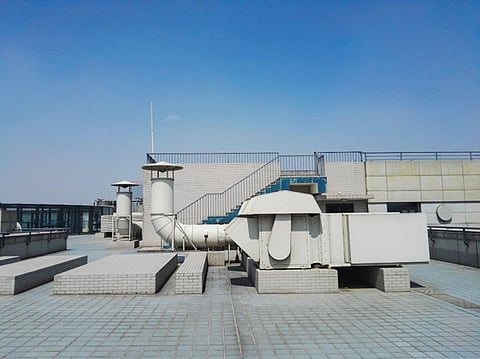
An RTU is a roof-mounted cabinet that houses the compressor, condenser, evaporator, and air handler, all of the main parts of a climate system. Conditioned air enters the occupied area below via ducting. Because everything is housed in one unit, rooftop access keeps occupants away from mechanical noise and installation is cleaner.
They're self-contained by design. That's the point. No separate indoor and outdoor components to coordinate, no refrigerant lines running through walls.
Flat commercial rooftops are everywhere in the Bay Area, older retail strips in Oakland, mid-century office parks in Santa Clara, and warehouse conversions across the East Bay. RTUs are a natural fit for this building stock.
Space is also a factor. Ground-level equipment pads eat into parking or loading areas, and landlords don't want to sacrifice rentable square footage for mechanical rooms. Rooftop placement sidesteps that entirely. And because Bay Area winters rarely demand heavy heating loads, the modest heating capacity of most packaged units is usually adequate.
The three main types of installations are gas/electric, electric-only (heat pump), and dual-fuel. Gas/electric is still the most common choice for heating from a gas furnace and cooling from an electric compressor. Heat pump RTUs are gaining ground as California's energy codes push toward electrification, though they carry higher upfront costs.
Tonnage ranges from 2 to 50 tons or more. Small retail or office suites typically need 3–10-ton units. Several units operating in a coordinated system may be necessary for large warehouses or open-floor commercial facilities.
If the area has irregular occupancy patterns, variable-speed compressors and variable refrigerant flow should be taken into consideration. Particularly in buildings where climate loads vary greatly throughout the day, the efficiency benefits are substantial.
Start with the roof structure. RTUs aren't light; some commercial units weigh over 1,500 pounds and older Bay Area buildings may need structural reinforcement before installation. A structural engineer's sign-off is worth getting early, before you've committed to a specific unit.
Zoning matters too. Bay Area municipalities have their own permitting requirements, and some have noise ordinances that affect which units you can install above occupied tenant spaces. Don't assume the specs you approved in one city transfer to a building two miles away in a different jurisdiction.
Energy efficiency ratings (EER and IEER) directly affect long-term HVAC system cost. A lower-efficiency unit saves money upfront and costs more every month. In a climate where cooling loads are moderate, the payback period on a high-efficiency unit can stretch longer than manufacturers suggest.
A commercial rooftop HVAC unit installation typically runs two to five days for a single unit, longer for multiple units or buildings requiring curb fabrication and duct modification. Crane access is required. Building out of service isn't always necessary, but tenant communication matters, especially if ductwork connections require ceiling work below.
Permit timelines in Bay Area cities can add weeks. Plan for that.
Expect a well-maintained RTU to last 15–20 years. Filters, coils, drain pans, and economizers need quarterly attention. Salt air in coastal Bay Area locations accelerates corrosion on condenser coils more frequent inspections are a reasonable standard there.
Budget for compressor replacement around years 10–12. It's cheaper than a full unit swap and often extends the system's useful life by several years.
Equipment for a mid-range commercial unit runs $8,000–$25,000. Installation adds $3,000–$10,000 depending on roof complexity and electrical work. Structural modifications and permitting can push total costs higher — $40,000–$60,000 for a full replacement on a complex building isn't unusual.
Rooftop package units are a practical, proven choice for Bay Area commercial properties, but "practical" doesn't mean uncomplicated. The smartest move before signing any equipment order is getting a load calculation done by a licensed mechanical engineer. Everything else follows from that.
Inspired by what you read?
Get more stories like this—plus exclusive guides and resident recommendations—delivered to your inbox. Subscribe to our exclusive newsletter
The products and experiences featured on RESIDENT™ are independently selected by our editorial team. We may receive compensation from retailers and partners when readers engage with or make purchases through certain links.