
- Locations
- Interviews
- Luxury Home
- Luxury Lifestyle
- Luxury Travel
- Luxury News
- Events
- More
- Magazine

You bring home gorgeous blooms from the market, arrange them in a vase, and somehow they look underwhelming. The colors seem off, and the height feels wrong. Nothing like those stunning displays you see in magazines or at boutique shops. Creating beautiful, Flower and Floral Arrangements isn't about having a magical green thumb. It’s about understanding which flowers shine in each season and following a few simple design principles.
When you work with nature's rhythm instead of against it, everything just clicks. The best part? You don't need fancy training to create arrangements that make people stop and stare. You just need to know what works when.
Professional arrangements follow three simple rules: harmonious colors, balanced proportions, and clear structure. Master these basics, and your arrangements instantly level up.
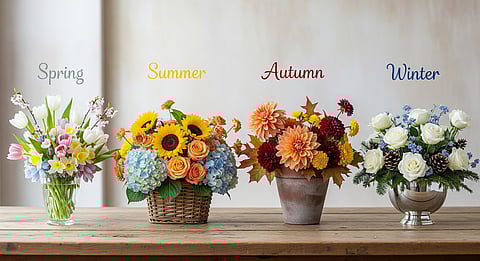
Think of color harmony as choosing blooms that play nicely together rather than fighting for attention. Spring loves soft pastels like blush pinks, buttery yellows, and sage greens. Summer goes bold with jewel tones like fuchsia, cobalt, and tangerine. Autumn shifts to warm burgundies, burnt oranges, and golden yellows. Winter favors crisp whites, deep reds, and evergreen accents.
Did You Know?
Monochromatic arrangements using different shades of one color create 60% more visual impact than random color mixes, according to floral design studies.
Here's your simple formula for choosing colors:
Pick one dominant color that covers 60% of your arrangement
Add a secondary color that fills 30% of the space
Include an accent color at just 10% for visual pop
Count your foliage as part of the color story
Balance keeps your arrangement from tilting or looking lopsided. Proportion ensures flowers don't swallow your vase or disappear into it. Texture adds depth by mixing smooth petals with ruffled blooms and delicate stems with bold foliage.
The golden ratio for flower and floral arrangements is beautifully simple: your arrangement should be 1.5 times the height of your container. Taller feels top-heavy, shorter looks squashed.
Mix textures with purpose:
Pair smooth roses with textured dahlias
Combine wispy grasses with solid blooms
Add rough bark branches to soft petals
This contrast makes each element stand out instead of blending into visual mush.
Every great arrangement needs a star or focal point. This is usually your largest or most vibrant bloom, and it should sit slightly off-center at eye level. Everything else supports this star without stealing the spotlight. Create natural structure by working in odd numbers like 3, 5, or 7 stems and arranging in triangular shapes. This geometry feels naturally pleasing to the human eye, making even simple arrangements look professionally designed.
Spring brings peonies, daffodils, tulips, and cherry blossoms. These flowers capture the season's gentle awakening perfectly.
Spring blooms arrive with soft colors and delicate textures that feel like a breath of fresh air after winter. Peonies offer lush, romantic layers. Daffodils provide cheerful pops of sunshine. Tulips come in endless colors with elegant simplicity. Cherry blossoms add ethereal branches, perfect for height and drama.
These flowers peak between March and May, offering the freshest quality and best prices. Buying spring blooms in-season means they'll last up to 10 days with proper care, and you'll spend less money, too.
Key Insight:
Arrangements featuring seasonal blooms generate 3x more social media engagement than generic bouquets. People naturally connect with what's blooming around them in real time.
Spring arrangements should feel breezy and open, like a garden on your table. Avoid cramming too many stems together because negative space is actually your secret weapon here.
Start with these basics:
A low, wide vessel for garden-style arrangements
5 to 7 focal flowers like tulips or peonies
Filler stems, such as sweet peas or ranunculus
Delicate greenery like eucalyptus or ferns
Let stems lean naturally at different angles instead of standing straight like soldiers. This creates movement and captures spring's carefree, dancing-in-the-breeze spirit.
Spring branches transform simple arrangements into statement pieces. Pussy willow, forsythia, quince, and flowering cherry add instant height and drama without overwhelming softer blooms.
Cut branches at a 45-degree angle and smash the bottom inch with a hammer. This helps woody stems absorb water better and stay fresh longer. Place branches first to create your framework, then fill in with softer blooms around them.
Summer arrangements celebrate bold colors, large blooms, and abundant displays that match the season's high energy and long, sunny days.
Summer flowers make statements without trying. Sunflowers bring sunny dispositions and massive heads that command attention. Dahlias offer intricate petals in jewel tones while hydrangeas provide instant volume with their clustered blooms.
These powerhouse flowers work perfectly for:
Outdoor entertaining spaces and patio tables
Large-scale centerpieces that wow guests
Garden party displays
Bright kitchen arrangements that energize the room
Pro Tip:
One large hydrangea bloom can fill a vase that would otherwise need 15 to 20 smaller flowers. This saves you time, money, and effort.
Summer invites you to go big and bold. Use oversized vessels, mix multiple bloom types freely, and embrace vivid color combinations you might shy away from in other seasons.
Create real impact by:
Clustering 3 to 5 arrangements of varying heights together
Using unexpected containers like pitchers, metal buckets, or ceramic bowls
Combining hot pinks with oranges and purples fearlessly
Adding tropical elements like bird of paradise or ginger flowers
Layer textures by mixing smooth calla lilies with fuzzy celosia and spiky gladiolus. The contrast makes each flower pop.
Summer heat is the enemy of fresh flower arrangements. Those gorgeous blooms wilt faster when temperatures climb, but smart care strategies keep them looking fresh.
Keep blooms fresh longer with these tricks:
Change water daily when it's hot outside
Add ice cubes to vases for temperature-sensitive flowers
Place arrangements away from direct sunlight and AC vents
Mist petals morning and evening with cool water
Re-cut stems every 2 to 3 days at an angle
Store flowers in the coolest room of your house, ideally below 70°F. Your bedroom or basement usually works better than your sunny kitchen.
Autumn arrangements embrace rich colors, interesting textures, and natural harvest elements that celebrate the season's cozy transition.
Fall flowers embrace warmth and depth. Chrysanthemums offer hardy blooms in sunset shades that last for weeks. Asters provide star-shaped flowers in purples and burgundies. Late-season dahlias deliver rich copper and wine tones. Wheat stalks, ornamental grasses, and dried seed heads add movement and texture. These blooms naturally complement autumn's shorter days and cooler temperatures, lasting 1 to 2 weeks with minimal care. Perfect when life gets busy with back-to-school and holiday prep.
Fact Alert!
Chrysanthemums rank among the longest-lasting cut flowers, surviving up to 3 weeks in arrangements. That's triple the lifespan of typical summer blooms.
Autumn invites creative mixing of fresh and dried materials in ways other seasons don't. Dried elements add texture without requiring water, extending your arrangement's life significantly.
Try incorporating these dried beauties:
Dried hydrangeas in muted tones
Seed pods from poppies or milkweed
Preserved oak or maple leaves
Ornamental grasses and wheat bundles
Dried cotton stems for soft texture
Pair these with fresh blooms for stunning contrast. The dried elements stay beautiful while you refresh only the fresh flowers every few days.
Fall color palettes pull straight from nature's harvest. Think pumpkin orange, burgundy wine, mustard yellow, chocolate brown, and deep plum. Colors that make you want to curl up with a warm drink.
Layer these colors intentionally for maximum impact:
Start with a base of warm foliage
Add medium-toned supporting flowers
Include deep, dramatic accent blooms
Finish with unexpected pops of texture
Natural materials like bark pieces, acorns, or small gourds can nestle at the vase base for seasonal flair. These touches make your arrangement feel authentically autumnal.
Winter arrangements embrace classic blooms, evergreen elements, and designs that favor simplicity over abundance. Less really is more during the coldest months.
Winter flowers lean elegant and restrained. Amaryllis provides architectural drama with tall stems and trumpet blooms. Evergreen branches bring forest freshness and last for weeks. Holly berries add festive pops of red. Paperwhites offer delicate white clusters with a sweet fragrance.
These winter classics thrive in cooler temperatures, making them perfect for homes where heating might stress other flowers. They also last significantly longer than spring or summer blooms.
Winter design philosophy embraces "less but better" thinking. A single stunning amaryllis stem in a simple vase creates more impact than a crowded arrangement of mediocre blooms.
Design with restraint using:
1 to 3 statement flowers as your focal point
Evergreen branches for structure and fullness
Berries or pine cones for texture
Minimal filler, so negative space works for you
This minimalist approach feels sophisticated and modern while staying true to winter's quiet beauty.
Winter blooms naturally last longer because cooler indoor temperatures slow aging. Take advantage of this by maximizing their lifespan even further.
Extend winter arrangement life by:
Keeping rooms cooler at 60 to 65°F ideally
Placing arrangements away from heating vents and fireplaces
Changing water every 3 to 4 days instead of daily
Trimming stems less frequently to avoid stress
Misting evergreens weekly to prevent drying
These blooms can easily last 3 to 4 weeks with proper care, giving you stunning displays through the entire holiday season.
Your flowers can last twice as long with proper preparation and care. The difference between wilted blooms in three days and vibrant flowers lasting two weeks comes down to these simple techniques.
Conditioning prepares flowers to absorb water efficiently right from the start. Skip this step, and your blooms struggle from day one.
Follow these preparation steps:
Cut stems at a 45-degree angle underwater to prevent air bubbles
Remove all leaves that will sit below the waterline
Smash woody stems like branches or lilacs with a hammer
Strip thorns from roses carefully without damaging stems
Let flowers drink in deep water for 2 to 4 hours before arranging
This conditioning period lets flowers hydrate fully before you place them in their final arrangement.
Flowers and floral arrangements need three things to thrive: clean water, indirect light, and regular maintenance. Get these right and your blooms reward you with extended beauty.
Daily care essentials:
Use lukewarm water, never cold or hot
Add flower food to every water change
Keep vases spotlessly clean to prevent bacteria
Place arrangements in bright, indirect light
Remove wilted blooms immediately so they don't affect others
Change water every 2 to 3 days completely instead of just topping off. Bacteria build up quickly in stagnant water and clog stems.
You don't need to stick to traditional styles. The best arrangements reflect your personal taste while celebrating seasonal beauty in unexpected ways.
Mixing blooms from different flower families creates arrangements with personality and depth. Pair formal flowers like roses with casual daisies. Combine exotic orchids with humble carnations. Let elegant calla lilies mingle with wildflowers.
Try these unexpected combinations:
Roses with eucalyptus and wildflowers for romantic-rustic style
Orchids with succulents for modern minimalism
Sunflowers with delicate sweet peas for cottage charm
Lilies with tropical leaves for dramatic flair
The key is balancing formality levels. One formal element, one casual, one textural, creates perfect harmony.
Garden flowers bring personality that store-bought blooms can't match. Zinnias, cosmos, snapdragons, and dahlias from your backyard make arrangements feel personal and fresh.
Cut garden flowers early in the morning when they're most hydrated. Bring a bucket of water directly to the garden and place stems in immediately after cutting. This prevents wilting before you even start arranging.
Mix homegrown blooms with a few store-bought statement flowers for the best of both worlds. Personal charm plus professional polish.
Start simple with these beginner-friendly arrangements that look impressive but require minimal skill. You'll build confidence quickly.
Easy starter arrangements:
Single-variety bundles with all tulips or all daisies in one color
Monochromatic mixes using different flowers in the same color family
Greenery-heavy designs with mostly foliage and 3 to 5 focal blooms
Low bowl gardens that cluster small blooms in shallow containers
Tip:
Start with odd numbers of stems like 3, 5, or 7. This simple rule makes any arrangement look intentional and balanced without complicated techniques.
Creating stunning fresh flower arrangements for every season doesn't require professional training or expensive blooms. It’s about understanding what nature offers each season and following simple design principles that work year-round. Spring's soft pastels, summer's bold colors, autumn's rich textures, and winter's elegant simplicity each bring their own beauty to your space.
The secret is working with seasonal rhythms rather than against them. When you choose blooms at their peak, apply basic color and balance principles, and care for them properly, your arrangements can rival any florist’s work. You save money and enjoy flowers that stay fresher, longer.
Some designers, like those at Growing Wild, make this effortless. They source seasonal blooms directly from local growers and craft arrangements that highlight each flower’s peak beauty. The same principles we’ve shared guide their work like harmonious colors, balanced proportions, and proper conditioning, so you get professional results without the learning curve.
What are the best flowers for each season in arrangements?
Spring arrangements work well with tulips, daffodils, and hyacinths for soft, fresh displays. Summer features sunflowers, roses, and dahlias with bold colors. Autumn highlights chrysanthemums, marigolds, and asters in warm tones. Winter showcases amaryllis, poinsettia, and paperwhites for elegant simplicity.
Can you use the same flowers in arrangements year-round?
Many staple flowers like roses, lilies, hydrangeas, and carnations are available year-round from greenhouses. However, truly seasonal blooms will be fresher, last longer, and cost less when purchased in their natural growing season.
How do you keep fresh flower arrangements vibrant for longer?
Keep fresh arrangements away from heat sources and direct sunlight in cooler rooms. Use clean water with flower food, trim stems at angles, and remove wilting petals immediately. Changing the water regularly and misting blooms also helps extend their display life significantly.
How do you create floral arrangements when your favorite flowers are out of season?
You can substitute with similar-looking flowers like garden roses for peonies, or use more greenery for fullness. Incorporating dried flowers, seed pods, and textured branches adds visual interest. Focus on blooms that are currently in season for the best quality and value.
What is the most important principle for arranging flowers beautifully?
Balancing colors, textures, and proportions creates the foundation of beautiful arrangements. Using a clear focal point or dominant seasonal flower anchors the design. Following the 1.5x height-to-vase ratio and working in odd numbers produces naturally pleasing, cohesive displays.
Are hypoallergenic options available for flower arrangements?
Yes, hypoallergenic flowers such as hydrangeas, orchids, roses, and peonies produce minimal pollen. These work well for people sensitive to allergens. Arrangements can be lightly misted to reduce airborne pollen, and avoiding lilies and sunflowers helps minimize allergic reactions further.
Inspired by what you read?
Get more stories like this—plus exclusive guides and resident recommendations—delivered to your inbox. Subscribe to our exclusive newsletter
The products and experiences featured on RESIDENT™ are independently selected by our editorial team. We may receive compensation from retailers and partners when readers engage with or make purchases through certain links.