
- Locations
- Interviews
- Luxury Home
- Luxury Lifestyle
- Luxury Travel
- Luxury News
- Events
- More
- Magazine

In commercial real estate development, the "sticker price" of construction is rarely the most important number. Experienced developers and business owners know that the true cost of a building is measured over its lifespan—through maintenance, insurance, utility, and eventual resale value.
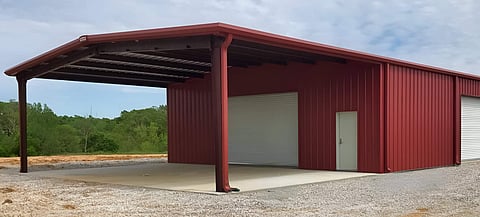
While wood-framed structures or light-gauge steel may offer attractive initial price points, "Red Iron" steel buildings (structural steel coated in red-oxide primer) have quietly become the gold standard for high-ROI commercial projects.
For investors looking to maximize capitalization rates and minimize operating expenses (OpEx), here is a breakdown of the hidden financial advantages of building with red iron.
In commercial real estate, time is literally money. Every week a project stalls in construction is a week of lost revenue, whether that’s rental income or business operations.
Red iron buildings are typically Pre-Engineered Metal Buildings (PEMBs). Unlike traditional "stick-built" structures where materials arrive raw and are cut on-site, red iron I-beams are engineered, cut, drilled, and welded at the factory. They arrive at the job site ready to be bolted together.
The ROI Factor: A red iron structure can often be erected 30% faster than a comparable wood or concrete building.
The Result: You reach "Certificate of Occupancy" sooner. If you are leasing the space, you start collecting rent months earlier than you would with traditional construction, instantly improving your cash flow in the first fiscal year.
One of the distinct technical advantages of red iron steel is its strength-to-weight ratio. These heavy-duty I-beams can support the roof without needing interior support columns, often spanning 100 to 200 feet or more.
In the world of commercial leasing, unobstructed square footage is worth more.
Warehousing: Forklifts have free rein without navigating around posts.
Retail/Sports: Interior layouts can be completely customized.
Manufacturing: Assembly lines can be reconfigured without structural impediments.
By using red iron to create a "clear span" facility, you future-proof the building. If a tenant leaves, the open floor plan is attractive to any type of business, reducing vacancy periods and allowing you to command a higher price per square foot.
Insurance premiums are a permanent line item in your Operating Expenses. This is where red iron offers a massive, recurring ROI that is often overlooked during the design phase.
Commercial insurance rates are heavily based on fire ratings and risk exposure.
Fire Resistance: Steel is non-combustible. Unlike wood-framed commercial buildings, which require expensive sprinkler systems and carry high premiums due to fire risk, steel withstands high temperatures much longer.
Weather Durability: Red iron buildings are engineered to withstand specific wind loads and snow loads. In hurricane or tornado-prone areas, steel structures often qualify for lower premiums due to their superior structural integrity.
Over a 20-year ownership period, the savings on insurance premiums alone can amount to tens of thousands of dollars, directly boosting the building’s Net Operating Income (NOI).
Wood rots, warps, checks, and twists. It attracts termites, carpenter ants, and mold. Concrete cracks and settles. All these materials require a sinking fund for ongoing repairs.
Red iron structural steel is virtually inorganic. It does not support mold growth, it is impervious to termites, and the red-oxide primer (which gives the beams their name) provides a foundational layer of rust protection during transport and construction.
When paired with high-quality metal sheathing (often featuring Kynar 500 or silicone-polyester paint systems), the exterior requires little more than an annual pressure wash. For a commercial landlord, this means fewer calls from tenants regarding leaks or structural settling, and significantly lower annual maintenance costs.
Eventually, every investor exits. When it comes time to sell your commercial property, a red iron building retains its value better than most alternatives.
Because these buildings are bolted rather than nailed, they are technically easier to expand. If a new owner wants to blow out the end wall and extend the warehouse by another 100 feet, red iron makes that structural addition straightforward. This scalability is a major selling point for buyers who anticipate growth.
Furthermore, steel is 100% recyclable. While we rarely tear down buildings just for scrap, the intrinsic value of the materials provides a financial floor that other materials don’t offer.
There is a difference between the price of a building and the cost of owning it.
If you are building a temporary structure or a small garden shed, red iron is likely overkill. But for commercial real estate—warehouses, agricultural centers, industrial parks, and retail strip centers—red iron represents the smart money.
By reducing your OpEx through lower insurance and maintenance, and increasing your revenue potential through faster occupancy and clear-span flexibility, red iron doesn't just protect your assets; it actively contributes to your bottom line.
Inspired by what you read?
Get more stories like this—plus exclusive guides and resident recommendations—delivered to your inbox. Subscribe to our exclusive newsletter
The products and experiences featured on RESIDENT™ are independently selected by our editorial team. We may receive compensation from retailers and partners when readers engage with or make purchases through certain links.