
- Locations
- Interviews
- Luxury Home
- Luxury Lifestyle
- Luxury Travel
- Luxury News
- Events
- More
- Magazine

The most valuable real estate often presents the most challenging terrain.
Cliffsides, steep slopes, and hillside lots offer commanding views and natural privacy, but they also demand innovative architectural solutions.
For discerning homeowners seeking to maximize their property's potential, cantilevered design transforms geographic limitations into architectural advantages.
This engineering approach extends living space beyond traditional foundation constraints, creating dramatic homes that command premium valuations and establish lasting family legacies.
Cantilevered architecture involves extending portions of a structure beyond its primary support system, using engineered frameworks to distribute weight and ensure stability. In luxury residential construction, this typically means steel moment frames, reinforced concrete systems, or hybrid approaches that anchor extensions into bedrock or existing foundations.
Affluent homeowners pursue cantilevered designs for three primary reasons: capturing unobstructed views, maximizing usable square footage on constrained lots, and creating architecturally distinctive properties. A cantilevered addition can extend 15 to 20 feet or more beyond the primary structure, effectively converting unusable slope into premium living space.
The financial equation differs significantly from standard construction. While cantilevered projects command higher per-square-foot costs due to structural engineering requirements and specialized construction techniques, they generate returns through enhanced property values and expanded functional space. Homeowners effectively purchase square footage that traditional building methods cannot access.
Properly engineered cantilevered structures rival or exceed conventional construction in longevity and structural integrity. The engineering rigor required for these projects often results in homes built to higher standards than code minimums, an important consideration for families planning multi-generational ownership.
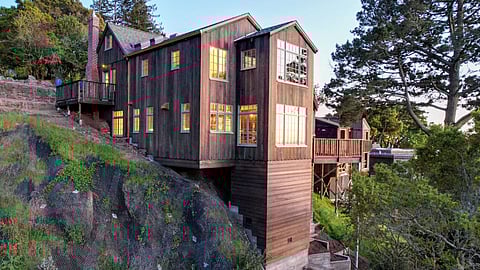
A 1936 home perched on the edge of an old quarry presented a classic challenge: the owners needed additional space, but the property's cliffside location eliminated conventional expansion options. The solution required both architectural vision and engineering precision.
The project centered on a 16-foot cantilevered addition supported by steel moment frames anchored into the hillside. This structural approach distributed the extension's weight through engineered load paths, eliminating the need for foundation work on the unstable slope below.
The addition created an expanded primary suite, larger kitchen, and dedicated guest area. More importantly, it positioned these spaces to capture the property's best views while maintaining the home's historic character. Original 1936 architectural elements remained intact, with old-growth redwood siding and custom ironwork preserving the home's heritage.
The $1.6 million investment delivered results that traditional construction methods could not achieve. The cantilevered design solved the space requirements without compromising the property's historic integrity or requiring massive earthwork on the challenging terrain.
This level of complexity demands specialized expertise.
Projects involving significant structural engineering, hillside construction, and cantilevered design require builders with proven experience in these domains. Whether working with luxury home builders like Vought Construction or other specialists in complex residential projects, homeowners should verify documented experience with similar structural challenges and confirmed engineering credentials.
The Berkeley project demonstrates cantilevered architecture's essential advantage: converting challenging topography into distinctive luxury living space that enhances both functionality and property value.
Real estate value hinges on location, views, and architectural distinction. Cantilevered design addresses all three factors simultaneously.
Properties with commanding vistas consistently achieve premium pricing. A cantilevered extension positions primary living spaces, master suites, or entertaining areas to capture views that traditional construction methods cannot access. In competitive luxury markets, this view advantage translates directly to increased property valuations. Comparable properties with superior views typically command 15 to 30 percent premiums over similar homes with obstructed sightlines.
The square footage equation proves equally compelling. On hillside or waterfront lots where buildable area faces restrictions, cantilevered additions create space that otherwise would not exist. This isn't merely adding rooms to an existing footprint. It's accessing entirely new territory, often in the most desirable areas of the property where views, natural light, and privacy converge.
Market differentiation represents another significant advantage. Architecturally significant homes attract serious buyers and achieve faster sales at higher price points. A well-executed cantilevered design becomes a property's signature feature, the element that distinguishes it from every other listing in the area.
For families building generational homes, cantilevered architecture offers lasting value. These structures make bold architectural statements that remain relevant across decades. The engineering investment ensures structural integrity that supports long-term ownership, while the distinctive design maintains appeal across changing market conditions.
Insurance and appraisal considerations favor properly engineered cantilevered structures. Modern engineering standards and construction techniques have proven these designs' reliability. Professional appraisers recognize the value these additions bring, particularly when executed by experienced builders with documented structural engineering credentials.
Several site conditions indicate cantilevered design may deliver optimal results for property development or renovation.
Hillside and slope properties represent the most obvious candidates. When your lot drops away from the street or primary access point, cantilevered extensions capture views and natural light that ground-level construction cannot reach. The steeper the slope, the more dramatic the potential advantage.
Waterfront properties benefit similarly. Cantilevered design extends living spaces toward water views while minimizing environmental impact on shoreline areas. This approach often satisfies regulatory setback requirements while maximizing the property's most valuable asset: water access and views.
Constrained urban lots with limited buildable area can gain significant square footage through cantilevered additions. In dense neighborhoods where lot coverage restrictions limit ground-level expansion, cantilevering upward or outward may provide the only viable path to additional space.
Properties with specific view corridors benefit from targeted cantilevered design. If your prime views exist in one direction but your home's current configuration doesn't capture them, a cantilevered addition can position key rooms to maximize those sightlines.
Regulatory and permitting considerations vary significantly by jurisdiction. Hillside properties often face additional scrutiny regarding geotechnical stability, environmental impact, and neighborhood compatibility. Budget adequate time for permitting processes, typically six to twelve months for complex projects.
Timeline expectations should account for engineering complexity. Structural engineering, permit approval, and specialized construction techniques extend project duration compared to conventional additions. Plan for 18 to 24 months from initial design through completion for substantial cantilevered projects.
Selecting the right team proves critical. Your project requires structural engineers experienced in hillside and cantilevered design, architects familiar with local regulations and complex site conditions, and contractors with documented experience executing similar projects. Request references for comparable work and verify professional credentials before committing to any team.
Cantilevered architecture represents strategic investment in properties where topography presents both challenges and opportunities.
For homeowners with hillside, waterfront, or constrained lots, this approach transforms geographic limitations into architectural advantages that enhance livability, capture premium views, and establish distinctive legacy homes.
When site conditions warrant the engineering investment, cantilevered design delivers returns through expanded square footage, enhanced property values, and architectural significance that appreciates across generations.
Inspired by what you read?
Get more stories like this—plus exclusive guides and resident recommendations—delivered to your inbox. Subscribe to our exclusive newsletter
The products and experiences featured on RESIDENT™ are independently selected by our editorial team. We may receive compensation from retailers and partners when readers engage with or make purchases through certain links.