
- Locations
- Interviews
- Luxury Home
- Luxury Lifestyle
- Luxury Travel
- Luxury News
- Events
- More
- Magazine
- Contact Us

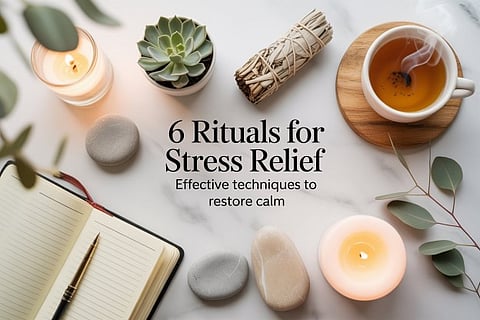
Stress is the kind of noise, almost imperceptible, a stray background sound. It's just there, eroding the focus, sleep, and almost emotional stability. Acute stress may serve as a motivator, but chronic stress more often than not compromises well-being in rather less obvious forms. Rituals, or intentional acts performed repeatedly, are phenomenal ways to give a signal of safety to the nervous system and provide predictability in uncertain times. Unlike instant remedies, effective rituals work as they encompass physiological components, psychological components, and imprints of meaning. Here are six stress relief rituals that go far beyond common wisdom and foster sustainable paths back to calmness.
Breathwork is usually advised, yet it depends on how one uses it with structure and timing. Long exhales or square breathing engages the vagus nerve directly to move the body out of its stress response. When combined with a defined time, perhaps before work or following a tense conversation, breathing becomes more of a ritual that disciplines the nervous system to expect calm.
The best conceived pairing of the breath is an intention. Instead of breathing for relaxation, anchor the intention for the working of emotional regulation or mental clarity. Over time, this will reinforce the neural pathways, so that you can eventually find calm in all such situations, even under immense pressure.
Being connected to another person is the single most stress-buffering mechanism for humans, but only when it is felt. Regular connection communicates emotional predictability, like a weekly intentional geography conversation with a friend or TP-Trusted Partner. Stable social interaction can sometimes become a stress ping while offering relief.
Conversational gaming assumes special meaning in the world of fast-paced, profession-dominated cities like Denver, where the opportunity for soul connection appears to hide behind glass barriers. For those of you in the emotional labyrinth, external help in terms of a therapist in Denver can support this ritual by clarifying boundaries and enhancing emotional resilience without creating excessive dependence on others.
Temperature actions can be an underutilized weapon against stress. Alternation between warm and cool sensations, such as not ending a shower with warm water but cool water, or holding a warm mug, activated sensory awareness and interrupted stress spirals. The reshaping of attention is the point where rumination is redirected to this immediate experience of the body's condition.
What makes this rite effective is continuity and contrast. Daily repetition conditions the brain to associate that sensory cue with regulation. After several weeks, even those instances of increasing calm that last just a few moments can trigger a profound calming response without spending excessive time or effort.
Movement triggers endorphin release while assisting in dissipating unresolved emotional energy from the body. Slow and intentional movements, such as mindful walking, tai chi, or gentle stretching, allow emotions to float to the surface and ebb away from consciousness without becoming overwhelming. This differs from vigorous exercise, which sometimes obscures stress instead of relieving it.
For this ritual to deepen, establish a post-movement reflection. A short time to note shifts in one’s emotion or body feeling will enhance one’s awareness and aid in the integration of that experience. This way, it turns the movement from a simple task into a context of real meaning for regulating one's stress.
Stress is aggravated when some unresolved thoughts lodge in the mind. Cognitive offloading rituals, such as structured journaling or daily mental downloads, relieve this burden. Writing it down relieves anyone's mental replay since it sends a signal to the brain to have this acknowledged, thus decreasing this repetitive urge.
For added effect, that ritual should be undertaken under a prescribed time and format. For instance, write out anxieties with an accompanying note on one realistic next step, which prevents the exercise from degenerating into repetitive rumination. Over time, it builds trust that problems will be related to action in an organized manner, rather than reactively.
The digital sunset specifically attempts to limit screen time before sleep. Blue light and its accompanying ceaseless notifications firmly keep the brain alert and prevent any serious recovery. Instead, the set cut-off time offers the nervous system a means to rest.
To augment this ritual, it should be accompanied by a soothing cue in the form of reading, dim lights, or some light stretching. Constantly done, the brain will link gradually diminished stimulation with safety and rest, which will, in time, translate into quality sleep and better emotional regulation.
A ritual would perform the most effective stress-busters rather than a reaction. These gently guide the body, mind, and environment into conscious activity toward an even more profound peace. With continual practice, this begins to sink into the resilience of the person and penetrate their daily life, transforming the experience of just enduring stress into something one can actually live through.
Inspired by what you read?
Get more stories like this—plus exclusive guides and resident recommendations—delivered to your inbox. Subscribe to our exclusive newsletter
The products and experiences featured on RESIDENT™ are independently selected by our editorial team. We may receive compensation from retailers and partners when readers engage with or make purchases through certain links.