
- Locations
- Interviews
- Luxury Home
- Luxury Lifestyle
- Luxury Travel
- Luxury News
- Events
- More
- Magazine
- Contact Us

It used to be the ultimate homeowner hack: slap a few solar panels on the roof, watch your electric meter spin backward, and laugh all the way to the bank. For years, the math was simple. You generated power, the utility bought it at retail rates, and your bill vanished.
But in 2026, that math has fundamentally broken. If you are a homeowner in California, Texas, or Florida, you might have noticed a disturbing trend. Despite generating plenty of clean energy, your monthly statement is creeping back up—sometimes hitting $200 or even $500. This isn't a glitch; it's the new design of the modern grid. With policies like NEM 3.0 (Net Billing) slashing export rates by over 75% and "Time-of-Use" windows shifting to late evenings, the era of passive savings is over. The era of active energy independence has begun.
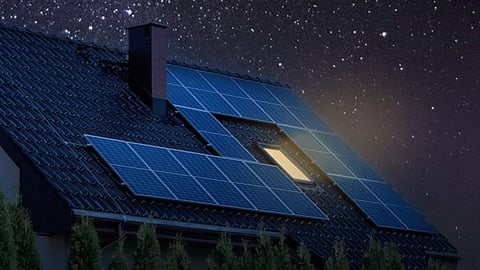
To beat the utilities at their own game in 2026, you need to stop renting the grid and start owning your infrastructure. The missing variable in your home energy equation isn't more panels—it's intelligent storage. By integrating the EcoFlow OCEAN Pro Solar Battery System, homeowners can finally sever their reliance on predatory peak-hour rates. Instead of selling your excess solar power for pennies during the day and repurchasing it for dollars at night, this system captures that cheap energy and deploys it exactly when rates spike. It transforms your home from a passive consumer into a self-sufficient fortress, ensuring that every kilowatt you generate stays in your wallet.
For over a decade, the solar industry sold a dream based on "Net Metering"—the idea that the grid was your personal free battery. In California, that dream ended with the implementation of NEM 3.0, and similar "Net Billing" policies are now the standard across Texas and Florida.
Under these rules, the credit you receive for sending power to the grid has plummeted. In some cases, utilities now pay you as little as 3 to 4 cents per kWh for your solar exports, only to charge you 30 to 50 cents per kWh when you turn on your lights at 7 PM. This massive spread has created a "Solar-Only Cliff." Without a battery, your expensive solar array is essentially working for the utility company, not for you. By pairing your solar energy for home with high-capacity storage, you bypass this rigged exchange entirely, maintaining the 1:1 value of your energy.
For residents in high-consumption states like Texas and Florida, the issue is compounded by extreme weather. When a heat dome settles over Dallas or a tropical storm threatens Miami, grid prices can surge, or the grid can fail entirely.
The "middle-class squeeze" is real. Families are finding that rising insurance premiums and inflation are eating into disposable income, making a variable $500 utility bill a financial hazard. An intelligent battery system acts as a hedge against inflation. By locking in your energy costs today, you insulate your household budget from the rate hikes projected for 2027 and beyond.
Let's be honest: saving money is critical, but keeping your family safe is non-negotiable. The reliability of the US power grid is degrading. From rolling blackouts to Public Safety Power Shutoffs (PSPS), the "always-on" grid is a thing of the past. Modern backup power is about more than just keeping a few LED lights flickering; it's about maintaining your standard of living.
Whole-home resilience: You need a system capable of starting a 5-ton central AC unit and ensuring medical devices stay running.
Seamless transition: A premium LFP (Lithium Iron Phosphate) battery system takes over in milliseconds—so fast your digital clocks won't even blink.
Weathering the storm: With IP67-rated water and dust resistance, advanced systems are designed to withstand the very elements that knock the grid offline.
One of the most significant friction points for homeowners is the upfront cost. Is it worth it? In 2026, the financial argument for a solar-plus-battery system remains strong through local incentives.
Intelligent autonomy & optimized savings: While the OCEAN Pro is designed with Virtual Power Plant (VPP) compatibility, it offers homeowners a 'future-ready' hardware advantage. Beyond potential grid services, the system delivers immediate autonomy through Smart Energy Management. By intelligently analyzing your usage patterns and solar generation, the OCEAN Pro automatically optimizes power flow—storing cheap energy and discharging during peak rates—to maximize savings and secure your home against volatile energy markets right now.
Future-proofing your property value: Real estate market data suggests that homes with integrated energy storage are commanding a premium. As buyers become more educated about grid instability, a "blackout-proof" home is becoming a major selling point. It's an investment that pays dividends while you live there and increases equity when you sell.
Your energy needs today are not what they will be five years from now. You might buy an electric vehicle, add a heated pool, or build an ADU for aging parents.
Competitor systems often lock you into a fixed capacity that is difficult or expensive to upgrade. A truly future-proof system lets you start with what you need—say, 15kWh—and easily scale up to 80kWh without replacing your inverter. This is particularly crucial for EV owners. Charging an electric truck can double a household's energy consumption; a scalable battery ecosystem allows you to "drive on sunshine" rather than pulling from the expensive grid.
The days of relying solely on the utility company to provide cheap, reliable power are behind us. The grid of 2026 is fragmented and increasingly fragile. But for the prepared homeowner, this transition represents an opportunity.
By shifting your mindset from "passive solar" to "active storage," you do more than just lower your monthly expenses. You secure your home against uncertainty and increase your property value. The technology is here, and the need has never been greater.
Ready to secure your home's energy independence? Don't wait for the next rate hike or blackout to act. Get your free quote for the EcoFlow OCEAN Pro today and see exactly how much you can save by owning your power.
Inspired by what you read?
Get more stories like this—plus exclusive guides and resident recommendations—delivered to your inbox. Subscribe to our exclusive newsletter
The products and experiences featured on RESIDENT™ are independently selected by our editorial team. We may receive compensation from retailers and partners when readers engage with or make purchases through certain links.