
- Locations
- Interviews
- Luxury Home
- Luxury Lifestyle
- Luxury Travel
- Luxury News
- Events
- More
- Magazine

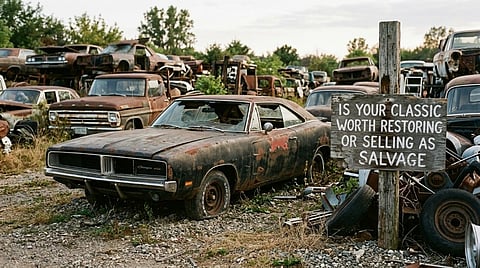
A classic car is worth restoring if its long-term value, sentimental appeal, and structural condition justify the cost and time involved. Selling as salvage makes more sense when repair expenses outweigh market value or when damage is too extensive to reverse economically. The right decision depends on a mix of financial reality and personal priorities.
Classic car ownership often blends passion with practicality. Enthusiasts may see potential where others see rust, while buyers in the salvage market focus strictly on numbers. Both perspectives are valid, but clarity comes from understanding what each path requires.
Every project begins with a simple question that quickly becomes complex. Costs, timelines, and market demand all play a role in shaping the outcome. The sections below break down how to evaluate your classic and decide which direction makes the most sense.
Condition is the single most important factor in deciding whether to restore or sell. Surface wear can be manageable, but structural damage often changes the equation entirely.
A thorough inspection should focus on key areas:
Frame integrity
Rust severity
Engine condition
Transmission status
Electrical systems
Hidden issues can quickly inflate restoration costs. Rust in the frame or extensive corrosion under the body often signals deeper problems that require specialized repairs.
Mechanical condition also matters, but parts can sometimes be replaced more easily than structural elements. A non-running engine may still be salvageable, while a compromised frame can limit the car’s future entirely.
Valuation provides a reality check before committing to restoration. Many owners underestimate costs and overestimate resale value, which can lead to difficult financial decisions later.
Researching comparable sales and understanding salvage value estimates helps establish a baseline for what a damaged or non-running vehicle is worth. Salvage buyers typically evaluate vehicles based on usable parts, scrap metal, and market demand.
When assessing salvage value, consider:
Current scrap metal prices
Demand for specific parts
Vehicle rarity
Overall damage level
Market conditions in 2026 continue to favor certain classic models, especially those with strong enthusiast communities. However, even desirable vehicles can lose value quickly when damage becomes too extensive.
Using valuation tools and buyer quotes can provide a clearer picture. Knowing the lower-end value of the car helps frame whether restoration is a financially reasonable choice.
Restoration projects require more than money. Time, patience, and access to skilled labor all influence the final outcome.
Costs typically include:
Bodywork and paint
Engine rebuild or replacement
Interior restoration
Parts sourcing
Labor and shop fees
Timelines can stretch from months to years depending on the scope of work. Delays often occur when parts are hard to find or when unexpected issues arise during disassembly.
Parts availability plays a major role in feasibility. Popular models tend to have better aftermarket support, while rare vehicles may require custom fabrication or long searches for original components.
Classic cars often carry emotional weight that doesn’t show up on a balance sheet. Family history, nostalgia, or personal milestones can influence the decision to restore.
Emotional considerations might include:
Sentimental attachment
Personal enjoyment of the project
Long-term ownership plans
Desire to preserve history
Financial considerations still need equal attention. Restoration costs can exceed the car’s eventual resale value, especially when labor and storage are factored in.
Balancing both sides helps create a clearer picture. A project driven purely by emotion may still be worthwhile, but expectations should align with reality.
Ownership doesn’t end with restoration or sale. Insurance, storage, and maintenance all affect the long-term financial picture.
Key ongoing costs include:
Specialty insurance policies
Climate-controlled storage
Routine maintenance
Registration and fees
Insurance companies may require appraisals for restored classics. Coverage can vary depending on usage, condition, and agreed value policies.
Storage also matters more than many owners expect. Proper conditions help preserve the vehicle’s condition and protect the investment over time.
A structured approach can simplify the decision-making process. Breaking the choice into clear steps helps reduce uncertainty.
Start by asking:
What is the car worth now
What will restoration cost
How long will the project take
What is the expected resale value
How important is personal attachment
Comparing these answers side by side reveals whether restoration makes sense financially. A large gap between costs and potential value often points toward selling as salvage.
Lifestyle also plays a role. Some owners enjoy the process as much as the result, while others prefer a quicker, more practical outcome.
Deciding whether to restore or sell as salvage comes down to aligning your goals with realistic expectations. A well-planned restoration can be rewarding, but not every project justifies the investment.
Careful evaluation of condition, costs, and market value provides a solid foundation for making the right call. Resources that support understanding salvage value estimates can help clarify where your vehicle stands before any major decisions are made.
In the end, the best choice is the one that fits both your financial situation and your personal priorities. Taking the time to assess all factors ensures that your classic car journey moves forward with confidence, whether that means restoration or working with trusted buyers like Cash for Cars.
Inspired by what you read?
Get more stories like this—plus exclusive guides and resident recommendations—delivered to your inbox. Subscribe to our exclusive newsletter
The products and experiences featured on RESIDENT™ are independently selected by our editorial team. We may receive compensation from retailers and partners when readers engage with or make purchases through certain links.