
- Locations
- Interviews
- Luxury Home
- Luxury Lifestyle
- Luxury Travel
- Luxury News
- Events
- More
- Magazine
- Contact Us

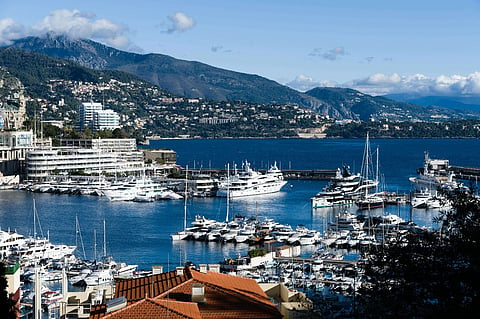
Picture the opening frames of a film that doesn't exist yet but feels like it should: the Hotel de Paris in Monaco, sometime in the 1950s. A man in a white dinner jacket leans over a green baize table, not with the feverish desperation of a roulette player watching a wheel spin beyond his control, but with the composed attention of someone doing a very elegant kind of thinking. The croupier waits. The man considers. He asks for another card.
This image, or some version of it, has lodged itself so deeply in the Western cultural imagination that it barely needs explaining. Blackjack carries a quality that no other casino game has quite managed to replicate: the suggestion that the person playing it might actually know something.
That intelligence, applied with sufficient nerve, can shift the odds. Whether or not that is strictly true is almost beside the point. The mythology of the game was built long before the mathematics were properly worked out, and by the time the mathematicians arrived, Hollywood had already done most of the promotional work.
The game's origins are murkier than its image suggests. A precursor called "vingt-et-un" was played in French casinos as far back as the eighteenth century, and by the time it crossed the Atlantic, it had acquired the name that stuck. But the cultural transformation, the point at which blackjack ceased to be merely a card game and became a symbol of something, happened gradually and then all at once in the postwar decades.
In 1962, a mathematics professor named Edward Thorp published "Beat the Dealer," a book that proved, with rigorous statistical argument, that a player using card-counting techniques could gain a meaningful edge over the house.
The book became a bestseller. It was a genuinely unusual moment: a work of applied probability theory going mainstream because it spoke to something people already half-believed, that blackjack was a game where the mind could win. Casinos responded by introducing multiple decks and shuffling more frequently. The counter-measures were, in their way, a form of flattery. No casino ever shuffled more often to stop someone winning at slots.
By the time the Rat Pack was photographed at the Sands in Las Vegas, blackjack had its aesthetic fully formed. Frank Sinatra, Dean Martin, and Sammy Davis Jr. did not pose at slot machines. The table game suited the image: considered, unhurried, faintly dangerous. A game for men who understood that style and strategy were not opposites.
The cinema was paying close attention. What strikes you, looking back at how blackjack has been used on screen, is that directors reach for it in very specific emotional registers. It appears when a character's intelligence is being tested under pressure, or when the script needs a scene that is simultaneously intimate and high-stakes.
The most famous example remains the card-counting sequence in Barry Levinson's "Rain Man" from 1988. Dustin Hoffman's Raymond, an autistic savant, counts cards through multiple shoes at Caesars Palace while Tom Cruise's Charlie runs interference on the floor.
The scene works not because the gambling is thrilling in a conventional sense but because it reframes what the table represents: a place where a particular kind of mind, operating differently from everyone else's, can find its own kind of mastery. Blackjack, not roulette, not craps. The choice is entirely deliberate.
Two decades later, Robert Luketic's "21" told a version of the MIT Blackjack Team's story, that group of students and ex-students who turned Thorp's theoretical framework into a practiced art form during the 1980s and 90s, winning millions before the casinos worked out what was happening. The film took considerable liberties with the real story, but it captured something true about the game's cultural position: blackjack as an intellectual endeavour that happens to take place in a room full of distractions.
The question is worth asking directly. Roulette is the more visually iconic casino image, the wheel a better symbol, the ball a better metaphor. So why has blackjack held the cultural imagination in a way that roulette simply has not?
The answer comes back to the agency. Roulette is beautiful precisely because it is arbitrary. After all, the physics of the ball will do what they will do regardless of what the player wants, believes, or calculates.
There is a purity to that. But it offers no purchase for a story about human intelligence. Blackjack does. Every hand is a small argument between what you know and what you cannot know, between the card you can see and the one you cannot. The game respects the player's mind by making the player's choices matter, at least somewhat, at least at the margins. That is enough to build a mythology around.
The slots player and the roulette player are at the mercy of chance. The blackjack player is negotiating with it. In cultural terms, that is an entirely different proposition.
What is perhaps most interesting about blackjack's cultural longevity is that it has survived the full exposure of its own mechanics. Everyone knows now, in a general way, that the house maintains its edge. Card counting, once the great secret, has been written about in bestsellers, dramatised in Hollywood films, and explained in countless online tutorials. The mystique should have evaporated.
Instead, the game has settled into something more sustainable than mystique: a reputation for honesty. Blackjack does not pretend to be fair in the way that a slot machine pretends, through the illusion of near-misses and the manipulation of dopamine responses. It presents its mathematics openly, and it offers the player a real, if constrained, role in what happens. That is a different kind of respect, and it may be why, from Thorp's textbook to a live-streamed table in 2025, the game keeps drawing the same kind of person: someone who wants to think.
The green baize and the binary choice, hit or stand, have outlasted empires, entertainment formats, and several generations of casino architecture. Not because the player usually wins. Because the game still asks something of the person sitting down to play it.
Inspired by what you read?
Get more stories like this—plus exclusive guides and resident recommendations—delivered to your inbox. Subscribe to our exclusive newsletter
The products and experiences featured on RESIDENT™ are independently selected by our editorial team. We may receive compensation from retailers and partners when readers engage with or make purchases through certain links.