
- Locations
- Interviews
- Luxury Home
- Luxury Lifestyle
- Luxury Travel
- Luxury News
- Events
- More
- Magazine
- Contact Us

Can an alexandrite engagement ring withstand decades of regular wear? And what makes one ring suitable for passing down while another becomes difficult to resize, repair, or restore?
Heirloom potential depends on more than the center stone. Gemstone durability, setting construction, repairability, resizing feasibility, documentation, and realistic maintenance expectations all determine whether a ring can be worn, serviced, and transferred across generations.
A ring becomes an heirloom through family significance and eventual transfer. Its physical longevity depends on whether it can be worn, maintained, repaired, and adapted over time. That requires a setting built to last, metal substantial enough to support reasonable maintenance and possible resizing, and a design that a future owner can comfortably wear .
A gemstone that scores well on hardness tests can still sit in a setting that loosens easily, on a band too narrow to resize safely, or in a structure too complex to repair without significant cost. Evaluating heirloom readiness means looking at the entire ring, not just the stone at its center.
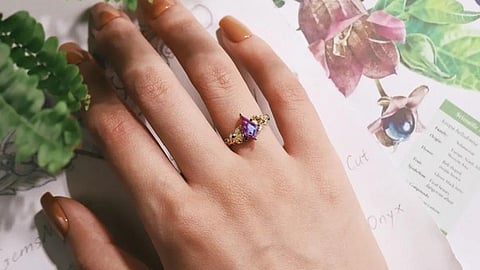
Alexandrite is the color-change variety of chrysoberyl. It ranks approximately 8.5 on the Mohs scale, which measures scratch resistance rather than complete resistance to impact. Alexandrite also has excellent toughness and no cleavage, so it is not prone to splitting along a defined cleavage direction. These properties make alexandrite a practical gemstone for regular ring wear.
No gemstone is indestructible, and hardness alone does not determine whether a ring holds up across generations. When comparing Alexandrite Engagement Rings for long-term ownership, examine the construction around the gemstone as carefully as the stone itself.
Setting construction has a direct effect on how a ring performs over time. Worn, undersized, or poorly maintained prongs can reduce the security of the center or accent stones. A high or exposed setting may place more of the stone in the path of knocks and snagging than a lower-profile design.
Ask whether the setting can be inspected and repaired by a skilled jeweler decades from now. Highly customized construction may require a specialist jeweler or more involved repair work later. A very thin shank may limit how much the ring can be resized and could require reinforcement over time. Wedding-band compatibility is also worth confirming before purchase.
No single setting style is universally best. The right choice depends on how the ring will be worn and what level of maintenance the owner is prepared to arrange.
Because future taste is impossible to predict, focus less on whether a design is currently fashionable and more on whether it remains wearable, maintainable, and adaptable. Balanced proportions and well-executed details can support long-term wear, regardless of whether the design is traditional or unconventional.
A design that allows for band changes or modest modifications over time offers more flexibility. The most important factors are structural integrity, whether decorative details can be restored if needed, and whether the ring can still be worn comfortably across different life stages.
Long-term ownership often involves some form of maintenance. Before purchasing, ask what parts of the ring can be resized, rebuilt, refinished, or replaced without significantly changing the original design.
Worn prongs, thinning bands, lost accent stones, and metal refinishing are all normal parts of a ring's service life. Some design features may complicate future work: full eternity bands, stones covering most of the shank, very thin bands, tension-style settings, highly intricate custom construction, and certain mixed-metal combinations can all limit a jeweler's options, depending on the construction.
Ask the seller or jeweler which parts of the design may limit future resizing or repair. A design that cannot be easily resized may still be the right choice — but understanding the implications before purchasing avoids surprises later.
Both natural and lab-created alexandrite can carry genuine family and emotional significance. The choice between them does not determine whether a ring becomes meaningful to future generations.
Natural alexandrite is generally rarer and may command higher market values, although value depends heavily on the individual stone, its quality, and its documentation. Lab-created alexandrite may be available in more predictable sizes and appearances, making it easier to compare options.
The stone's origin should be recorded clearly so future owners understand what they have inherited. Sentimental value is not determined by resale price, but accurate information should travel with the ring.
Clear documentation is one of the most practical things you can pass down alongside the ring. Retain where available:
Purchase receipt and seller details
Gemstone identification or grading report, if supplied
Appraisal and insurance records, when relevant
Stone measurements, metal details, and original ring size
Repair and resizing history
Clear photographs of the original ring and any major restoration
Retain each document supplied, since a receipt, appraisal, and gemological report serve different purposes.
Alexandrite is a strong candidate for long-term ownership, but it is not the right fit in every situation.
It may not suit someone who expects a completely maintenance-free ring, regularly performs demanding physical work while wearing it, or is unwilling to arrange periodic inspections. The color-change effect means the stone appears differently depending on lighting conditions, which is part of its character but may not appeal to every future owner. Rings with significant resizing limitations, or purchases motivated primarily by assumed resale value, may also fall short of expectations over time.
Stone identity and origin documented
Secure, maintainable setting
Appropriate band thickness and profile
Resizing and repair options understood
Realistic care and inspection expectations
Purchase, appraisal, and repair records retained
Reviewing designs from Gemsmagic can help you compare setting profiles, band construction, accent-stone arrangements, and metals through a long-term ownership lens.
Heirloom readiness depends on the whole ring: gemstone durability, setting construction, design adaptability, repairability, and documentation. Alexandrite offers strong hardness and toughness, but those qualities only carry the ring so far if the rest of the construction is not built to match.
Compare several designs using the checklist above, and confirm resizing and repair options before purchasing. Take the time to review available ring designs with these criteria in mind. A ring chosen with that level of attention is better positioned for long-term wear, future maintenance, and eventual transfer to another owner.
Inspired by what you read?
Get more stories like this—plus exclusive guides and resident recommendations—delivered to your inbox. Subscribe to our exclusive newsletter
The products and experiences featured on RESIDENT™ are independently selected by our editorial team. We may receive compensation from retailers and partners when readers engage with or make purchases through certain links.