
- Locations
- Interviews
- Luxury Home
- Luxury Lifestyle
- Luxury Travel
- Luxury News
- Events
- More
- Magazine

Does the word "padparadscha" in a product title confirm exactly what the gemstone is? And what should a gemstone report tell you before you buy?
This article explains how to read the most important parts of a report and avoid assuming it confirms more than it does. It covers gemstone identity, natural or laboratory-grown status, treatment disclosure, color wording, measurements, report limitations, and how to match the report to the ring.
A gemstone report may identify the stone, state whether it is natural or laboratory-grown, record detectable treatments, and list measurements and color. It does not provide an overall quality grade, assess the ring's craftsmanship, confirm fair pricing, or guarantee that the color will look the same in person.
Padparadscha refers to a pinkish-orange or orangey-pink sapphire description. The exact boundaries of the term have historically been debated. A laboratory may state, in its professional opinion, whether the examined sapphire meets its criteria for the Padparadscha description. That conclusion is not a universal certification, and different laboratories may apply different criteria.
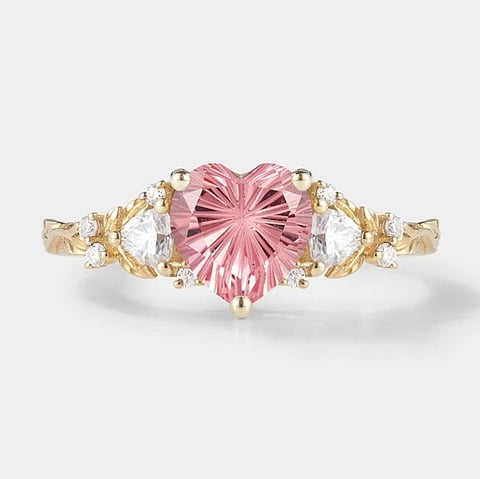
A product title or seller description is not the same as an independent gemstone identification. When comparing Padparadscha Rings, review the gemstone disclosure alongside the design rather than relying only on the product title or photographs.
The information available depends on the report type and the laboratory that issued it. A report may include:
Gemstone species and variety
Natural or laboratory-grown status
Detectable treatment conclusions
Shape and cutting style
Measurements and weight, where available
Color description
Photograph, depending on report type
Not every report includes all of these fields, and geographic origin is a separate conclusion that may only appear on certain reports when requested and determinable.
For example, a hypothetical report might identify the stone as natural sapphire, record its color as orangey pink, and state indications of heating. These are separate conclusions covering identity, observed color, and detectable treatment. This is a hypothetical illustration only, not a report for any specific product.
A colored-stone identification report is not a diamond-style quality grade. It does not guarantee that you will personally prefer the color, that the price is fair, that the stone will look identical under every light source, or that the complete ring is well-constructed. It also does not assess setting security, craftsmanship, or long-term durability.
A gemstone report supports verification, but it does not replace visual inspection or evaluation of the complete ring.
Natural and laboratory-grown sapphire are different, and the distinction should be clearly disclosed before purchase. An appropriate identification report should state whether the stone is natural or laboratory-grown. A geographic-origin opinion, if requested and determinable, is a separate conclusion.
Both natural and laboratory-grown sapphire can be used in fine jewelry and can carry personal significance. Natural stones may differ in rarity and market value. Laboratory-grown stones may be available in more predictable sizes and appearances. Neither should be misrepresented. If the listing does not address natural or laboratory-grown status clearly, ask the laboratory named on the report or the seller directly.
Sapphire may be untreated, conventionally heated, or treated using other processes. Heat treatment is common in the sapphire market. Lattice diffusion is a different treatment category from conventional heating and should be disclosed separately, as it uses heat together with color-causing elements to alter a stone's color.
Treatment type affects how buyers compare stones and interpret what they are purchasing. A treated stone is not automatically unsuitable, but clear disclosure matters. The report should record any treatment conclusions the laboratory was able to determine. Not every possible treatment can always be detected, which is one reason disclosure practices vary.
Padparadscha color is generally associated with a blend of pink and orange. Reports may use wording such as "pinkish orange" or "orangey pink" to describe the dominant hue as assessed under laboratory conditions. Hue, tone, saturation, cutting style, lighting, and photography all affect how a stone appears in a listing or in person. A report's color description does not guarantee that you will prefer the stone visually, and photographs should be reviewed in more than one lighting condition where possible.
Before purchasing, compare the report details against the seller's listing. Check:
Report issuer and report number
Gemstone shape and cutting style
Measurements and weight, if stated
Report photograph
Seller's product description
Any identifying inscription, if applicable
Verify the report number through the issuer where a verification service is available. A mounted stone can be harder to assess fully than a loose gemstone, so ask the seller for clarification when any detail is unclear or inconsistent.
These four documents serve different purposes:
Gemstone identification report: Describes identity and detectable characteristics or treatments.
Appraisal: Estimates insurance or replacement value.
Sales receipt: Records the transaction.
Warranty: Explains seller-specific service terms.
Retain each document supplied, since they serve different purposes.
Documentation is especially useful when natural status is central to your decision, the stone is described as untreated, treatment type matters to you, the ring represents a significant purchase, insurance or future transfer may require records, or the listing uses unclear or inconsistent terminology. The level of documentation you request should match the claims being made and your own priorities as a buyer.
Report issuer and report type identified
Report number verified where possible
Gemstone identity stated
Natural or laboratory-grown status disclosed
Detectable treatment conclusion reviewed
Color, shape, and measurements reviewed
Report details reasonably match the ring
Return and documentation terms understood
After clarifying the documentation you expect, reviewing designs from Lahelajewelry can help you compare how different cuts and settings present the gemstone.
A report may clarify a stone's identity, natural or laboratory-grown status, detectable treatments, and physical measurements. It does not assess the complete ring, provide an overall quality grade, or decide whether you will prefer the color in person. Understanding those limits makes the report more useful, not less.
Before purchasing, compare the report, product description, photographs, measurements, and return terms together. Buyers who work through each of these details are better positioned to make a clear, confident decision.
Inspired by what you read?
Get more stories like this—plus exclusive guides and resident recommendations—delivered to your inbox. Subscribe to our exclusive newsletter
The products and experiences featured on RESIDENT™ are independently selected by our editorial team. We may receive compensation from retailers and partners when readers engage with or make purchases through certain links.