
- Locations
- Interviews
- Luxury Home
- Luxury Lifestyle
- Luxury Travel
- Luxury News
- Events
- More
- Magazine

In industries where cutting metal is a daily requirement—like manufacturing, construction, and fabrication—precision and speed are everything. Even small inaccuracies can lead to material waste, project delays, or additional costs.
That’s why businesses are constantly looking for tools that not only get the job done but do it efficiently and accurately. Among the many cutting technologies available today, plasma cutting has become one of the most reliable and widely used solutions.
It offers a combination of speed, precision, and versatility that makes it suitable for a wide range of applications. But what exactly makes this technology so effective, and how does it help businesses improve their overall workflow? Let’s break it down.
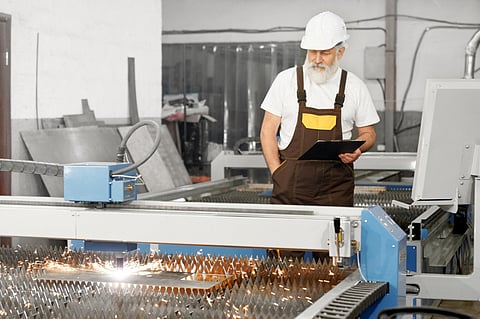
One of the biggest advantages of using a plasma cutter is the level of precision it offers. Unlike traditional cutting methods, plasma technology uses a focused stream of ionized gas to cut through metal with accuracy.
This results in:
Cleaner edges.
Minimal material distortion.
Reduced need for post-processing.
For businesses, this precision directly translates into better product quality. Whether you’re working on detailed fabrication or large-scale industrial projects, accurate cuts ensure that components fit perfectly without requiring rework.
Over time, this level of consistency helps maintain high standards while also reducing errors that can slow down production.
Another key benefit of plasma cutting technology is its versatility. It can be used on a wide range of conductive metals, including:
Steel.
Stainless steel.
Aluminum.
Copper.
This flexibility allows businesses to use a single cutting solution for multiple types of projects. Instead of switching between different tools, they can rely on one system that handles various materials effectively.
Moreover, using a reliable plasma cutter makes it easier to maintain consistent results across different applications without constantly adjusting processes. In fact, some well-established manufacturers in this space, like Hypertherm, focus on building systems that balance precision, efficiency, and long-term performance, which is why their solutions are widely used across both small workshops and large-scale industrial setups.
This adaptability helps businesses streamline their processes and reduce operational complexity.
Speed plays a crucial role in project efficiency. Traditional cutting methods can be time-consuming, especially when working with thick or hard metals.
Plasma cutting significantly reduces cutting time by delivering high-energy output that slices through materials quickly. This allows businesses to:
Complete projects faster.
Handle larger workloads.
Meet tight deadlines more easily.
Faster processing doesn’t just save time—it also improves overall productivity. Teams can focus on completing more tasks instead of spending extra hours on a single job. This makes plasma cutting especially valuable in industries where time directly impacts costs and delivery schedules.
Material waste is one of the biggest hidden costs in any cutting process. Inaccurate cuts, rough edges, or repeated errors can lead to wasted resources and increased expenses.
Plasma cutting helps minimize waste by delivering precise cuts that require little to no correction. This means:
Less scrap material.
Lower production costs.
More efficient use of resources.
Over time, these savings can add up significantly, especially for businesses handling large volumes of material. Additionally, reduced waste also supports sustainability efforts, which is becoming increasingly important across industries.
Modern manufacturing environments often rely on automation and digital systems to improve efficiency. Plasma cutting technology integrates well with these setups, especially when combined with CNC (Computer Numerical Control) systems.
This allows for:
Automated cutting processes.
Repeatable accuracy.
Reduced manual effort.
With automation, businesses can maintain consistency across multiple projects while reducing the chances of human error. It also allows operators to focus on monitoring and managing workflows instead of performing repetitive tasks.
This level of integration makes plasma cutting a future-ready solution that aligns with modern production needs.
When you combine precision, speed, and versatility, the result is a more efficient workflow. Plasma cutting helps businesses optimize their processes by reducing delays, minimizing errors, and improving output quality.
This leads to:
Better project planning.
Faster turnaround times.
Improved customer satisfaction.
Instead of dealing with frequent adjustments or rework, teams can move smoothly from one stage of production to the next.
In the long run, this kind of efficiency doesn’t just improve daily operations—it also strengthens a business’s ability to scale and take on more complex projects.
Have you ever wondered how some businesses manage to deliver high-quality projects quickly without compromising on accuracy?
The answer often lies in the technology they use. Plasma cutting has become a key part of modern industrial workflows because it combines precision, speed, and reliability in a single solution. Reducing errors, saving time, and improving overall efficiency help businesses stay competitive in demanding industries.
Because in the end, success isn’t just about completing projects—it’s about completing them with accuracy, consistency, and efficiency every single time.
Inspired by what you read?
Get more stories like this—plus exclusive guides and resident recommendations—delivered to your inbox. Subscribe to our exclusive newsletter
The products and experiences featured on RESIDENT™ are independently selected by our editorial team. We may receive compensation from retailers and partners when readers engage with or make purchases through certain links.