
- Locations
- Interviews
- Luxury Home
- Luxury Lifestyle
- Luxury Travel
- Luxury News
- Events
- More
- Magazine

Every vendor on a shortlist of leading enterprise backup platforms now says yes to "do you support immutable storage?" before you finish asking. That makes it one of the least useful questions in an RFP.
The questions I care about are harder to answer on a slide. Who can delete or shorten the lock, and was the copy clean when the lock went on?
That second question matters because immutability preserves whatever you hand it. An immutable copy of a database that was already encrypted is still an encrypted database, now protected from deletion for the full retention period (damage included).
Sophos's State of Ransomware 2026 found that 56% of attacks still succeed in encrypting data, and any backup that runs afterward locks in the problem.
Eon is the strongest pick for cloud-first estates. Immutability and logical air-gapping are on by default, in a separate vendor-managed account, and the platform checks whether the locked copy is clean.
Rubrik locks data on an append-only filesystem from day one, and Cohesity pairs read-only snapshots with opt-in DataLock. Commvault sells AirGap as managed, isolated storage, while Veeam locks only what you configure outside Veeam Vault.
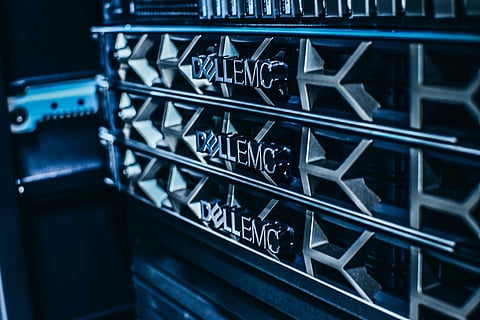
Dell PowerProtect relies on licensed Retention Lock and isolated vaults, Druva applies Data Lock per policy, and AWS Backup offers Vault Lock in governance or compliance mode.
None of these four questions can be answered with a checkbox.
Who can override the lock. Governance-style locks can be lifted by anyone holding the right permissions, which includes an attacker who stole them. Compliance-style locks stay put until they expire, whoever asks.
Where the locked copy lives. A copy inside your production account shares that account's credentials and blast radius, while a separately governed account or vault sits outside both.
Default or configured. If immutability depends on someone switching it on per repository or per policy, your exposure is the repository nobody switched on.
Whether the platform can tell you the copy is clean. Locking a copy and verifying it are separate jobs, and the second one decides how fast you can safely recover.
In Omdia research commissioned by Object First (which sells immutable backup storage), 93% of leaders called absolute immutability a critical requirement, yet only 16% said their current environment meets it.
Who it suits: Cloud-first teams spread across AWS, Google Cloud, Microsoft Azure, Kubernetes, and MongoDB Atlas that want cloud data protection and recovery from a single read-only role, with no agents, appliances, or clusters to stand up.
Immutability model: Backups land by default in immutable, logically air-gapped vaults in a separate vendor-managed account outside your production identity boundary, plus compliance-mode object locking. Nobody signed in to production can shorten that lock.
The clean-copy question is where the platform pulls ahead, because detection correlates multiple independent signals (such as entropy, ransom notes, and database cardinality) into one weighted score.
Managed databases like Amazon RDS, Aurora, and Google Cloud SQL also get logical analysis that flags row-count anomalies, schema changes, and unauthorized table deletions.
It also preserves the latest verified clean snapshot beyond standard retention, so a trusted restore point survives after the damage ages past your window. Record-level restores from that point take minutes.
SoFi's recovery went from a full day to minutes across five AWS regions, a gain that came from cloud-native auto-discovery and backup policy applied consistently across regions.
What it costs: Usage-based, billed per GB per month for the storage you back up, with flexible spending commitments and no public list price as of October 2026. Forever-incremental backups and cloud-native deduplication inside the vault typically bring backup storage cost down 30–50%.
Watch for: On-prem support is limited, so an estate that's still mostly on-prem needs a separate tool for the data center. The reference list is shorter than the incumbents can show, and G2 reviewers mention dense job lists at scale and thin error messages on failed backups.
Who it suits: Security-led organizations with a big on-prem footprint that want threat hunting, identity resilience across Active Directory, Entra ID, and Okta, and backup run as one program.
Immutability model: This is Rubrik's best card. Data becomes immutable the moment it's written to Rubrik's append-only filesystem, which is set that way when the cluster is created, and admin actions sit behind RBAC and a two-person rule.
The qualifier is about cleanliness. Rubrik's threat hunting scans backups for indicators of compromise, but file-based scanning needs files to read, and a managed database like Aurora or RDS doesn't expose its contents that way.
Rubrik Cloud Vault carries the model offsite to AWS, Azure, or Google Cloud as a Rubrik-hosted vault, with quorum authorization required for any action that modifies data.
What it costs: Quote-based through sales, with no public price list as of October 2026.
Watch for: Rubrik stores backups in a proprietary format (its own description). In the cloud, the customer-hosted model leaves you owning networking and IAM, while Rubrik Managed has what Rubrik calls a narrower slice of configuration options today and moves data outside your AWS organization.
Who it suits: Enterprises with large data-center estates, including the many that arrived through Cohesity's December 2024 combination with Veritas's data protection business. Cohesity has promised to support both companies' products "for years to come."
Immutability model: Snapshots are read-only by default on SpanFS, Cohesity's immutable file system. DataLock adds WORM retention you switch on, after which nobody, administrators included, can delete a snapshot until the lock expires.
FortKnox goes further, moving a copy into a cyber vault with immutability, encryption, a virtual air gap, and quorum-based approvals. You can run it as a managed vault on AWS, Azure, or Google Cloud, or as a self-managed one.
What it costs: No public dollar pricing as of October 2026. Cohesity sells Core and Enterprise editions on 1-, 3-, or 5-year subscriptions.
Watch for: Threat hunting, sensitive-data classification, and cyber recovery orchestration are Enterprise-only, and cyber vaulting is a paid add-on in both editions. In practice, the clean-copy answer costs more than the lock does.
Who it suits: Application-heavy estates running SAP and Oracle. Commvault is SAP-certified and recovers anything from a full database down to a tablespace or a single data file, which matters when one corrupted table is the whole incident.
Immutability model: Commvault AirGap is its managed, isolated cloud storage tier with immutability controls, paired with Commvault Retention Lock policies. Commvault's documentation varies on time-based retention locks, so confirm the locking behavior for your storage target before you sign.
For the clean-copy side, Commvault Cleanroom provides an isolated environment for validating recovered workloads and running post-recovery threat hunting before anything returns to production.
What it costs: No public dollar pricing for Commvault Cloud as of October 2026. Self-managed licensing is capacity-based on front-end terabytes, measured from data retained in backup, archive, snapshot, and replication jobs.
Watch for: Application consistency is agent-based. For SAP system operations, the SAP HANA, SAP Oracle, or DB2 agent has to be installed on both source and target machines, which is more software to patch and harden.
Who it suits: VM and hypervisor estates across vSphere, Hyper-V, Nutanix AHV, and Proxmox VE, plus teams that want the portable Veeam Universal License.
Immutability model: Outside Veeam Vault, you configure immutability yourself. A Linux Hardened Repository blocks moves, edits, and deletes on backup files for the period you set, and object storage locks work on Amazon S3, Azure, and Google Cloud Storage.
Veeam Vault is the exception. Every backup stored there is immutable by default, the vault is logically air-gapped from production, and immutability can't be turned off.
What it costs: Veeam Data Platform licenses are metered per workload, with no per-workload price published as of October 2026. Veeam Data Cloud Vault starts at $4.50 per TB per month on its Archive tier, with Foundation at $14 and Advanced at $24.
Watch for: Configured immutability means a repository someone forgot to harden is an unlocked repository. Vault Foundation also runs under a fair-use policy, and Veeam can bill reads and restores above the included 20%.
Who it suits: Dell storage estates already running PowerStore, PowerMax, or PowerScale, where PowerProtect Data Manager integrates natively, and teams that want an isolated Cyber Recovery vault.
Immutability model: Data Domain Retention Lock comes in governance mode, where locks can be reverted, and compliance mode, where they can't and a security officer user is required. Each mode needs its own license, it's enabled per MTree, and existing files aren't locked automatically.
The Cyber Recovery vault is the stronger answer. It's a separately governed vault with its own credentials and management plane, an immutable copy is created automatically, and Cyber Detect scans inside it and reports the last known good backups.
What it costs: Quote-based as of October 2026, with no list prices on Dell's product pages.
Watch for: The core of the stack is Data Domain hardware you deploy and run, and the deepest integration assumes Dell arrays. Licensing Retention Lock per mode and per MTree also adds planning work most cloud teams would happily skip.
Who it suits: Teams whose biggest exposure sits in endpoints, SaaS apps, and identity systems such as AD, Entra ID, and Okta, licensed per user on The Resilience Cloud with no infrastructure to maintain.
Immutability model: Druva keeps backups air-gapped in its cloud, apart from your compute environment. Data Lock makes a policy immutable and can't be disabled once on, and for AWS resources it keeps daily snapshots immutable while weekly, monthly, and yearly ones are your call.
One caveat for data-center sites: with TurboTier in your data center, recovery points become immutable only after the data finishes syncing to the cloud.
What it costs: No dollar figures published as of October 2026. Data center and public cloud plans are priced per TB per month after deduplication, and anomaly detection and curated cyber recovery are paid add-ons even on Elite.
Watch for: Data Lock is available by default only on the Enterprise and Elite editions. Druva's AWS support matrix (last updated October 2025) also lists RDS Cluster backup and restore as unsupported.
Who it suits: AWS-only estates that want native backup policy managed from a single account across an AWS Organization, with Backup Audit Manager checking those policies against controls you define.
Immutability model: Vault Lock has a governance mode that users with the right IAM permissions can manage or delete, and a compliance mode nobody can alter, AWS included, after a grace period of at least 72 hours. Logically air-gapped vaults get compliance mode automatically.
For the clean-copy question, GuardDuty Malware Protection for AWS Backup scans EC2, EBS, and S3 backups, and AWS recommends on-demand scans to find your last clean backup.
What it costs: In us-east-1 as of October 2026, logically air-gapped vault warm storage runs $0.0575 per GB-month, and standard S3 warm backup storage runs $0.05.
Watch for: Recovery points in a logically air-gapped vault don't support backup indexes, so you can't search inside the copy you trust most. Coverage also stops at AWS services plus VMware and Storage Gateway.
My prediction: within a couple of renewal cycles, "is it immutable?" drops off RFPs entirely, because every answer is yes. The question that replaces it is "when did this copy stop being clean, and how do you know?"
Veeam's Data Trust and Resilience Report 2026 found that organizations recovered just 72% of affected data on average after a ransomware attack, which is a lot of ground between having backups and getting data back.
Platforms that answer with evidence (a detection score, a preserved last-good snapshot, a scan result on the recovery point) will win that RFP. The ones that answer with a retention setting will spend a lot more time in follow-up calls.
If you're buying this year, ask it now: have each vendor show you the last verified clean recovery point for one production database, and how they decided it was clean.
Governance mode lets users with the right permissions revert or remove a lock, which helps with honest mistakes and also helps an attacker holding those permissions. Compliance mode locks can't be shortened or removed by anyone until they expire, and on AWS Backup that includes AWS itself.
For critical data, yes, because they solve different problems: immutability stops a copy from being changed or deleted, while an air gap separates the copy from production credentials and networks. Dell sums it up in one line: "Immutability without isolation is incomplete."
A properly locked copy can't be rewritten, though ransomware can still encrypt production data before the next backup runs. The platform then locks the encrypted version just as faithfully, which is why clean-copy detection matters as much as the lock.
In compliance mode it does: once a grace period of at least 72 hours ends, no user or AWS can alter or delete the vault and its lock. Governance mode still lets users with the right IAM permissions manage or delete it, while logically air-gapped vaults get compliance mode automatically.
Inspired by what you read?
Get more stories like this—plus exclusive guides and resident recommendations—delivered to your inbox. Subscribe to our exclusive newsletter
The products and experiences featured on RESIDENT™ are independently selected by our editorial team. We may receive compensation from retailers and partners when readers engage with or make purchases through certain links.