
- Locations
- Interviews
- Luxury Home
- Luxury Lifestyle
- Luxury Travel
- Luxury News
- Events
- More
- Magazine

Getting a line of credit is a process, and like most processes, it goes smoother when you know the order of events. Homeowners who jump straight to an application often discover too late that their equity is lower than expected or that their credit needs work. A little sequencing prevents wasted time and unnecessary costs.
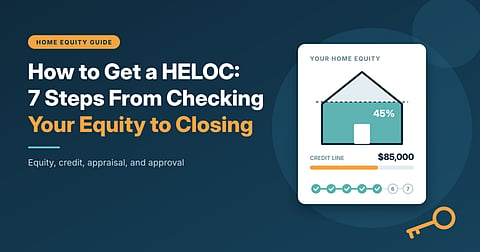
If you are researching how to get a HELOC, Achieve's overview describes the product, and the seven steps below walk through what usually happens from the first calculation to the final signature. The details vary by lender, but most follow a similar pattern..
Treat the steps as a roadmap. You can move through them in a weekend of research and then a few weeks of paperwork, or you can stretch them out while you strengthen your credit. Either approach works if you stay organized. The biggest time-savers are knowing your numbers before you apply and keeping your paperwork in one place.
Subtract your mortgage balance from an estimate of your home's value. Online tools and recent comparable sales can give a rough sense. Then apply a combined loan-to-value ceiling of around 80 to 85 percent to see how much you might be able to borrow. The CFPB's page on home equity explains the concept clearly. Keep in mind that a lender's appraisal may differ from your estimate, so treat your own number as a starting point rather than a promise.
Order your free reports from AnnualCreditReport.com and review them for errors. According to myFICO, payment history and amounts owed are the biggest factors in a score, so paying down balances before applying can help. If you spot an error, dispute it right away, because corrections can take weeks to appear.
Define your purpose and amount. A specific plan keeps you from borrowing too much and helps you choose the right structure. A project that will be paid in stages, for example, points toward a line of credit, while a single large expense may favor a fixed-rate loan. Remember that interest may be deductible only in certain situations, as the IRS explains in its guidance on home equity loan interest.
Request quotes from several lenders, including banks, credit unions and online companies. Compare APR, fees, draw and repayment periods and whether fixed-rate options are available. Ask each lender to put its quote in writing, and use the same loan amount for every request so the numbers line up. Check licensing through the NMLS Consumer Access site.
Prepare proof of income, mortgage statements, homeowner's insurance and tax records. Having these ready keeps your file moving and avoids delays. Digital copies stored in one folder make it easy to respond when the lender asks for something extra.
Submit your application and respond quickly to requests. The lender will verify your income, check your credit and typically order an appraisal. This stage can take a few weeks, so build in time if you have a deadline. Avoid taking on new debt or making large purchases while your file is under review, since changes to your credit can complicate approval.
Read your disclosures carefully before signing. For a loan secured by your primary residence, you generally have three business days to cancel after closing. Once the period ends, your line opens and you can begin to draw according to the terms. Take the time to confirm your credit limit, the rate, the fees and the payment schedule match the disclosures you reviewed.
Getting a HELOC comes down to seven steps: calculate your equity, check your credit, define your purpose, compare lenders, gather documents, complete underwriting and review everything before you sign. Set up online access, mark the end of the draw period on your calendar and make a plan for repayment. Consider paying some principal during the draw period if you can. Keep copies of every document, and watch for rate changes if your line is variable. Review your statements each month, because catching a mistake early is far easier than disputing it later.
The best line is the one that balances a competitive APR, reasonable fees and flexible terms for your situation. Compare at least three lenders, review every cost and consider the quality of customer service. A lender that explains each step clearly is often a good fit.
It varies. Many borrowers complete the process in several weeks, depending on the appraisal and how quickly documents are submitted.
Requirements differ by lender. Higher scores generally lead to better rates and higher limits, but lenders also weigh your income, existing debts and the amount of equity in your home. If your score is on the lower side, improving it before applying may save you money.
Yes. Most lines are second liens, and the lender will consider your remaining equity when setting your limit.
Inspired by what you read?
Get more stories like this—plus exclusive guides and resident recommendations—delivered to your inbox. Subscribe to our exclusive newsletter
The products and experiences featured on RESIDENT™ are independently selected by our editorial team. We may receive compensation from retailers and partners when readers engage with or make purchases through certain links.