
- Locations
- Interviews
- Luxury Home
- Luxury Lifestyle
- Luxury Travel
- Luxury News
- Events
- More
- Magazine

Museums preserve objects that carry traces of human history, but displaying an artefact does not always explain the full story behind it. A centuries-old ceramic vessel, a fragment of clothing, a handwritten letter, or an ancient tool may be historically significant, yet visitors often struggle to understand how it fitted into everyday life. Without context, even an extraordinary discovery can appear like an isolated object behind a glass case. Museums therefore face an ongoing challenge: how can they make historical information meaningful without oversimplifying the past?
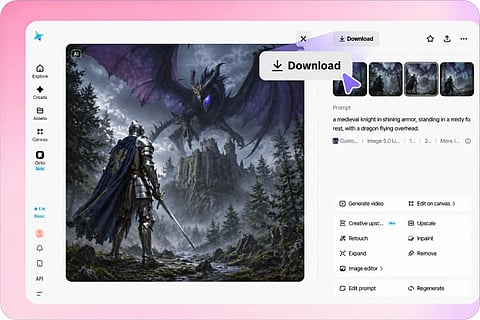
One approach is to combine physical collections with carefully developed digital storytelling. An ai image generator can help museum teams explore visual representations of historical settings, forgotten activities, architectural environments, and cultural practices. These illustrations can provide additional context for objects that are difficult to interpret through written descriptions alone. They can also help educators develop visual resources for exhibitions, workshops, and digital learning experiences.
The purpose of this approach is not to replace original artefacts or turn museums into collections of computer-generated pictures. Instead, it is to create stronger connections between historical evidence and public understanding. When visual storytelling is supported by research, museums can help visitors explore not only what survived from the past, but also the people, environments, and activities that gave those objects meaning.
Many museum collections contain objects separated from the places where they were originally used. A cooking vessel may have been recovered from an ancient settlement, while a decorative object might have belonged to a household, religious building, or commercial space. Once displayed independently, the relationship between an object and its original surroundings can become difficult to understand.
Visual reconstruction can help restore some of this context. For example, an exhibition displaying ancient agricultural equipment could include an illustration of a possible farming environment. Visitors would have an opportunity to understand how the object may have been handled, what other tools were used alongside it, and why it mattered to the community.
This approach can be particularly useful for collections containing domestic objects. Furniture fragments, storage containers, utensils, and decorative pieces often reveal details about household routines. Placing them within a carefully researched visual setting can make their purpose easier to understand.
However, museums must distinguish between confirmed historical information and interpretation. If the exact appearance of a room is unknown, the reconstruction should be presented as an illustrative possibility rather than a definitive record. This transparency allows visitors to appreciate the visual explanation without confusing it with direct archaeological evidence.
Historical buildings frequently survive in incomplete condition. Some museums display architectural fragments, carved stonework, tiles, columns, or decorative elements recovered from demolished structures. These remains can be impressive, but visitors may find it difficult to imagine the original building from a small section of its structure.
Visual storytelling can provide a broader perspective. An exhibition about a historic palace, temple, marketplace, or public building could include researched illustrations showing how its spaces might have been arranged. These images could help visitors understand the relationship between entrances, courtyards, halls, decorative features, and surrounding streets.
Different reconstructions could also demonstrate how a building changed over time. A historic structure might have been expanded, repaired, or adapted for different purposes across several generations. Showing these possible stages can make architectural history more accessible than presenting a single final appearance.
Digital imagery can also support conversations about conservation. A museum could compare the current condition of a building with an interpretation of its earlier appearance, helping visitors understand why restoration work matters. Such comparisons should always be supported by architectural research, historical documentation, and clearly identified evidence.
Objects are often remembered because of their craftsmanship, rarity, or monetary value. Yet their deeper significance frequently comes from the people who made, owned, traded, or used them. A handwritten document may reveal an individual's concerns, while a household object can provide clues about family routines and social relationships.
Museum storytelling becomes more engaging when it explores these human connections. An exhibition about historical writing instruments, for example, could explain who used them, what kinds of documents were produced, and how written communication influenced administration or education.
Visual scenes can help communicate these relationships. A carefully researched illustration might show a historical writing environment, including furniture, tools, documents, and surrounding architectural features. The image would not claim to represent a particular person unless reliable evidence supported that interpretation. Instead, it would provide a general setting through which visitors could understand the object's historical function.
This method can also make collections more accessible to younger audiences. Children may find it easier to connect with an object when they can imagine how someone used it in an everyday situation. The educational value comes from connecting the physical artefact with a broader human experience.
Museum audiences come from different educational backgrounds, age groups, and cultural experiences. Some visitors are familiar with historical terminology, while others may be encountering a particular civilization or tradition for the first time. Exhibitions must communicate important ideas without assuming that everyone has the same level of background knowledge.
Visual explanations can help reduce this barrier. An exhibition about traditional textile production might include illustrations of the different stages involved in preparing fibres, weaving patterns, and creating finished garments. Visitors could then connect these processes with the actual textiles displayed in the collection.
This approach is also valuable when museums present cultural practices that are less familiar to international audiences. Carefully researched visual material can explain regional architecture, traditional crafts, historical clothing, and community activities in ways that are easier to follow.
Inclusivity also requires cultural sensitivity. Museums should avoid combining unrelated traditions or presenting one community through stereotypical visual details. Where appropriate, curators can consult cultural representatives, historians, and specialists to ensure that the exhibition reflects the people and traditions being discussed. Digital imagery should support cultural understanding rather than simplify complex identities.
Traditional exhibitions are often organised around periods, geographical regions, important individuals, or categories of objects. These structures provide useful historical organisation, but another approach is to build an exhibition around a question.
For example, a museum might explore how people travelled before modern transportation, how communities stored food, or how cities managed water supplies. Such themes encourage visitors to examine objects from different historical periods and consider how societies approached similar challenges.
Visual storytelling can support this structure by illustrating the environments and activities associated with each question. An exhibition about water management might combine photographs of ancient wells, maps of historic settlements, physical tools, and reconstructed scenes showing possible systems of collection and distribution.
This approach creates opportunities for comparison. Visitors can see how different communities developed solutions according to their geography, technology, available materials, and social organisation. It also demonstrates that historical development was not identical across every region.
A question-led exhibition can be particularly effective for educational groups because it encourages observation and discussion. Rather than simply reading labels, students can compare evidence, identify differences, and develop their own interpretations.
Not everyone can visit a museum in person. Geographical distance, travel expenses, accessibility limitations, and personal circumstances can prevent people from experiencing physical collections. Digital exhibitions provide another way to share historical material with a wider audience.
Online collections often begin with photographs and descriptions of individual objects. While these resources are valuable, they can become more engaging when supported by visual context. A digital exhibition about ancient trade, for instance, could combine artefact photographs with illustrated trading environments, maps, and explanations of how different goods moved between regions.
AI-assisted imagery can support the development of these additional visual materials. Museum teams can explore different compositions for educational pages, digital presentations, and virtual exhibition concepts. They can also create visual references that help communicate how an online exhibition might be organised before the final design is produced.
Accessibility should remain central to digital development. Images need meaningful descriptions for visitors using screen readers, while text should be clear and easy to navigate. Visual material should complement historical explanations rather than become the only source of information.
Digital exhibitions also create opportunities for international collaboration. Museums holding related collections can share research, compare objects, and develop educational projects that connect historical material across geographical boundaries.
History is rarely a collection of isolated events. It involves gradual changes in technology, architecture, clothing, trade, social organisation, and cultural practices. Museums can use visual comparisons to help visitors recognise these developments.
An exhibition about urban life might compare the layout of a settlement during different periods. One section could explore early residential areas, another could examine the development of public spaces, and a third could show how commercial activity influenced the surrounding environment.
Visual reconstructions can make these differences easier to recognise. However, the images should be based on dated archaeological or historical evidence. Without reliable references, a visual comparison could accidentally introduce architectural features from different periods or suggest changes that did not occur.
Chronological storytelling can also reveal connections between seemingly unrelated objects. A change in transportation may influence trade, which may affect the availability of materials and eventually alter local craftsmanship. Presenting these relationships through objects, maps, and illustrations can help visitors understand history as a connected process.
This method is particularly useful for exhibitions about long periods of social or technological development. Instead of asking visitors to remember a large number of dates, museums can demonstrate how everyday environments changed through time.
Visual storytelling can make historical information more engaging, but it also creates a responsibility to protect the accuracy of museum collections. A convincing image may contain details that have never been supported by archaeological findings or historical records. Visitors may assume that a realistic illustration represents an actual historical scene unless its status is clearly explained.
Museum teams should therefore establish a research process before creating reconstructed imagery. This may involve consulting excavation reports, archival photographs, historical documents, specialist publications, and relevant collection records. Each visual element should be evaluated according to the strength of its supporting evidence.
It is also important to involve subject specialists during review. Historians, archaeologists, conservators, and cultural experts can identify details that require correction. They can assess whether the architecture, clothing, tools, and social environment are appropriate for the period being presented.
Where evidence is incomplete, museums can explain the uncertainty directly. Showing alternative interpretations may be more educational than presenting one imagined version as the only possible reconstruction. Visitors can then understand that historical knowledge develops through research, debate, and new discoveries.
Museum education increasingly involves activities that encourage visitors to participate rather than simply observe. Interactive displays, guided workshops, digital quizzes, and educational demonstrations can make collections more memorable.
Visual resources can support these experiences. A museum workshop about historical architecture might ask participants to compare several building concepts and identify which features are supported by physical evidence. An activity about traditional clothing could invite students to examine textile fragments before considering how a garment may have been constructed.
Digital illustrations can also be used as discussion prompts. Visitors might compare a reconstructed scene with an original artefact and identify which details appear to be based on evidence. This encourages critical thinking instead of passive acceptance.
For younger audiences, visual storytelling can make difficult historical subjects easier to approach. Students can explore how people lived in different environments, how materials were transformed into useful objects, and how cultural practices developed across generations.
The most effective interactive experiences maintain a connection with the actual collection. Technology should encourage visitors to look more closely at historical evidence rather than distract them from the objects museums are responsible for preserving.
Museums have an important responsibility to preserve historical objects, but their role also involves explaining why those objects matter. A fragment of pottery, an architectural detail, or an ordinary household tool can reveal much more when visitors understand its original environment and the people connected to it.
AI-assisted visual storytelling offers another way to communicate these relationships. It can help museums explore historical settings, explain everyday activities, support digital exhibitions, and develop educational resources. However, its value depends on research, cultural sensitivity, expert review, and transparent presentation.
The strongest museum experiences will continue to combine authentic collections with thoughtful interpretation. When digital imagery supports rather than replaces historical evidence, it can help visitors move beyond simply looking at objects and begin understanding the lives, ideas, and communities behind them.
1. How can museums use AI-generated images in exhibitions?
Museums can use them to develop illustrative reconstructions of historical environments, explain the possible uses of objects, support educational displays, and create additional visual material for digital exhibitions.
2. Can AI-generated imagery replace original museum artefacts?
No. Original artefacts provide physical and historical evidence that generated images cannot reproduce. Digital illustrations should complement authentic collections and provide additional context.
3. Why is historical accuracy important in museum visualisation?
Accuracy helps visitors distinguish documented information from interpretation. It also protects cultural heritage from misleading representations and unsupported historical assumptions.
4. Can digital storytelling make museum education more accessible?
Yes. Visual explanations, online exhibitions, and interactive educational resources can help people understand collections even when they cannot visit a museum physically.
5. Who should review AI-assisted historical reconstructions?
Depending on the subject, historians, archaeologists, museum curators, conservators, and cultural specialists can review the imagery to identify inaccuracies and ensure that historical context is represented responsibly.
Inspired by what you read?
Get more stories like this—plus exclusive guides and resident recommendations—delivered to your inbox. Subscribe to our exclusive newsletter
The products and experiences featured on RESIDENT™ are independently selected by our editorial team. We may receive compensation from retailers and partners when readers engage with or make purchases through certain links.