
- Locations
- Interviews
- Luxury Home
- Luxury Lifestyle
- Luxury Travel
- Luxury News
- Events
- More
- Magazine

Ask ten people to name their dream European vacation spot and you will hear the same answers over and over. Italy. France. Greece. Spain. Rarely does anyone mention Slovenia, and that is exactly why this small alpine country deserves your attention right now.
Slovenia sits quietly between Italy, Austria, Hungary, and Croatia, yet it somehow avoids the crowds that flood its famous neighbors every summer. It has the turquoise lakes people travel to Switzerland for, the coastal charm people fly to Croatia for, and the cave systems that rival anything in Europe. Best of all, you get to enjoy it without fighting through your buses and long ticket lines.
This guide breaks down exactly why Slovenia belongs on your travel list, what makes it different from the rest of Europe, and how to plan a trip that actually delivers on the hype.
Slovenia covers just over 20,000 square kilometers, which makes it smaller than many US states. That size is actually its biggest advantage. You can wake up hiking in the Julian Alps, have lunch in a medieval old town, and watch the sunset over the Adriatic Sea, all in the same day.
Most travelers spend a week or two hopping between countries to see mountains, lakes, coastline, and cities. In Slovenia, you get all four within a short drive. That kind of variety in such a compact space is rare anywhere in the world.
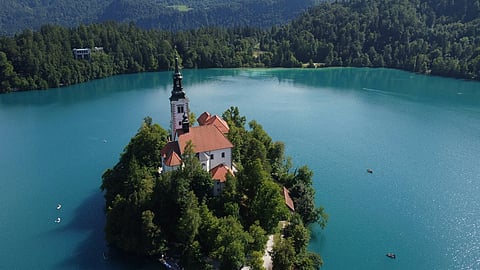
Lake Bled is often the first image people see of Slovenia, and honestly, it undersells the place. The glacier lake sits surrounded by the Julian Alps, with a tiny island in the middle holding a church you can reach by traditional wooden boat called a pletna. A cliffside castle watches over the whole scene from above.
Visit early in the morning before the tour groups arrive, and you will have the shoreline almost to yourself. Rent a rowboat, ring the wishing bell inside the church, or just sit at a lakeside café with a slice of the local kremna rezina cream cake. Few places in Europe give you this much beauty without the wait.
Ljubljana is one of the smallest and calmest capital cities in Europe, and that is a compliment. The historic center is closed to most traffic, so you can walk along the Ljubljanica River, cross the famous Triple Bridge, and browse the open-air market without dodging cars or crowds.
Take the funicular up to Ljubljana Castle for views over the terracotta rooftops, then wander back down through streets lined with cafés, street art, and small local shops. The city has a relaxed, creative energy that feels closer to a university town than a national capital, which is part of its charm.
Triglav National Park covers a large stretch of northwest Slovenia and includes the country's highest peak, Mount Triglav. The park is a paradise for hikers, climbers, and anyone who wants dramatic mountain scenery without the crowds you would find in the Dolomites or the Swiss Alps.
The Soča Valley, part of this same alpine region, is famous for its bright turquoise river. Rafting, kayaking, canyoning, and mountain biking are all popular here, along with quiet hiking trails that lead to waterfalls and gorges most tourists never hear about.
The Karst region in southwestern Slovenia is home to Postojna Cave, one of the largest cave networks in Europe. A small underground train carries you deep into the cave before you continue on foot past towering stalactites and stalagmites formed over thousands of years.
Nearby, Predjama Castle is built directly into the mouth of a cliff, making it one of the most unusual castles you will ever see. Legend says a rebellious knight once used its secret tunnels to hold off a siege for over a year. Together, these two sites offer an experience you simply cannot find anywhere else in Europe.
Slovenia only has about 46 kilometers of coastline, but it makes the most of it. Piran, with its narrow stone streets and Venetian architecture, feels like a smaller, quieter version of towns along the Italian coast, minus the crowds and the price tag.
A short drive away, the fishing town of Izola has become known for its slower pace of life and charming harbor. Both towns give you Mediterranean vibes without the overtourism that has become a real problem in nearby Croatia and Italy.
Slovenian cuisine blends Italian, Austrian, and Balkan influences into something unique. Try potica, a rolled pastry filled with walnuts or tarragon, or sample fresh trout pulled straight from alpine rivers. The Karst region is also known for pršut, an air dried ham similar to prosciutto.
Wine lovers should not skip the Brda region near the Italian border, where rolling hills produce excellent white wines that rarely make it onto shelves outside the country. Many small family run wineries offer tastings directly with the people who grow the grapes.
Slovenia consistently ranks as one of the safest and greenest countries in Europe. Public transport is reliable, English is widely spoken, and the country has invested heavily in sustainable tourism practices. Ljubljana was even named a European Green Capital, a title that reflects the country's genuine commitment to protecting its natural spaces.
This focus on sustainability means fewer crowds, cleaner cities, and better preserved nature. It also means your visit supports a country actively trying to grow tourism the right way, rather than overwhelming its own resources.
Late spring through early autumn, roughly April to October, gives you the best weather across the country. Summer months bring warm temperatures perfect for lake swimming and coastal trips, while May, June, September, and October offer milder weather with fewer visitors, making them ideal for hiking and city exploring.
Winter has its own appeal too. The Julian Alps turn into a quiet playground for skiing, and Ljubljana's Christmas markets are among the most charming in Central Europe.
Slovenia rewards travelers who slow down. Rather than rushing between the biggest landmarks, spend a few extra nights in smaller towns, talk to locals, and leave room in your schedule for spontaneous stops. If planning logistics feels overwhelming, booking guided slovenia tours can help you cover the highlights efficiently while still leaving time to explore at your own pace.
Whether you are drawn to alpine lakes, coastal towns, underground caves, or a walkable capital city, Slovenia delivers all of it without the overcrowding found elsewhere in Europe.
Slovenia is not underrated because it lacks anything. It is underrated because it has not yet been discovered by the masses, and that is precisely what makes it special. The lakes are just as blue, the mountains just as tall, and the old towns just as charming as anything you will find in more famous parts of Europe. The only difference is you get to experience it all without the crowds.
If you are looking for a European destination that feels fresh, authentic, and still relatively untouched by mass tourism, Slovenia should be at the very top of your list.