
- Locations
- Interviews
- Luxury Home
- Luxury Lifestyle
- Luxury Travel
- Luxury News
- Events
- More
- Magazine

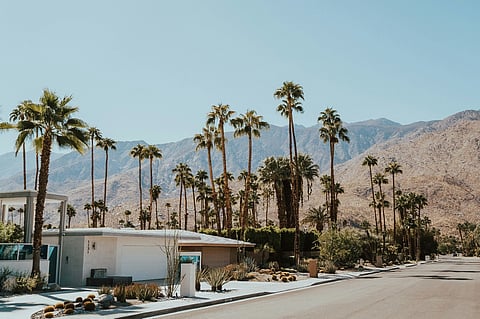
For some households, winter means trading a gray northern city for a modernist house in Palm Springs or a hillside place above Montecito. The art, the golf and the long dinners are the point. The car, though, is the detail that tends to get decided last, usually at the moment someone realizes that renting for four months costs more than shipping the one they already love.
Delivery figures from the broker SAKAEM Logistics put what moving a car into California costs right now at between $975 and $1,275 for an ordinary vehicle on an uncovered trailer, based on recent deliveries into the state. The exact figure depends on the starting city, how big the vehicle is and the week it moves.
Those numbers apply to the daily driver, meaning the SUV for grocery runs to Palm Desert or the sedan for weekend drives over to Santa Ynez. The prized car in the back of the garage is another matter.
An open truck is the standard way cars cross the country, and for a modern daily driver it is perfectly sensible. The vehicle rides on the same highways everyone else uses, open to rain and highway grit, much as it would if its owner drove it west.
Enclosed transport is a different product. The car rides inside a covered trailer, often with liftgate loading rather than steep ramps, and typically alongside fewer vehicles. In the same shipment data, enclosed moves averaged about 55% more than open ones. That premium is easy to justify for:
A collector car with original paint or a fresh restoration
Anything with minimal ground clearance, where ramp angles matter
A soft top or convertible with a delicate roof
A car headed to a concours or a club event, where arriving clean is the whole idea
For the household SUV, it is usually money better spent on dinner at Workshop Kitchen.
Palm Springs runs on a well known calendar. Modernism Week in February brings some of the year's biggest crowds, and by May the desert heat sends most seasonal residents back north. Montecito's rhythm is gentler, but the holiday weeks fill quickly there as well.
Plan to have the car arrive a few days before the household does. An estate manager, a trusted neighbor or gate staff at a community in Rancho Mirage or Indian Wells can usually receive it, provided they know a truck is coming and where it can safely stop. Plenty of private roads and gated drives simply cannot fit a big transport rig, so the handoff may take place at the community entrance or a nearby club lot.
California's DMV is clear on the basic rule. A nonresident can drive a car in the state without California registration provided it is properly registered in the home state and carries valid plates from that state. The registration can be renewed back home.
The picture changes when residency changes. According to the DMV, California fees become due on the earlier of two dates: the day the owner establishes California residency, or the day the out of state registration expires. A household that winters in Palm Springs but votes, files taxes and keeps its primary home in Connecticut is in a very different position from one that has quietly started spending most of the year in the desert. Anyone in the second group should talk to an accountant before the car's paperwork becomes a question.
Insurance. Check whether the policy, especially an agreed value policy on a collector car, has terms that apply during transport, and keep a copy of the declarations page handy.
Fuel and fluids. A quarter tank is plenty. A full one adds weight without adding anything useful.
Keys and remotes. Gate openers, garage remotes and valet keys belong in a drawer at the destination, not in the car.
Paperwork. Keep the registration card and the insurance card in the glove box for the trip, and a photo of both on a phone.
Some owners stop moving the car at all. Once a household has spent a few winters in the desert, a dedicated California car starts to make sense: a convertible that never leaves the Coachella Valley, kept in a climate controlled storage facility from May to October and collected again at Thanksgiving.
That approach has its own fine print. Summer afternoons in Palm Springs regularly top 110 degrees, which is hard on batteries, rubber seals and tires sitting in an ordinary garage. A proper storage space with temperature control, a battery tender and a cover is the minimum, and someone local should start the car and move it every few weeks. A car that stays in the state all year can also raise registration questions of its own, so ask the DMV or an accountant how it will be treated before committing.
The trade off is simple to weigh. A round trip on a truck every year adds up over a decade, while a car that lives in the desert year round asks for storage fees, a caretaker and a little more paperwork. For households that winter in the same place every year, the second option often wins.
Spring brings the same decision in reverse. Many seasonal owners reserve the northbound leg on the same call as the westbound one, which keeps the dates simple and avoids the late April rush, when the desert empties out all at once. Booking both directions together also gives the person receiving the car in the desert a single date to plan around, and leaves the household one less errand in the final busy weeks of the season.
The car is a small part of a winter in California. Handled early, it stays that way.
Inspired by what you read?
Get more stories like this—plus exclusive guides and resident recommendations—delivered to your inbox. Subscribe to our exclusive newsletter
The products and experiences featured on RESIDENT™ are independently selected by our editorial team. We may receive compensation from retailers and partners when readers engage with or make purchases through certain links.