
- Locations
- Interviews
- Luxury Home
- Luxury Lifestyle
- Luxury Travel
- Luxury News
- Events
- More
- Magazine

Each year, Omaha becomes the center of gravity for global finance as investors gather for the annual meeting of Berkshire Hathaway. The event earned its nickname, Woodstock for Capitalists, because it blends financial insight with cultural spectacle. For decades, the meeting revolved around Warren Buffett, whose presence turned earnings discussions into masterclasses on life and investing.
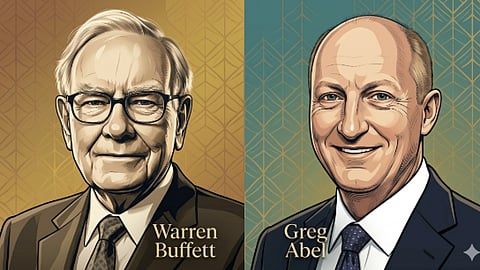
In 2026, that dynamic changes in a profound way. Buffett is no longer leading the meeting. He attends as an observer, marking the first time in over four decades that his voice is not guiding the conversation from center stage. The atmosphere remains electric, yet there is an unmistakable shift in tone as attendees witness the beginning of a new chapter.
Even as leadership evolves, Berkshire’s financial engine continues to perform with remarkable consistency. In the first quarter of 2026, the company reported revenue of $93.7 billion, representing growth of more than 4 percent. Operating profits rose an impressive 17 percent to $11.35 billion, underscoring the strength of its diversified holdings.
From insurance to energy to transportation, Berkshire’s structure allows it to absorb volatility while capturing steady gains. What stands out even more is the company’s record cash position, now sitting at $373.5 billion. This level of liquidity is both a strategic advantage and a philosophical question. It reflects patience and discipline, yet it also invites scrutiny about where future returns will come from. In many ways, Berkshire’s financials mirror its identity as a company that prioritizes resilience over speed.
The transition of leadership to Greg Abel has been years in the making. Abel, who has overseen Berkshire’s non-insurance operations, is widely respected within the organization for his steady management style and operational depth. His appointment signals continuity rather than disruption, which aligns with Berkshire’s long-standing culture. Abel is not expected to reinvent the company’s philosophy. Instead, his role is to preserve what works while adapting to new economic realities.
That balance will define his leadership. He inherits a company built on trust, decentralization, and long-term thinking. The challenge lies in maintaining those principles while navigating markets shaped by technology, geopolitical shifts, and evolving consumer behavior. Abel’s understated presence may prove to be his greatest strength in this moment.
Berkshire’s record cash holdings of $373.5 billion have become one of the most discussed aspects of its current position. On one hand, the cash represents optionality and security in uncertain markets. On the other hand, it raises a fundamental question about deployment. Investors are increasingly curious about how such a vast reserve will be used to generate future returns. Large-scale acquisitions have become more difficult as valuations remain high and competition intensifies.
At the same time, smaller investments may not meaningfully impact a company of Berkshire’s size. This tension highlights the complexity of managing capital at such scale. The decision is no longer just about finding value but about finding value that can move the needle. Abel’s approach to this challenge will offer early insight into how the next era of Berkshire will take shape.
Beyond financial metrics, Berkshire’s true differentiator has always been its culture. The company operates with a decentralized model that empowers its subsidiaries while maintaining a shared philosophy of discipline and trust. This structure has allowed Berkshire to scale without losing its identity. Warren Buffett cultivated a culture that values patience, integrity, and rational decision-making.
Preserving that culture is perhaps the most important responsibility for Abel and the broader leadership team. In a business environment that often rewards short-term thinking, Berkshire’s commitment to long-term value stands apart. The question now is whether that culture can continue to thrive without the figure who defined it for so long. Early signals suggest that the foundation is strong, but the coming years will test its durability in new and unexpected ways.
Buffett has pledged nearly his entire fortune to philanthropy, primarily through the Gates Foundation and his children’s foundations. He co-founded the Giving Pledge with Bill Gates in 2010, encouraging billionaires to donate at least half their wealth. Personally modest, he continues to live in his Omaha home purchased in 1958 and maintains simple tastes, favoring McDonald’s, Coca-Cola, and bridge games over luxury.
The Berkshire Hathaway annual meeting has always been more than a financial event. It has been a cultural phenomenon driven largely by Buffett’s ability to connect with audiences. His humor, clarity, and perspective turned complex financial discussions into accessible insights. With Buffett stepping back, the meeting itself is poised to evolve. The format may become more structured, and the tone may shift toward a broader leadership perspective.
While some of the charm associated with Buffett’s presence may fade, there is an opportunity to redefine the event for a new generation of investors. The focus may expand to include a wider range of voices within Berkshire’s leadership. This evolution reflects the broader transition taking place within the company and signals a move toward a more institutional identity.
The transition from Buffett to Abel represents one of the most significant leadership changes in modern financial history. It is not just about a change in CEO but about the continuation of a philosophy that has shaped decades of investment thinking. Berkshire Hathaway stands as a testament to the power of patience, discipline, and compounding over time.
As the company moves forward, investors will be watching closely to see how these principles are applied in a new context. The stakes are high, but so is the foundation. This moment is less about uncertainty and more about evolution. Berkshire’s story is far from over. In many ways, it is entering a phase that will define its legacy for the next generation.
Inspired by what you read?
Get more stories like this—plus exclusive guides and resident recommendations—delivered to your inbox. Subscribe to our exclusive newsletter
The products and experiences featured on RESIDENT™ are independently selected by our editorial team. We may receive compensation from retailers and partners when readers engage with or make purchases through certain links.