
- Locations
- Interviews
- Luxury Home
- Luxury Lifestyle
- Luxury Travel
- Luxury News
- Events
- More
- Magazine

Best Korean BBQ in Koreatown — Hae Jang Chon Korean BBQ Restaurant
Best Korean Spa in Los Angeles — Wi Spa
Best Shopping in Koreatown — Koreatown Plaza and Koreatown Galleria (tie)
Best Noraebang Karaoke in Koreatown — Rosen By Pharaoh
Best Hotel in Koreatown — The LINE LA
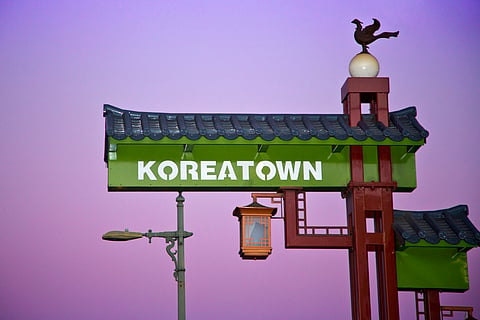
Koreatown sits roughly two miles west of Downtown Los Angeles, straddling Wilshire and Olympic boulevards in a dense 2.7-square-mile grid that holds more than 700 restaurants and the highest concentration of nightclubs in Southern California. It is the cultural and commercial heart of the largest Korean-American community in the United States, and the energy here is unlike anything else in Los Angeles. Korean barbecue restaurants run late. Spas open around the clock, and karaoke rooms fill every day of the week. The neighborhood moves on its own schedule, and that schedule never really stops.
A 72-hour visit covers the essentials well: the tabletop grills and steaming soups, the skincare boutiques along Chapman Plaza, the jimjilbang sauna experience, the private noraebang rooms, and the after-hours dining culture that defines the neighborhood as much as any restaurant with a Michelin nod. What follows is a neighborhood guide to the best food, spas, shopping, nightlife, and hotels Koreatown has to offer.
Food is the reason most visitors come to Koreatown, and there is enough variety across a single day to move from Taiwanese breakfast comfort food to tableside Korean barbecue to late-night pork bone soup without once leaving the neighborhood.
Korean barbecue is the defining ritual of Koreatown dining, and the neighborhood holds some of the best Korean BBQ in Los Angeles. Park's BBQ on South Vermont Avenue is the benchmark: USDA Prime meats, exceptional banchan, and attentive tableside service that has made it a consistent destination for decades.
Quarters Korean BBQ brings a more modern atmosphere and strong cocktails alongside its grills. Hae Jang Chon on West 6th Street has been serving all-you-can-eat USDA Choice Korean barbecue on traditional stone grills since 2002, with a menu that runs from marinated beef to fresh seafood. On Friday and Saturday nights, the kitchen stays open until 2 a.m. Soowon Galbi on South Vermont Avenue is known for its signature house galbi, a USDA Premium Black Angus bone-in short rib marinated for 48 hours and grilled over charcoal.
Beyond the grill, Koreatown's soup and noodle culture runs just as deep. Lasung Tofu is the neighborhood's go-to for soondubu jjigae, the silken tofu stew that arrives in a stone pot still bubbling at the table. Hangari Kalguksu specializes in handmade knife-cut noodles in clear, rich broths. For late-night recovery, Jinsol Gukbap on W 3rd Street serves their signature dish pork rice soup, perfect if you are looking for authentic Korean flavor in every bite.
The neighborhood's dining scene extends well past its Korean foundations. Danbi, the Michelin-recognized modern Korean dining room on West 6th Street, brings refined small plates and a drink forward menu to one of Koreatown's most polished rooms. Escala K-Town explores Korean-Colombian fusion with confidence, with standout dishes like kimchi empanadas and Pacific seafood stew that make the case for the combination. Liu's Cafe is is a Michelin Bib Gourmand Taiwanese and Chinese-American spot built around braised pork belly rice, handmade wontons in chili oil and Hong Kong-style French toast.
Koreatown's late-night dining culture is one of its defining characteristics. Sun Nong Dan keeps its kitchen going through the early morning hours, built around sullung tang, a slow-simmered beef bone broth soup served with premium cuts of beef and house-made kimchi. Dan Sung Sa, a longtime neighborhood institution with a Korean pojangmacha aesthetic, is the place to end an evening over small plates and soju. For dessert, Sul & Beans does bingsoo, the shaved ice dessert layered with sweet red beans and condensed milk, in both classic and seasonal variations.
When the meal ends, the neighborhood has somewhere to be next, and in Koreatown, that is almost always the spa.
What is a jjimjilbang? A jjimjilbang is a Korean public bathhouse and sauna facility. Entry includes access to wet areas with hot and cold pools, dry sauna rooms, and communal rest areas. Most facilities are open late or 24 hours, and many include food service. Modest clothing is worn in the communal areas; the wet areas are gender-separated and clothing-free.
A visit to a Korean spa, or jimjilbang, is one of the most distinctive experiences Koreatown offers, and one of the most transportive. The format is communal: wet areas with soaking pools at varying temperatures, dry saunas lined in clay or charcoal, and common areas for rest. Wi Spa on Wilshire Boulevard is Koreatown's best-known Korean spa, open 24 hours a day.
Olympic Spa is women-only Korean spa and sanctuary offers body scrubs, massages and facials alongside its soaking pools. Crystal Spa is smaller and more neighborhood in feel, a good option for a first-timer looking to unwind, relax and reenergize.
Koreatown's beauty and skincare shopping is concentrated along a few key corridors and worth a dedicated afternoon. Palace Beauty stocks an extensive range of Korean skincare, makeup, and hair care, from cult favorites like Beauty of Joseon and SKIN1004 to luxury lines like The Whoo, all at prices that make serious Korean skincare accessible without a trip to Seoul. Elorea Perfume takes a more experiential approach: the fragrances are rooted in Korean botanicals and landscapes, and each purchase comes with a complimentary coffee drink inspired by your chosen scent.
Koreatown Plaza on Western Avenue, offer Korean fashion, accessories, and specialty grocery alongside food courts that are worth a detour on their own. Koreatown Galleria on Olympic Boulevard is a three-story mall anchored by Galleria Market, one of the largest Korean supermarkets in Los Angeles. The upper floors hold more than 70 shops covering apparel, beauty, K-pop, books, and a food court with outdoor patio seating.
Set aside more time than you think you need for shopping in Koreatown. You come for a skincare brand and leave two hours later having discovered a food court that rivals any restaurant on the block, a basement supermarket with an entire wall of kimchi, and a Japanese dollar store that somehow has everything you never knew you needed.
When the afternoon finally winds down, the neighborhood shifts into a different gear entirely, and Koreatown's nightlife is as much a part of the experience as anything that came before it.
Koreatown's nightlife ranges from full entertainment venues to low-key cocktail bars, and it runs later than most of Los Angeles. Break Room 86, is a retro-styled bar and entertainment venue with live performances and themed events that change regularly. Lock & Key operates as a speakeasy-style cocktail bar on West 6th Street with an extensive and creative cocktail menu.
Private-room karaoke, known in Korean as noraebang, is one of the most socially distinctive experiences Koreatown offers, and it has no real equivalent anywhere else in Los Angeles. Groups book by the hour, choose from libraries of tens of thousands of songs across multiple languages, and sing in rooms equipped with tambourines, light systems, and, food and drink service. Blah Blah Karaoke and Rosen By Pharaoh are two of the neighborhood's best karaoke options for a full noraebang experience, with modern rooms and solid song selections.
Most venues run until 2 a.m., and the neighborhood's late-night dining culture means the night does not have to end there. When it is time to call it, Koreatown has no shortage of places to sleep it off well.
Koreatown's hotel scene has grown considerably in recent years, with options ranging from historic boutique properties to sleek modern arrivals. For visitors looking to stay in the heart of the neighborhood, these are the two properties we recommend.
The newest arrival in Koreatown's hotel landscape, The Ivory is a boutique property built around a 'home, but better' ethos, the result is warm oak herringbone floors, a richly layered material palette, and public spaces including a courtyard pool, rooftop deck, and lobby lounge that are worth arriving early for.
The LINE Hotel on Wilshire Boulevard has been the anchor of Koreatown's design hotel scene since it opened in a restored 1964 mid-century tower. Rooms have floor-to-ceiling windows with views of the Hollywood Hills. Openaire, the glass-roofed courtyard restaurant, is worth a reservation regardless of where you are staying. Break Room 86, the 80s-themed underground bar is in the building and a perfectly good reason to stay for the night.
Whichever you choose, you will be well positioned to cover everything Koreatown has to offer, and the neighborhood's 24-hour culture means there is always something worth stepping outside for.
The Metro D Line stops at Wilshire/Vermont, Wilshire/Normandie, and Wilshire/Western, placing most of Koreatown's dining and nightlife within a short walk. Rideshares are reliable and recommended for late-night returns. Driving is possible but parking in Koreatown is famously difficult: most commercial lots charge by the hour and fill quickly on weekends. If you are staying in the neighborhood, walking is almost always the better option.
Koreatown operates year-round and the mild Los Angeles climate makes any season the right season. Weeknights at top Korean barbecue restaurants like Park's BBQ tend to have shorter waits. Weekends bring the full energy of the neighborhood's bar and karaoke scene. The neighborhood's 24-hour culture means there is no wrong time to arrive, though arriving hungry and without a fixed plan is always a good approach.
Many Korean barbecue restaurants prefer a single check per table, so it is worth coming prepared to split the bill among your group. Tipping follows standard US practice at around 20 percent. At the spas, bring a change of clothes and plan for at least two to three hours; trying to rush a jimjilbang visit defeats the purpose.
Koreatown is known for its concentration of Korean barbecue restaurants, 24-hour dining culture, Korean spas (jimjilbang), private karaoke rooms (noraebang), and K-beauty shopping. It is the cultural and commercial heart of the largest Korean-American community in the United States, and holds one of the highest densities of restaurants of any neighborhood in the country.
How many days do you need in Koreatown?
Two to three days is enough to cover the essentials: a Korean barbecue dinner, a jimjilbang spa visit, an afternoon of K-beauty shopping, and at least one late-night noraebang session. A single day is enough for a strong introduction centered on food.
Yes. Koreatown is centrally located, walkable within its core blocks, well-served by public transit, and offers a concentration of distinctive experiences unavailable in most American cities. It is one of the most rewarding neighborhoods in Los Angeles for a visitor looking for something beyond the standard tourist circuit.
Many of Koreatown's most beloved institutions, including Sun Nong Dan on Western Avenue, operate 24 hours, while others like Hae Jang Chon keep their kitchens running until 2 a.m. The neighborhood's around-the-clock culture is one of its defining characteristics.
A Korean spa, or jimjilbang, includes gender-separated wet areas with hot, warm, and cold soaking pools, dry sauna rooms in various temperatures and materials, and communal rest areas. Most facilities offer body scrub services, food, and quiet areas for sleeping. Entry is typically $30 to $40. Wi Spa on Wilshire Boulevard is Koreatown's best-known example and a strong introduction to the jimjilbang experience.
Noraebang is Korean private-room karaoke. Groups rent a soundproofed room by the hour and sing from a library of tens of thousands of songs. It differs from Western karaoke bars in that there is no audience: the experience is entirely private. Most Koreatown noraebang venues run until 2 a.m. and offer food and drink service.
Inspired by what you read?
Get more stories like this—plus exclusive guides and resident recommendations—delivered to your inbox. Subscribe to our exclusive newsletter
The products and experiences featured on RESIDENT™ are independently selected by our editorial team. We may receive compensation from retailers and partners when readers engage with or make purchases through certain links.