
- Locations
- Interviews
- Luxury Home
- Luxury Lifestyle
- Luxury Travel
- Luxury News
- Events
- More
- Magazine

Dates: August 14–28, 2026
Where: More than 400 restaurants across 84 Los Angeles neighborhoods
What it costs: Prix-fixe lunch and dinner menus from $15 to $65 and above
How to book: Reserve directly with the restaurant; no event ticket or pass is required
Best for: Trying a new restaurant, planning a neighborhood food crawl, or booking a more approachable meal at one of LA’s acclaimed dining rooms
Los Angeles is not always an easy restaurant city to navigate. The distances are large, the reservation lists can feel impenetrable, and every neighborhood seems to have its own collection of places you should already know about. Dine LA Restaurant Week makes the whole thing considerably simpler.
Running for 15 days from August 14 through August 28, 2026, the summer edition brings together more than 400 restaurants across 84 neighborhoods and 26 global cuisines. Each offers a specially priced menu for lunch, dinner, or both, with set prices ranging from $15 to $65 and above. It is one of the best times of year to try somewhere new, but it is also a useful way to understand Los Angeles itself, not through a checklist of landmarks, but one neighborhood and one meal at a time.
Dine LA is a twice-yearly dining event produced by Los Angeles Tourism. Despite the name, it lasts just over two weeks. Participating restaurants prepare limited-time prix-fixe menus that may include lunch, dinner, or, in a few cases, brunch.
There is no central ticketing system. You choose a restaurant, review its Dine LA menu online, and book directly through the restaurant or the reservation link on the official site. Walk-ins may be accepted, but reservations are the sensible option for popular dining rooms, particularly in Beverly Hills, Downtown, Santa Monica, and Manhattan Beach.
The headline price covers the dishes listed on the set menu. Drinks, tax, gratuity, supplements, and optional additions are generally extra.
The best approach is to compare the Dine LA menu with the restaurant’s usual à-la-carte prices and look for dishes that genuinely reflect what the kitchen does well. Restaurant Week is most rewarding when it feels like a concise introduction to a place, rather than a generic set menu created simply to meet a price point.
This summer’s program arrives after Los Angeles hosted matches during the 2026 FIFA World Cup and amid another year of attention from the James Beard Foundation and the MICHELIN Guide. The result is a lineup that feels less like a citywide discount promotion and more like a snapshot of where LA dining is now.
First-time participants include Dominique Crenn’s Monsieur Dior, along with Omaniku, Hipico, Dune Atwater Village, and Perse. They join established restaurants including CUT by Wolfgang Puck, Broken Spanish Comedor, Ammatoli, Sichuan Impression, Dama, and RYLA.
That range is the real pleasure of the event. One reservation might mean a polished steakhouse in Beverly Hills; the next could be Eastern Mediterranean cooking in Long Beach, regional Chinese food in the San Gabriel Valley, or a Japanese-inspired dinner near the beach.
RYLA is the kind of restaurant that suits Dine LA particularly well. Chef and partner David LeFevre’s cooking draws on Japanese flavors while remaining relaxed enough for a beach-town evening.
This season, LeFevre is leaning into the time of year rather than treating the event as a stripped-back version of the regular experience.
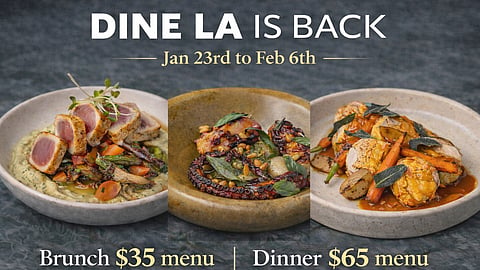
“We are fully embracing summer, which is one of our favorite seasons. We are also doing something different this time by offering a brunch menu for the first time,” said David LeFevre, chef and partner at MB Post, The Arthur J and RYLA.
Come for brunch or dinner, then walk toward the water afterward. It is one of the easiest ways to turn a Restaurant Week booking into a full South Bay afternoon.
The Arthur J is a handsome, wood-paneled steakhouse a few blocks from the beach, with the sort of room that makes lunch feel like an occasion without requiring an entire evening. Its 2026 Dine LA listing includes a $55 lunch menu.
LeFevre sees the event as an introduction rather than a compromise.
“It’s a wonderful opportunity to welcome both regular and new guests, giving them a chance to experience what our restaurant specializes in at an incredible value,” said David LeFevre, chef and partner at MB Post, The Arthur J and RYLA.
The appeal here is the combination of a proper steakhouse meal and Manhattan Beach’s low-key coastal atmosphere. It is polished, but it still feels connected to the neighborhood.
“Most importantly, I want them to see how much we care—about our product, our service, and ensuring our guests are well taken care of, regardless of the price point. We are located in a special area, and we want new guests to experience the best of both worlds: an incredible beach town combined with a phenomenal restaurant experience,” LeFevre said.
Sausal serves bold, Mexican-inspired cooking shaped by the flavors of Southern California and the traditions of old rancho kitchens. A wood-burning hearth gives the restaurant’s tacos, slow-roasted meats, and vegetable dishes their signature smoke and char, while freshly made tortillas and seasonal produce keep the menu grounded and bright. Add a lively room and a strong margarita program, and it becomes an easy choice for a relaxed lunch or dinner in El Segundo.
One of the season’s most intriguing newcomers is Monsieur Dior, Dominique Crenn’s restaurant at the Dior boutique in Beverly Hills. For anyone who follows fashion as closely as food, it is an obvious place to start. The setting is part of the draw, but Crenn’s involvement gives the restaurant more substance than the usual luxury-brand dining room.
Pair lunch with an afternoon along Rodeo Drive, or make it the anchor of a Beverly Hills day that ends with drinks nearby.
Suzanne Goin and Caroline Styne’s a.o.c. has long been one of the city’s most dependable dining rooms, especially for vegetable-driven California cooking, thoughtful small plates, and an excellent wine program. The current Dine LA listing shows a $35 lunch and a dinner in the $65-and-above tier.
CUT remains one of the city’s best-known contemporary steakhouses, located inside the Beverly Wilshire at the intersection of Wilshire Boulevard and Rodeo Drive. The flagship restaurant marks its 20th anniversary in 2026, making this an especially fitting year to visit.
This is the reservation for a more traditional special-occasion evening: expertly prepared beef, a lively dining room, and the pleasure of going directly upstairs afterward rather than facing traffic across town.
Ammatoli is a strong choice for diners who want to look beyond the usual Westside and Beverly Hills circuit. Its Eastern Mediterranean cooking reflects the breadth of LA’s dining culture, and Long Beach makes for a worthwhile destination in its own right. Order broadly and use the set menu as a starting point rather than resisting an extra dish for the table.
PLANTA brings a polished, playful approach to plant-based dining in Marina del Rey, with a menu that moves easily between sushi, tacos, noodles, and globally inspired sharing plates. The food is colorful and inventive, from crispy rice topped with spicy watermelon “tuna” to truffle udon and mushroom quesabirria. Its waterfront-adjacent location also makes it an easy choice for a relaxed lunch or dinner after time by the marina.
Pez Coastal Kitchen brings a seafood-first approach to Old Pasadena, with seasonal California cooking built around crudos, chilled shellfish, whole fish, and generous dishes designed for sharing. Chef Bret Thompson also works with curing, smoking, and dry-aging techniques. Set inside a restored 1896 building with an airy California-Mediterranean dining room and a lively cocktail bar, it is an especially good choice for a relaxed dinner after exploring Pasadena.
Mélisse is one of Los Angeles’s most intimate fine-dining experiences, a two-MICHELIN-starred restaurant hidden inside the same building as Citrin. Chef Josiah Citrin and chef-partner Ken Takayama serve an elaborate tasting menu in a 14-seat dining room, drawing on exceptional California produce while folding in French technique and global flavors. It is the choice for a true occasion dinner, with just five tables and the chefs and sommeliers guiding guests through the experience from beginning to end.
The Ritz-Carlton is the most convenient option for a Downtown-centered weekend. It sits at L.A. LIVE, close to museums, sports venues, and several participating restaurants. The hotel’s own Sendero complex includes the Latin American concepts Corteza at Sendero and Leña at sendero, allowing guests to participate in restaurant week without leaving the building.
Stay here for immediate access to Rodeo Drive and CUT by Wolfgang Puck. The hotel has occupied its prominent Beverly Hills corner since 1928 and remains one of the city’s most recognizable addresses. It is the best base for diners concentrating on Beverly Hills, West Hollywood, and Century City.
The InterContinental works well for travelers who want panoramic views and a central Downtown location. La Boucherie occupies the 71st floor, serving steaks and seafood against a wide view of the city, while the hotel places guests within easy reach of additional Dine LA restaurants across Downtown and the Arts District.
Do not try to cross the entire city for every reservation. Los Angeles is too big for that. Choose one area, book lunch or dinner, and leave time to explore between meals.
Dine LA is at its best when it introduces you to a part of the city you might otherwise overlook. The prix-fixe menus are helpful, but the real value is having a reason to spend an afternoon in Manhattan Beach, linger in Downtown, or finally book the Beverly Hills restaurant that has been sitting on your list.
Do you need a car in Los Angeles?
A car is useful for visiting several distant neighborhoods, but it is not essential for every trip. Choose a hotel close to the areas where you plan to spend most of your time, then use rideshares or public transport selectively. Trying to cover Santa Monica, Beverly Hills, Downtown, and the South Bay in a single day is rarely enjoyable.
What is the best area to stay in Los Angeles?
Beverly Hills and West Hollywood work well for shopping, restaurants, and nightlife. Santa Monica is better for beach access, while Downtown suits museums, sporting events, and an urban weekend. The right choice depends more on your itinerary than on finding one universally “best” neighborhood.
How far in advance should you book LA restaurants?
For Dine LA, book celebrated restaurants as soon as reservations become available. Less formal neighborhood restaurants may have space closer to the date, particularly at lunch or early in the evening.
Is August a good time to visit Los Angeles?
August is warm, dry, and well suited to beach days, rooftop dinners, and outdoor dining. Inland neighborhoods can be considerably hotter than the coast, so plan outdoor activities for the morning and allow for cooler evenings near the ocean.
How many days do you need in Los Angeles?
Four to five days is enough for a focused first visit. Rather than attempting to see the entire county, divide the trip into manageable areas such as Beverly Hills and West Hollywood, Downtown and the Arts District, and Santa Monica or Manhattan Beach.
Inspired by what you read?
Get more stories like this—plus exclusive guides and resident recommendations—delivered to your inbox. Subscribe to our exclusive newsletter
The products and experiences featured on RESIDENT™ are independently selected by our editorial team. We may receive compensation from retailers and partners when readers engage with or make purchases through certain links.