
- Locations
- Interviews
- Luxury Home
- Luxury Lifestyle
- Luxury Travel
- Luxury News
- Events
- More
- Magazine

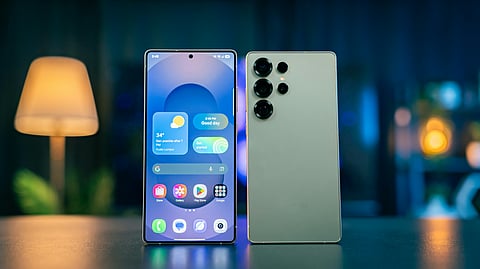
A phone spends more time in your hand than any watch, any ring, and most of the clothes in your closet. It gets set on restaurant tables, slid across desks, pulled out during introductions, and handed to strangers who offer to take the photo. Yet for years the object wrapped around it was an afterthought, a slab of rubbery plastic chosen in a checkout line for four dollars. That gap between how visible the device is and how little thought went into its shell has finally started to close.
The shift did not come from the phone makers. It came from the same designers and small ateliers that have spent decades thinking about how leather softens, how brass patinas, and why a hand-stitched edge outlasts a glued one. They looked at a device people touch two thousand times a day and saw an obvious canvas. Samsung Galaxy owners, long used to a narrower accessory market than their iPhone-carrying friends, have been among the biggest beneficiaries.
What follows is less a shopping list than a way of looking. Luxury in this category is not about a logo stamped on polycarbonate, and it is certainly not about price alone. It is about materials that improve with use, hardware that still works in year three, and a design point of view strong enough that the accessory reads as deliberate rather than defensive.
Walk through any design fair now and you will find bench-made goods sitting comfortably beside charging pucks and camera-control rings. That pairing would have looked absurd fifteen years ago. Consumer electronics were treated as disposable, replaced on a two-year cycle, so nobody bothered making a case that would outlive the hardware. Then upgrade cycles stretched out, phones got expensive enough to insure, and suddenly a shell worth keeping made sense.
The craft argument holds up under scrutiny. An accessory earns its place by doing something the core garment cannot, and a well-made case does exactly that: it protects, it signals, and it gives the eye somewhere to land. Small workshops in Florence and Seoul now cut phone shells from the same hides they use for handbags, and the offcuts that once went to waste have found a second life.
Full-grain leather is the obvious starting point, because it is the only common case material that looks better after a year than it did on day one. It darkens where your fingers rest, creases along the lines of how you actually hold the phone, and picks up a shine that no factory finish reproduces. Corrected-grain leather, sanded and sprayed to hide flaws, does none of this. The difference is visible at arm's length once you know to look.
Metal hardware separates serious pieces from convincing imitations. Machined aluminum buttons click with a defined stop, while molded plastic ones go mushy after a few thousand presses. Magnetic arrays matter too, since a Galaxy paired with a properly aligned magnet ring will sit dead center on a charger every time instead of sliding half an inch and stalling overnight. Ask what the camera surround is made of, because that thin lip takes the impact when a phone lands face down on tile.
The collaborations arrived slowly, then all at once. A leather goods house lends its signature grain to a shell, a print studio licenses an archive pattern, an independent illustrator releases forty numbered pieces that sell out in an afternoon. The good ones treat the phone as a canvas with real constraints, working around the camera array rather than pretending it is not there. The lazy ones just shrink a runway print until it fits, and you can tell within seconds which is which.
Color is where most people go wrong, and where a little theory pays off fast. Basic color theory suggests you either match your case to a repeated note in your wardrobe, such as the tan of your belt and shoes, or push it to a clean contrast that reads as intentional. Muddy middle grounds, a heathered mauve against navy and black, look like an accident. Designers who work in fashion understand this instinctively, which is why their premium Samsung Galaxy cases tend to arrive in tight, confident palettes rather than sprawling color menus.
Three cases cover almost every life. One neutral in leather or a matte technical weave for work and travel, one with color or pattern for weekends and dinners, and one genuinely armored shell for hiking, festivals, and anything involving a boat. Swapping takes eight seconds and costs nothing after the initial purchase, which makes it the cheapest wardrobe change available to anyone.
Beyond cases, the accessory field has widened considerably. Woven crossbody straps turn a Galaxy into something closer to a small bag, which is a relief at a crowded event where pockets are not an option. Machined stands in walnut and steel make a bedside charger look like furniture. Wireless earbud covers in the same leather as your case create the kind of quiet coordination that founders in the luxury space keep pointing to when they describe modern luxury as ease rather than display.
None of this requires spending recklessly. A single well-chosen leather case at a hundred and twenty dollars, kept for three years, costs less per day than the coffee you drink while holding it, and it will look considerably better at the end of that run than a stack of cheap shells would. The math of cost per use tends to favor the good version of almost anything you touch daily.
The real argument for treating your Galaxy as something worth dressing is not vanity. It is coherence. When the object you handle most often shares a language with your watch, your bag, and your shoes, the whole picture settles, and nothing in it shouts for attention. That is roughly what luxury has always meant in practice, long before anyone put a chip in it.
Start with one piece. Pick the material you would still want to hold in two years, check that the hardware feels solid under your thumb, and let the rest of the collection build itself slowly from there.
Inspired by what you read?
Get more stories like this—plus exclusive guides and resident recommendations—delivered to your inbox. Subscribe to our exclusive newsletter
The products and experiences featured on RESIDENT™ are independently selected by our editorial team. We may receive compensation from retailers and partners when readers engage with or make purchases through certain links.