
- Locations
- Interviews
- Luxury Home
- Luxury Lifestyle
- Luxury Travel
- Luxury News
- Events
- More
- Magazine

Scroll through any property listing today and one thing becomes immediately clear—some homes stop you in your tracks, while others are forgotten within seconds.
The difference is rarely the property itself.
It’s the photography.
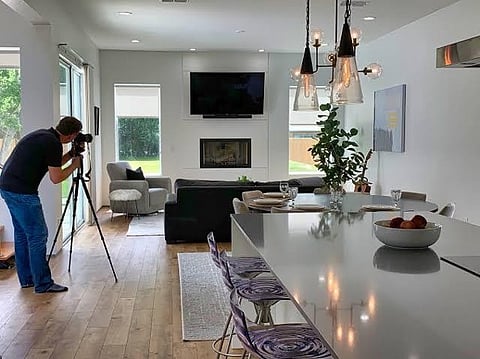
In a market where most buyers begin their search online, real estate photography has become one of the most influential factors in whether a listing gets attention, generates inquiries, or sits unnoticed. It’s no longer a “nice-to-have”—it’s a core part of how properties are positioned and sold.
Before a buyer steps inside a home, they’ve already made a judgment.
Listings are often filtered in seconds, based almost entirely on visual appeal. Bright, well-composed images create a sense of space, warmth, and possibility. Poor-quality photos, on the other hand, can make even the most attractive property feel uninviting.
This shift has fundamentally changed how properties are marketed. Photography isn’t just documenting a home—it’s shaping perception. Visit At Home Media to understand how it’s done.
The best real estate images do more than show rooms. They tell a story.
They highlight how natural light moves through a space. They emphasize flow between rooms. They create a feeling of lifestyle rather than just layout.
A well-shot kitchen doesn’t just look clean—it feels like a place where someone could imagine their daily routine. A living room isn’t just staged—it feels comfortable, lived-in, and inviting.
That emotional connection is what drives engagement.
One of the most defining elements of high-quality real estate photography is lighting.
Natural light is carefully used to create openness and warmth. Shadows are softened, colors are balanced, and details are preserved without overexposure. Professional photographers often time shoots around optimal daylight hours for this exact reason.
Artificial lighting is also used strategically—not to overpower a space, but to enhance it subtly.
The result is a property that feels bright, balanced, and true to life.
How a photo is framed can completely change how a property is perceived.
Wide angles can make spaces feel larger, but when used correctly, they avoid distortion. Clean lines, straight verticals, and thoughtful angles give a sense of order and quality.
Clutter is minimized. Distractions are removed. The focus is always on the strongest features of the home.
These details may seem small, but collectively, they influence how premium a property appears.
Buyers are becoming more aware of overly edited or misleading images. While editing is part of the process, authenticity matters.
Photos should represent the property accurately while still presenting it at its best. Over-processing can lead to disappointment during viewings, which ultimately hurts trust.
Strong real estate photography strikes a balance—enhanced, but believable.
With so many buyers browsing listings on their phones, images need to perform well on smaller screens.
This means:
Strong contrast and clarity
Simple, clean compositions
Immediate visual impact
If a photo doesn’t stand out within seconds, it’s often skipped.
This has raised the standard for photography across the industry.
What used to be considered a premium service is now the baseline.
Agents and sellers who invest in professional photography consistently see:
Higher engagement on listings
More inquiries
Faster sales
It’s one of the most cost-effective ways to improve a property’s market performance.
Photography is still the foundation, but it’s now part of a broader visual strategy.
Video tours, drone shots, and virtual walkthroughs are becoming more common, especially for higher-end listings. These formats add depth and context, helping buyers understand the property more fully before visiting in person.
Still, it all starts with strong images.
Real estate photography isn’t just about capturing a property—it’s about positioning it.
In a competitive market, the way a home is presented can significantly influence how quickly it sells and at what price. The right images don’t just attract attention—they create interest, build trust, and drive action.
Because in today’s property market, buyers don’t just view homes.
They experience them—starting with a photograph.
Inspired by what you read?
Get more stories like this—plus exclusive guides and resident recommendations—delivered to your inbox. Subscribe to our exclusive newsletter
The products and experiences featured on RESIDENT™ are independently selected by our editorial team. We may receive compensation from retailers and partners when readers engage with or make purchases through certain links.